

Synaptic potential
Images

Landmark Study on Persistent Restructuring of the Brain by Single Dose Psilocybin 🍄


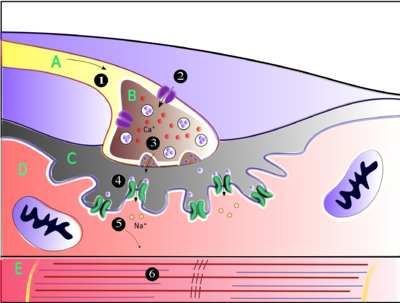

The Genesis of Neural Signals
Synaptic potential refers to the transient change in the membrane potential of a postsynaptic neuron that occurs when a neurotransmitter binds to its receptor. These potentials are the fundamental 'incoming' signals that a neuron receives, dictating its likelihood of firing an action potential. They are generated by the opening or closing of ion channels in the postsynaptic membrane, leading to changes in ion conductance.
Excitatory postsynaptic potentials (EPSPs) typically involve the influx of positive ions (like Na+), causing depolarization and moving the membrane potential closer to the threshold for firing. Conversely, inhibitory postsynaptic potentials (IPSPs) often involve the influx of negative ions (like Cl-) or the efflux of positive ions (like K+), leading to hyperpolarization and moving the membrane potential further away from the threshold. The specific type of potential is determined by the neurotransmitter released and the type of receptor on the postsynaptic neuron.
For instance, glutamate binding to its receptors commonly elicits EPSPs, while GABA binding to its receptors typically induces IPSPs. These potentials are graded, meaning their amplitude varies depending on the amount of neurotransmitter released and the number of receptors activated, and they decay rapidly as they propagate away from the synapse.
The Art of Neural Computation
A single synaptic potential is rarely sufficient to trigger an action potential. Instead, neurons integrate numerous incoming signals through a process known as summation. This integration occurs in two primary ways: spatial summation and temporal summation.
Spatial summation involves the convergence of multiple EPSPs (or IPSPs) from different synapses onto the same postsynaptic neuron occurring simultaneously. The combined effect of these spatially distributed inputs can depolarize the membrane to its firing threshold. Temporal summation occurs when successive EPSPs (or IPSPs) arrive at the same synapse in rapid succession.
The lingering depolarization from the first potential can add to the depolarization of the subsequent potential, potentially reaching the threshold. The neuron acts as an integrator, weighing the excitatory and inhibitory inputs in a complex 'tug-of-war.' For a neuron with a resting membrane potential of -70 mV and a threshold of -50 mV, a net depolarization of 20 mV is required. This integration is a sophisticated form of neural computation, allowing for complex processing of information.
The Chemical Symphony
The initiation of synaptic potentials is contingent upon the release of neurotransmitters from the presynaptic neuron. When an action potential arrives at the presynaptic terminal, it causes depolarization, which opens voltage-gated calcium channels. The influx of calcium ions triggers the fusion of synaptic vesicles, containing neurotransmitters, with the presynaptic membrane, releasing their contents into the synaptic cleft.
These neurotransmitters then diffuse across the cleft and bind to specific receptors on the postsynaptic membrane. This binding event is highly specific, akin to a lock and key mechanism. For example, glutamate, a major excitatory neurotransmitter, binds to its corresponding receptors (e.g., AMPA and NMDA receptors) on the postsynaptic neuron, leading to the opening of ion channels and the generation of EPSPs.
Conversely, inhibitory neurotransmitters like GABA bind to GABA receptors, facilitating the influx of chloride ions or the efflux of potassium ions, resulting in IPSPs. This precise molecular interaction is the bedrock of synaptic transmission.
Dynamic Connections
Synaptic potentials are not static entities; they are subject to modulation through a phenomenon known as synaptic plasticity. This refers to the ability of synapses to change their strength over time, a crucial mechanism underlying learning and memory. Factors influencing plasticity include the amount of neurotransmitter released, the number and sensitivity of postsynaptic receptors, and structural changes in the synapse.
Long-term potentiation (LTP) is a persistent strengthening of synapses, while long-term depression (LTD) is a persistent weakening. These changes can be induced by prolonged periods of high-frequency stimulation. For example, sustained co-activation of two neurons can lead to LTP at their synapse.
The ability to modify synaptic strength allows neural circuits to adapt and store information. Research into synaptic plasticity is vital for understanding cognitive functions and developing therapeutic strategies for neurological disorders such as Alzheimer's disease, where memory impairment is a hallmark.
The Future of Neural Signaling
The intricate mechanisms of synaptic potential generation and modulation are a major focus of neuroscience research, with significant implications for medicine. Scientists are actively investigating ways to enhance or reduce the amplitude and duration of synaptic potentials for therapeutic purposes. For instance, enhancing EPSPs could potentially improve cognitive function in individuals with neurodegenerative diseases or learning disabilities.
Conversely, reducing excessive excitatory signaling might be beneficial in conditions like epilepsy, where uncontrolled neuronal firing occurs. Understanding the molecular pathways involved in LTP and LTD offers promising avenues for developing drugs that can target synaptic plasticity. The goal is to fine-tune neural communication, restoring balance and function to compromised neural circuits, thereby offering new hope for treating a wide range of neurological and psychiatric conditions.
See also
Frequently Asked Questions
What is a synaptic potential?+
How does a synaptic potential make a neuron more or less likely to fire?+
Why are some synaptic potentials called excitatory and others inhibitory?+
How do many synaptic potentials add up to make a neuron fire?+
What happens inside the presynaptic neuron when an action potential arrives?+
Based on content from Wikipedia · Licensed under CC BY-SA 4.0