

Swedish Language
Images
Swedish language
Phonetic Nuances and Prosodic Features of Swedish
Swedish, a North Germanic language spoken by approximately 10 million native speakers, presents a fascinating study in phonetics and prosody. Its sound system is characterized by a range of consonants and vowels, including several that are not common in English. Notably, Swedish possesses a distinctive pitch accent system, with two main accents (acute and grave) that differentiate word meanings.
For instance, 'anden' (the duck) uses accent 1, while 'anden' (the spirit) uses accent 2. This prosodic feature significantly impacts intelligibility and adds a melodic quality to the language. Furthermore, Swedish features several sibilant sounds, including the voiceless postalveolar fricative (IPA: /ɧ/), often represented by 'sj', 'sk', 'stj', or 'ch' before certain vowels.
The pronunciation of /ɧ/ varies regionally, adding another layer of complexity and interest. The vowel system is also rich, with front rounded vowels like 'y' and 'u' and the distinct sounds of 'å', 'ä', and 'ö', which are crucial for accurate pronunciation and comprehension.
Evolution from Proto-Germanic to Modern Swedish
The history of the Swedish language is a testament to linguistic evolution. It traces its roots back to Proto-Germanic, eventually developing into Old Norse, the language of the Viking Age. Following the Viking era, Old Norse diverged into various dialects, with the East Norse dialects forming the basis for Swedish and Danish.
The period from the 8th to the 11th centuries saw the development of Runic Swedish. The transition to Modern Swedish is often marked by the 16th century, particularly with the publication of the New Testament in Swedish in 1526 and the full Bible translation in 1541, which helped standardize the language. Throughout subsequent centuries, Swedish has undergone significant changes, including simplification of grammar and the adoption of loanwords, particularly from French and German.
Regional dialects, while still present, have seen a decline in usage due to increased mobility and media influence, leading to a more unified standard Swedish.
The Cultural and Global Significance of Swedish
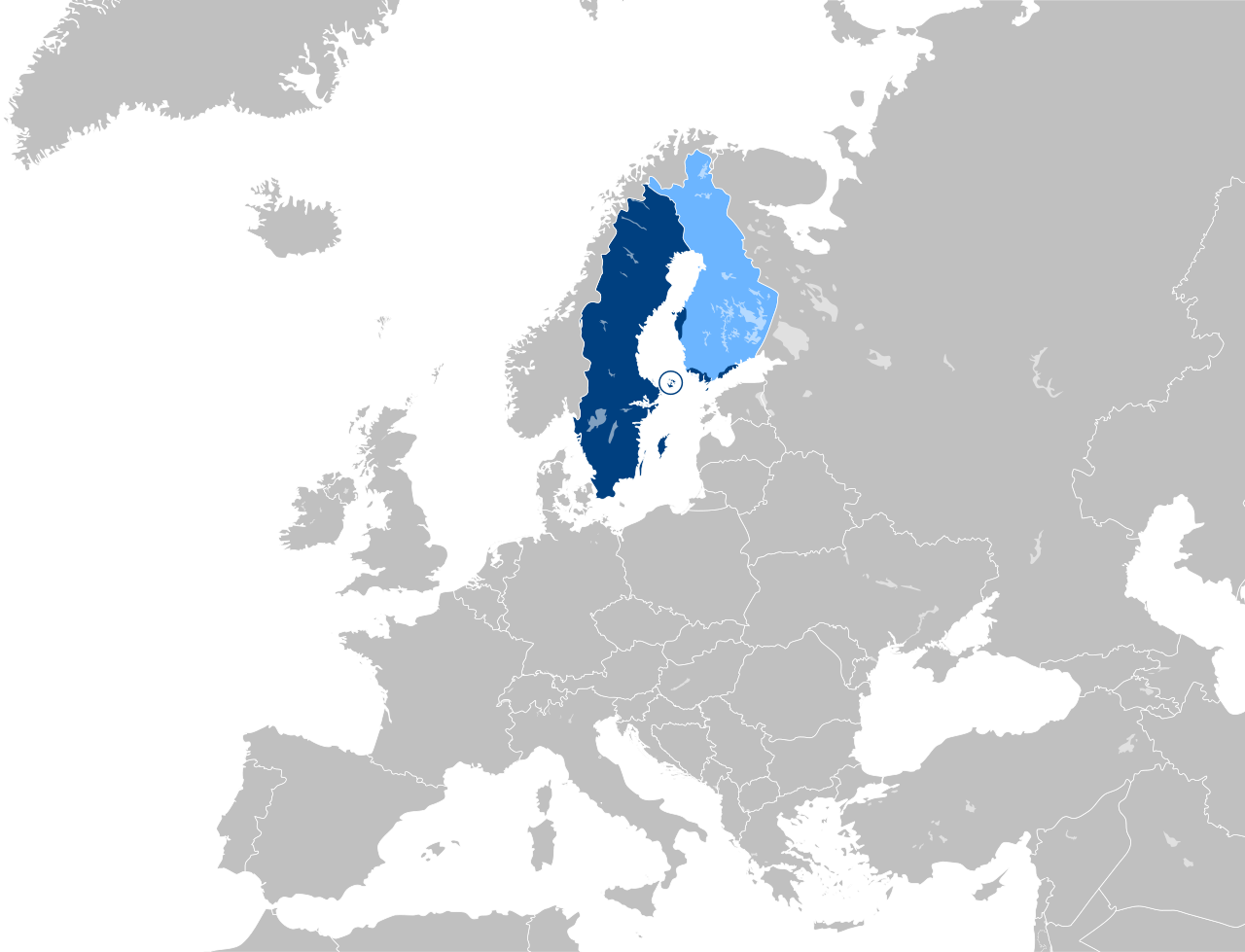
Swedish holds considerable cultural and global significance. As the official language of Sweden and one of the official languages of Finland, it serves as a vital medium for national identity, literature, and scientific discourse. Sweden's prominent role in international affairs, its contributions to the arts and sciences (including the Nobel Prizes), and its global brands like IKEA and Volvo have amplified the reach and influence of the Swedish language.
Learning Swedish provides access to a rich literary tradition, from medieval sagas to contemporary authors, and a vibrant film and music scene. In the context of global communication, Swedish is part of the broader Germanic language family, facilitating understanding and interaction with speakers of related languages. Its presence within the European Union also underscores its importance in European political and economic spheres.
Grammatical Structures and Lexical Characteristics
Modern Swedish grammar exhibits characteristics typical of North Germanic languages, often presenting a balance between complexity and relative simplicity for learners. It features two grammatical genders: common (en-words) and neuter (ett-words), which affect article and adjective agreement. Verbs are conjugated for tense but not typically for person or number, simplifying conjugation patterns compared to many other European languages.
For example, the present tense verb form is usually invariant across subjects. The definite article is often suffixed to the noun, a feature shared with other Scandinavian languages, such as 'hus' (house) becoming 'huset' (the house). The lexicon of Swedish includes a substantial number of loanwords, reflecting historical influences from languages like Low German, French, and more recently, English.
The presence of compound words is also a notable feature, allowing for the creation of new terms by combining existing ones, a characteristic that can lead to very long, descriptive words.
Go deeper
Frequently Asked Questions
What is the Swedish language?+
How does Swedish sound different from English?+
Why do some Swedish words sound the same but mean different things?+
Where did Swedish come from?+
How can learning Swedish help me?+
Based on content from Wikipedia · Licensed under CC BY-SA 4.0