

Stellar Corona: The Sun's Fiery Crown!
Images
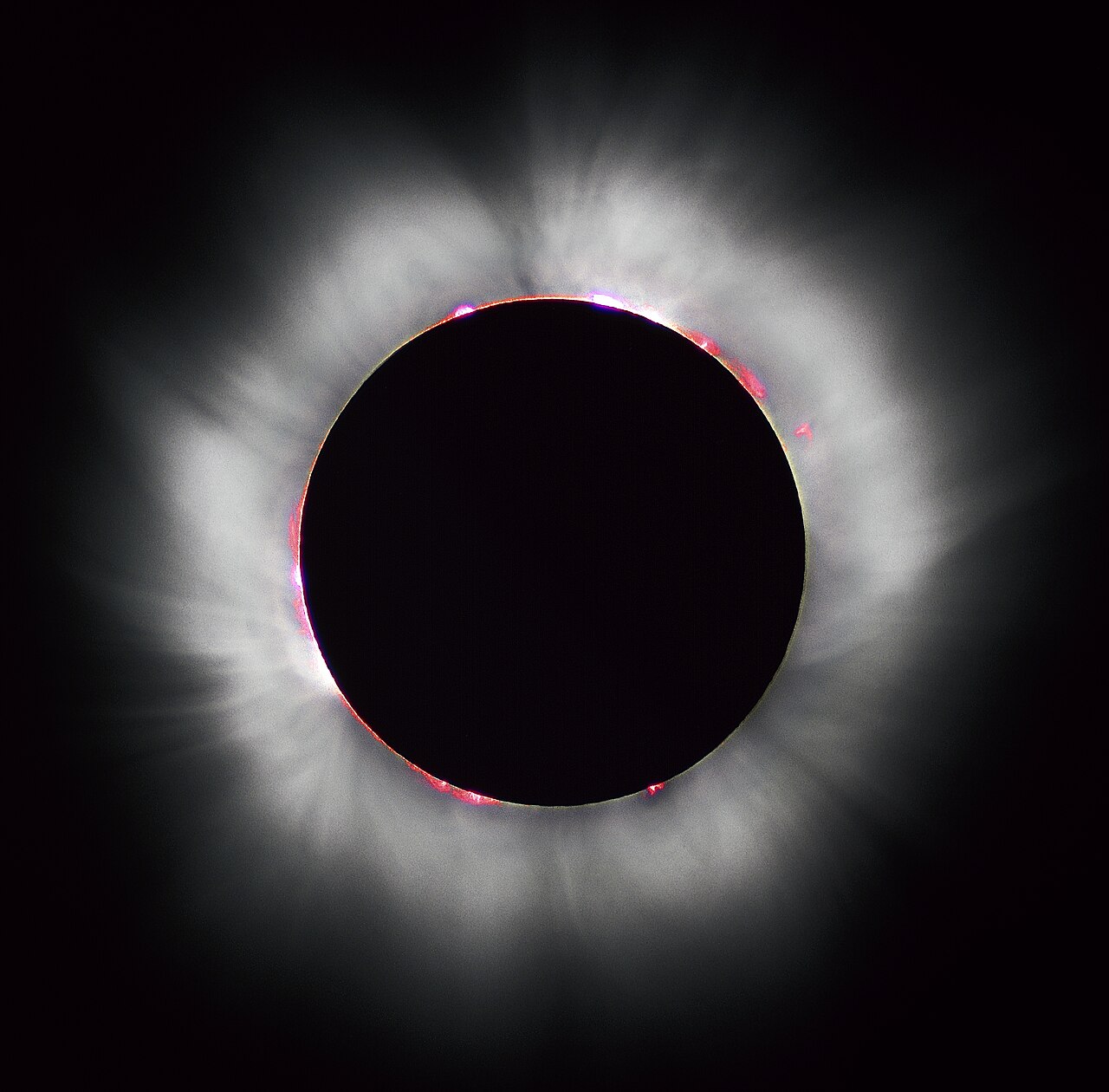
Stellar corona


The Corona's Enigma
The stellar corona represents the outermost layer of a star's atmosphere, characterized by its astonishingly high temperatures, reaching millions of degrees Celsius, far exceeding that of the star's visible surface (photosphere). For the Sun, this temperature gradient is a profound mystery, known as the 'coronal heating problem.' While the photosphere averages around 5,500 degrees Celsius, the corona can soar to 1-3 million degrees Celsius, and localized regions can be even hotter.
This extreme thermal energy is not uniformly distributed; it manifests in complex structures like streamers, loops, and plumes, sculpted by the star's magnetic field. The corona's plasma is highly ionized, meaning electrons are stripped from atoms, creating a state of matter that behaves very differently from gases on Earth. Understanding this thermal anomaly is central to comprehending stellar activity and energy transport.
Historical Perspectives and Observational Evolution
The corona's visibility has been limited to rare total solar eclipses for most of human history, leading to early, often mythological, interpretations of the Sun's halo. The first scientific observations began in the 18th century, with astronomers like Pierre-Charles Lemonnier noting its presence. The development of spectroscopy in the 19th century allowed for rudimentary analysis of its composition, revealing emission lines that indicated extremely high temperatures.
A pivotal advancement was the invention of the coronagraph by Bernard Lyot in 1931, enabling ground-based observation of the corona without waiting for an eclipse. The space age revolutionized coronal studies, with missions like Skylab and later SOHO (Solar and Heliospheric Observatory) providing continuous, high-resolution data, and instruments like the Solar Dynamics Observatory (SDO) offering unprecedented insights into its dynamic behavior and magnetic field evolution.
The Corona's Profound Influence on the Heliosphere
The stellar corona is the engine driving the heliosphere, the vast bubble of charged particles and magnetic fields that surrounds our Sun and extends far beyond the planets. The corona is the source of the solar wind, a continuous outflow of plasma that permeates the entire solar system. This wind carries the Sun's magnetic field with it, shaping the magnetospheres of planets and influencing their atmospheres and environments.
Intense events originating in the corona, such as Coronal Mass Ejections (CMEs) and solar flares, release enormous amounts of energy and particles. These events can have significant impacts on Earth, leading to geomagnetic storms that disrupt satellite operations, power grids, and radio communications, and pose radiation hazards to astronauts. Studying the corona is therefore essential for space weather forecasting and mitigating these risks.
Mechanisms of Coronal Heating
The prevailing scientific consensus attributes coronal heating to the conversion of magnetic energy into thermal energy. The Sun's dynamo generates a complex and dynamic magnetic field. This field is constantly being stressed, twisted, and reconfigured by the turbulent motion of plasma beneath the photosphere.
Two primary theoretical frameworks attempt to explain how this magnetic energy is dissipated as heat: wave heating and nanoflare heating. Wave heating proposes that Alfvén waves, generated by convective motions at the Sun's surface, propagate into the corona and dissipate their energy. Nanoflare heating suggests that the corona is continuously heated by a myriad of small, localized magnetic reconnection events, termed 'nanoflares,' which are too small to be individually detected but collectively contribute significant energy.
Current research focuses on distinguishing between these mechanisms and understanding the precise role of magnetic topology and plasma processes.
Comparative Coronal Studies and Exoplanetary Implications
The study of our Sun's corona provides a crucial benchmark for understanding the coronas of other stars. By observing stars across the Hertzsprung-Russell diagram, astronomers can correlate coronal properties (temperature, density, extent) with stellar parameters like mass, age, rotation rate, and magnetic field strength. Active stars, particularly young, rapidly rotating ones, often exhibit significantly hotter and more luminous coronas than our Sun, sometimes producing powerful stellar flares and winds.
These comparative studies are vital for understanding stellar evolution and the diversity of magnetic activity in the galaxy. Furthermore, the nature of a star's corona and its associated stellar wind has profound implications for the habitability of exoplanets. A star with a very active corona could strip away the atmosphere of a nearby planet, rendering it uninhabitable, while a more quiescent corona might allow for a more stable planetary environment, influencing the search for life beyond our solar system.
Go deeper
Frequently Asked Questions
What is the Sun's corona?+
Why is the corona hotter than the Sun's surface?+
How do scientists see the corona?+
What happens when the corona erupts?+
How does the corona affect Earth?+
Based on content from Wikipedia · Licensed under CC BY-SA 4.0