

Spiritualism (movement)
Images
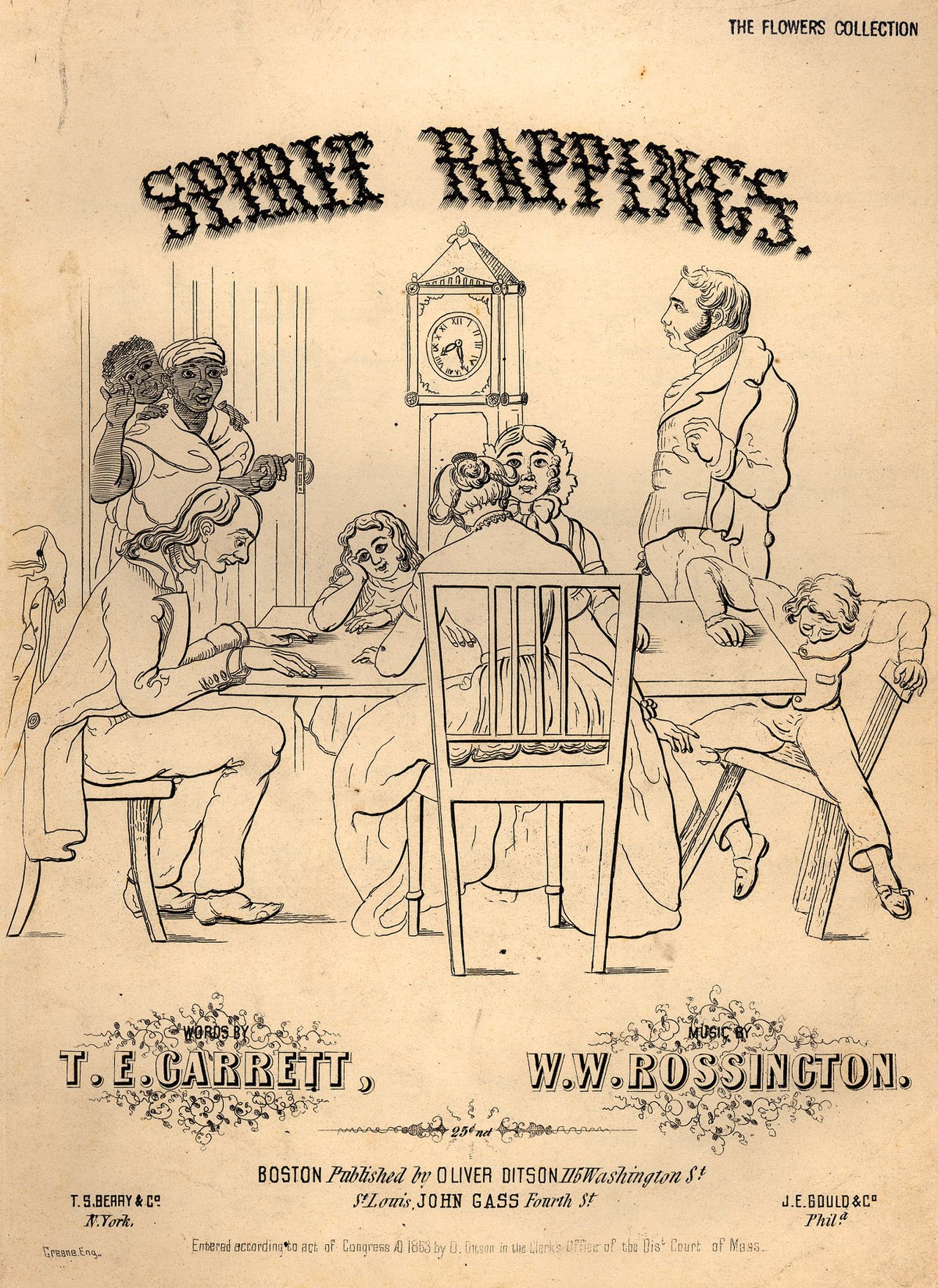
Spiritualism (movement)
The Genesis and Flourishing of a Spiritualist Society
Spiritualism emerged as a distinct religious and philosophical movement in the mid-19th century, profoundly shaped by a societal milieu grappling with rapid industrialization, scientific advancements, and a pervasive interest in the occult and the afterlife. While the seeds of spirit communication can be found in ancient traditions, the modern iteration is widely credited to the alleged phenomena involving the Fox sisters in 1848. This event catalyzed a widespread fascination, leading to the establishment of Spiritualist churches, societies, and a burgeoning industry of mediums.
The movement's appeal transcended social classes, offering solace to the bereaved, intellectual stimulation to the curious, and a spiritual alternative to established religious dogma. Its rapid proliferation across North America and Europe during the latter half of the 19th century marked it as a significant cultural and social force, influencing not only personal beliefs but also broader societal discourse on life, death, and consciousness.
Mechanisms of the Unseen
At the heart of Spiritualism lies the concept of mediumship, the purported ability of certain individuals to act as intermediaries between the living and the spirit world. Mediums employed a variety of techniques, often categorized by the perceived mode of communication. These included clairvoyance (seeing spirits), clairaudience (hearing spirits), clairsentience (feeling or sensing spirits), and psychometry (gaining information from objects).
Beyond these more subtle forms, historical Spiritualism was also characterized by 'physical phenomena' observed during séances. These purported manifestations included table tipping, raps, levitation of objects, and even apparitions, all attributed to the direct intervention of spirits. While skeptics often attributed these events to fraud or psychological suggestion, believers saw them as tangible evidence of a spiritual reality, validating their faith and the efficacy of their practices.
Societal Impact and Philosophical Underpinnings
The impact of Spiritualism extended far beyond individual spiritual experiences. It played a role in advocating for social reforms, including abolitionism and women's suffrage, as many prominent Spiritualists were also social activists. The belief that spirits were often more enlightened than the living led to the espousal of progressive ideals.
Philosophically, Spiritualism challenged prevailing materialistic and mechanistic worldviews by positing a non-physical reality accessible through direct experience. It offered a framework for understanding consciousness as something that survives bodily death, contributing to broader discussions in philosophy of mind and the nature of reality. The movement's emphasis on personal revelation and experiential faith also prefigured later developments in New Age spirituality and alternative belief systems.
The Evolution and Legacy of Spiritualist Thought
While the fervent public engagement with Spiritualism waned in the early 20th century, its core tenets and practices have continued to evolve and persist. Modern Spiritualism often emphasizes healing, personal growth, and ethical living, guided by the perceived wisdom of spirits. The scientific investigation into psychic phenomena, though often controversial, has roots in the early Spiritualist movement's quest for empirical validation.
Furthermore, the enduring human fascination with life after death and the possibility of communication with the departed ensures that Spiritualist ideas continue to resonate in contemporary culture, influencing literature, film, and various forms of alternative spirituality. Its legacy lies in its persistent challenge to conventional understandings of life, death, and the potential for consciousness to transcend physical limitations.
Critical Perspectives and Historical Context
From a critical standpoint, the history of Spiritualism is intertwined with issues of fraud, psychological suggestion, and the socio-cultural anxieties of its time. Many historical accounts detail investigations into fraudulent mediums who exploited the grief and credulity of believers. Skeptics, such as psychologists and scientists, often explained reported phenomena through naturalistic means, including unconscious muscular movements (ideomotor effect), wishful thinking, and collective delusion.
However, understanding Spiritualism solely through the lens of deception overlooks its genuine appeal and the profound comfort it offered to many. It served as a vital coping mechanism for a society experiencing high mortality rates and rapid social change, providing a sense of continuity and meaning in the face of uncertainty.
Go deeper
Based on content from Wikipedia · Licensed under CC BY-SA 4.0