

SoFi Stadium
Images

SoFi Stadium


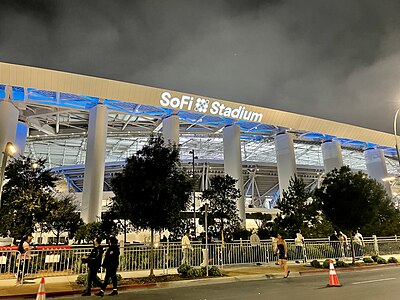


Genesis of a Mega-Structure
SoFi Stadium's existence is a testament to ambitious urban redevelopment, rising from the historic grounds of the Hollywood Park Racetrack in Inglewood, California. The project, initiated by Rams owner Stan Kroenke, aimed to bring an NFL team back to Los Angeles and create a world-class entertainment destination. Its construction marked a significant shift from its equestrian past to a future dominated by technological advancement and mass entertainment.
Opened in September 2020, the stadium is the centerpiece of the 300-acre Hollywood Park mixed-use development, which includes residential areas, retail spaces, and other entertainment venues. This integrated approach signifies a modern trend in stadium development, where the venue is not an isolated structure but part of a larger community ecosystem designed to generate economic activity and cultural impact year-round.
Dual-Tenant Dynamics and Stadium Sharing
A distinctive characteristic of SoFi Stadium is its status as one of only two NFL stadiums shared by two teams: the Los Angeles Rams and the Los Angeles Chargers. This dual-tenant model, also seen at MetLife Stadium in New Jersey, presents unique operational and logistical challenges and opportunities. It requires meticulous scheduling for practice facilities, game days, and fan engagement events to accommodate both franchises.
The stadium's design was inherently planned to support this shared use, ensuring that the fan experience and team operations are optimized for both the Rams and the Chargers. This model also maximizes the stadium's utilization, making it a consistently active hub for professional football, unlike single-tenant stadiums which may sit dormant for significant portions of the year.
Architectural Ingenuity
The architectural marvel of SoFi Stadium is perhaps best exemplified by its expansive, translucent roof. Composed of ETFE panels, this innovative canopy stretches over the seating bowl and playing field, creating an enclosed yet open-air feel. ETFE, a fluorine-based plastic, is chosen for its durability, light weight, and high light transmission properties, allowing natural sunlight to illuminate the stadium.
This not only reduces the need for artificial lighting during daylight hours, contributing to energy efficiency, but also creates a more pleasant environment for spectators and athletes. The roof system is integrated with advanced climate control technology, enabling the stadium to maintain comfortable temperatures regardless of external weather conditions, a crucial factor for hosting events year-round and for the comfort of fans during intense games.
A Global Epicenter for Major Sporting Events
SoFi Stadium has rapidly established itself as a premier venue for high-profile sporting and entertainment events on a global scale. Its successful hosting of Super Bowl LVI in 2022, the 2023 College Football Playoff National Championship, and WrestleMania 39 demonstrates its capacity to manage large-scale productions. Looking forward, its significance is amplified by its scheduled role in major international competitions.
It is slated to host eight matches during the 2026 FIFA World Cup, a testament to its world-class soccer facilities. Furthermore, its selection as a key venue for the 2028 Summer Olympics, including the opening ceremony and swimming events, underscores its importance in the international sporting calendar. This strategic positioning ensures SoFi Stadium will remain a focal point for global attention and athletic achievement for years to come.
See also
Frequently Asked Questions
What is SoFi Stadium?+
Why does SoFi Stadium have a translucent roof?+
How many teams share SoFi Stadium?+
What big events have taken place at SoFi Stadium?+
Where did the stadium replace?+
Based on content from Wikipedia · Licensed under CC BY-SA 4.0