

Socrates
Images
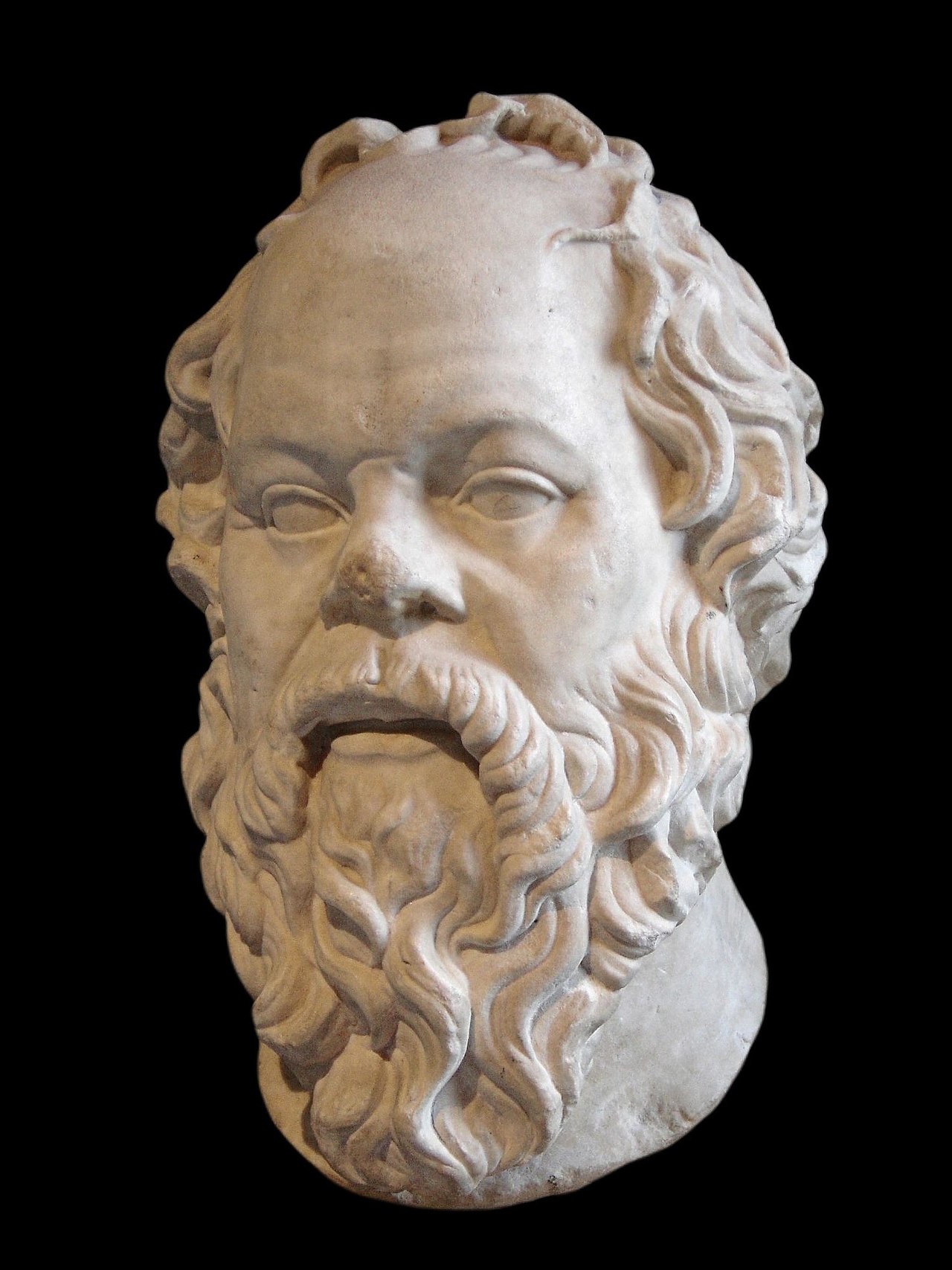
Socrates
The Enigma of Socrates
Socrates (c. 470 – 399 BC) stands as a monumental, yet paradoxically elusive, figure in the history of thought. Hailing from Athens, he is widely credited as the progenitor of Western philosophy and a pivotal figure in the development of ethical reasoning. What makes Socrates particularly fascinating is that he authored no texts himself.
Our knowledge of his life, teachings, and philosophical method is almost entirely derived from the accounts of his contemporaries and students, primarily Plato and Xenophon. These accounts, often presented as dialogues, depict Socrates engaging in rigorous intellectual debate. The challenge of reconciling these often-contradictory portrayals has led to the 'Socratic problem,' making a definitive reconstruction of his personal philosophy a complex endeavor.
Despite this ambiguity, his impact is undeniable, shaping philosophical discourse for over two millennia through his unique approach to inquiry and his profound influence on subsequent thinkers.
The Socratic Method
The cornerstone of Socrates' philosophical legacy is the Socratic method, also known as elenchus. This method is characterized by a series of probing questions designed to stimulate critical thinking and illuminate ideas. Rather than imparting knowledge directly, Socrates would engage interlocutors in a question-and-answer format, meticulously dissecting their assumptions and beliefs.
The goal was not to win an argument, but to expose ignorance and guide individuals toward a more profound understanding of concepts, particularly virtues like justice, piety, and courage. Socrates' frequent assertion of his own ignorance ('I know that I know nothing') was a strategic move, fostering intellectual humility and encouraging a relentless pursuit of truth. This process often led to aporia, or an impasse, where participants realized the inadequacy of their initial understanding, thereby opening the door for genuine philosophical exploration and the potential for discovering more robust definitions and insights.
A Polarizing Figure and His Ultimate Trial
Socrates was not universally admired in Athenian society; indeed, he was a deeply polarizing figure. His relentless questioning of societal norms, political figures, and traditional beliefs made him a target for criticism and suspicion. This culminated in his trial in 399 BC, where he faced charges of impiety and corrupting the youth of Athens.
The accusation of impiety suggested he did not recognize the gods of the city, while corrupting the youth implied he was leading young Athenians astray with his radical ideas. Despite the opportunity to escape, facilitated by his allies, Socrates chose to remain in Athens and face the legal proceedings. He believed in upholding the laws of the polis, even when they led to personal injustice.
As recounted by Plato in the Apology, Crito, and Phaedo, Socrates defended his life's work, arguing that an unexamined life is not worth living. Ultimately, he was sentenced to death and executed by drinking hemlock, a profound tragedy that cemented his status as a martyr for philosophy and intellectual freedom.
Enduring Influence and Philosophical Resonance
The death of Socrates did not silence his ideas; rather, it amplified his influence. His students, particularly Plato, meticulously documented his dialogues, ensuring his philosophical legacy would endure. Plato's writings became a primary conduit through which Socrates' thought impacted subsequent generations.
His emphasis on reason, virtue, and self-knowledge resonated deeply with philosophers throughout antiquity, the Middle Ages, and the Islamic world. During the Italian Renaissance, Socrates was embraced by humanist thinkers who admired his focus on human potential and ethical living. His intellectual lineage can be traced through countless influential figures, including Søren Kierkegaard and Friedrich Nietzsche, who engaged with his challenging ideas in their own philosophical pursuits.
Socrates remains a ubiquitous figure in Western culture, continually reinterpreted and debated in art, literature, and academic discourse, a testament to the enduring power of his philosophical quest.
Go deeper
Frequently Asked Questions
Who was Socrates?+
What is the Socratic method?+
Why did Socrates get in trouble in Athens?+
How did Socrates die?+
Did Socrates write books?+
Based on content from Wikipedia · Licensed under CC BY-SA 4.0