

Snorri Sturluson
Images

Snorri Sturlusons pool at Reykholt


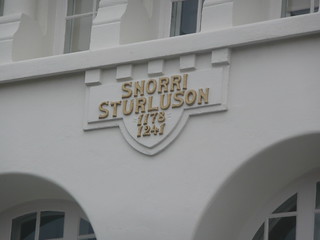


The Life and Times of Snorri Sturluson
Born in 1179 in Iceland, Snorri Sturluson rose from humble beginnings to become one of the most influential figures of the medieval Nordic world. His life spanned a tumultuous period in Icelandic history, marked by internal strife and increasing Norwegian influence, known as the Age of the Sturlungs. Snorri himself was a central player in this political landscape, twice elected as lawspeaker of the Althing, the oldest existing parliament in the world.
This position granted him significant authority and insight into the legal and political machinations of the era. Beyond his political career, Snorri was a prolific writer and a keen observer of culture, amassing considerable wealth and power through strategic marriages and land acquisitions. His intellectual prowess and political acumen made him a formidable figure, but also a target in the complex power struggles of his time.
Literary Masterpieces
Snorri Sturluson's enduring legacy rests primarily on his monumental literary works, which serve as indispensable sources for Norse mythology and early Scandinavian history. The Prose Edda, often attributed to Snorri, is a comprehensive handbook on skaldic poetry and Norse mythology. It meticulously details the pantheon of gods, the creation myths, the epic battles, and the eschatological prophecies like Ragnarök.
Its structured approach and detailed explanations were revolutionary, transforming oral traditions into a coherent literary form. Equally significant is Heimskringla, a vast collection of sagas chronicling the history of the Norwegian kings, beginning with the mythical Yngling dynasty and extending through to the 12th century. For stylistic and methodological reasons, scholars also widely believe Snorri to be the author of Egil's Saga, a vivid biographical account of a renowned Viking warrior and poet, showcasing his narrative skill and historical research.
The Enduring Significance of Snorri's Contributions
The importance of Snorri Sturluson's work cannot be overstated. He essentially preserved the rich tapestry of Norse mythology and early Viking history for posterity. Without his detailed compilations, much of what we understand about the beliefs, sagas, and historical figures of the Nordic peoples would be lost to time.
The Prose Edda, in particular, is the cornerstone of modern scholarship on Norse mythology, providing the framework through which we interpret ancient poems and legends. Heimskringla offers a crucial narrative thread for understanding the political development and royal lineages of Scandinavia. Snorri's meticulous approach to recording these narratives, even those with legendary elements, provides invaluable cultural and historical data, making him a foundational figure in the study of Northern European heritage.
Assassination and Legacy
Snorri Sturluson's life concluded abruptly and violently on September 23, 1241. He was assassinated at his estate in Reykholt by men claiming to be agents of Haakon IV, the King of Norway. This act was likely a culmination of the intense political rivalries and power struggles Snorri was embroiled in, both within Iceland and with the Norwegian crown, which sought greater control over the island.
His death marked the end of a brilliant but controversial life. However, his literary output ensured his immortality. Snorri's writings continue to be studied, translated, and admired globally, influencing literature, art, and our collective imagination.
He remains a central figure in Icelandic identity and a testament to the enduring power of storytelling and historical record-keeping.
Go deeper
Frequently Asked Questions
Who was Snorri Sturluson?+
What are the Prose Edda and Heimskringla?+
Why is Snorri important to us today?+
How did Snorri become a powerful man?+
How did Snorri die?+
Based on content from Wikipedia · Licensed under CC BY-SA 4.0