

Siula Grande
Images

Siula Grande 072530032013



Geological Formation and Topography
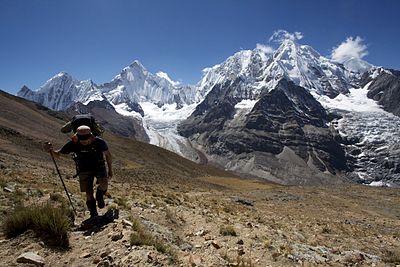
Siula Grande, a majestic massif within the Cordillera Huayhuash, represents a significant geological feature of the Peruvian Andes. Rising to an impressive elevation of 6,344 meters (20,814 feet), its sheer scale is a testament to the powerful tectonic forces that shaped this region. The mountain's topography is characterized by steep, glaciated slopes, formidable rock faces, and dramatic arêtes.
Its subpeak, Siula Chico, at 6,260 meters (20,540 feet), further accentuates the complex and rugged nature of the massif. The formation of these peaks is intrinsically linked to the uplift of the Andes, a process driven by the subduction of the Nazca Plate beneath the South American Plate. This ongoing geological activity continues to influence the landscape, contributing to its dynamic and often hazardous environment.
The presence of extensive glacial features, including ice fields and crevasses, highlights the mountain's role in the high-altitude cryosphere.
The Extreme Alpine Environment
The environment atop Siula Grande is an archetype of extreme alpine conditions. At altitudes exceeding 6,000 meters, the atmospheric pressure is significantly reduced, resulting in a thin atmosphere with limited oxygen. This hypobaric hypoxia poses a severe physiological challenge for any life forms.
Temperatures consistently remain below freezing, fostering the development and persistence of extensive snowfields and glaciers. These ice masses are not static; they are dynamic systems constantly shaped by snowfall, sublimation, and glacial flow. The landscape is largely devoid of terrestrial vegetation, with life limited to extremophile microorganisms and perhaps some hardy lichens or mosses in sheltered lower areas.
The weather is notoriously unpredictable, with rapid shifts from clear skies to severe storms, including blizzards and high winds, making survival a constant negotiation with the elements.
Mountaineering Challenges and Significance
Siula Grande is a coveted objective for elite mountaineers, renowned for its technical difficulty and objective hazards. Ascending its formidable walls demands a high level of skill in ice climbing, rock climbing, and crevasse rescue, alongside exceptional physical and mental endurance. The routes often involve navigating steep ice couloirs, exposed ridges, and unpredictable snow conditions.
The mountain's remoteness and the harsh environment amplify the risks, requiring meticulous planning, robust expedition logistics, and a profound respect for the mountain's power. The history of climbing Siula Grande is marked by significant expeditions, some successful and others tragically ending in disaster, underscoring its status as a serious undertaking. Its allure lies not only in the summit but in the comprehensive test of skill and resilience it provides, contributing to the lore of high-altitude mountaineering.
Ecological and Conservation Considerations
While Siula Grande itself supports minimal biodiversity due to its extreme conditions, its surrounding alpine and subalpine zones are crucial habitats for specialized flora and fauna. These high-altitude ecosystems are particularly vulnerable to climate change, with warming temperatures potentially altering snowpack dynamics, glacial retreat, and the distribution of species. Conservation efforts in the Cordillera Huayhuash are vital to protect these sensitive environments.
The mountain's presence also influences regional hydrology, as its glaciers act as important water sources for downstream communities and ecosystems. Understanding Siula Grande's role within the broader Andean environment is essential for sustainable land management and the long-term preservation of these unique natural landscapes. Its iconic status also plays a role in ecotourism, necessitating careful management to minimize impact.
Siula Grande in the Context of Andean Geography
Siula Grande is a key component of the Cordillera Huayhuash, a sub-range of the Peruvian Andes celebrated for its dramatic and challenging peaks. Its elevation places it among the highest mountains in Peru and South America, contributing to the region's reputation as a premier destination for high-altitude trekking and mountaineering. The geological processes that formed Siula Grande, such as tectonic uplift and glaciation, are characteristic of the broader Andean mountain-building event.
Studying Siula Grande provides insights into the geomorphology and climatology of the tropical Andes. Its existence highlights the incredible diversity of Earth's landscapes, from lush rainforests to barren, icy summits, all within a single continental mountain range. The mountain's stark beauty and formidable presence continue to inspire scientific inquiry and human endeavor.
See also
Frequently Asked Questions
What is Siula Grande?+
Why is Siula Grande so cold and icy?+
How do climbers reach the top of Siula Grande?+
Where does Siula Grande sit in the world?+
What animals can live near Siula Grande?+
Based on content from Wikipedia · Licensed under CC BY-SA 4.0