

Sea krait
Images

Banded Sea Krait (Laticauda colubrina)


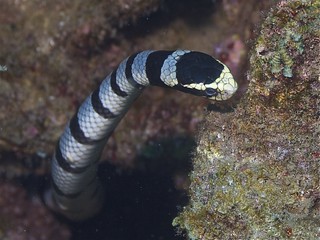

Geographic Distribution and Ecological Niches
Sea kraits, scientifically classified under the genus Laticauda, are fascinating members of the Elapidae family, distinguished by their semiaquatic lifestyle. Their geographic distribution is primarily concentrated in the temperate and tropical waters of the Pacific and Indian Oceans. These regions, characterized by warm currents and abundant marine life, provide ideal conditions for sea kraits.
They typically inhabit coastal areas, including rocky shorelines, mangrove forests, and coral reef systems. These diverse environments offer both hunting grounds and essential terrestrial refuges. Unlike fully aquatic sea snakes (subfamily Hydrophiinae), sea kraits retain a strong dependence on land for crucial biological processes, such as digestion and reproduction, carving out a unique ecological niche that bridges marine and terrestrial ecosystems.
Their presence is often an indicator of healthy coastal marine environments.
Morphological Adaptations for a Dual Existence
The evolutionary success of sea kraits is largely attributed to their remarkable morphological adaptations that facilitate a dual existence. On land, they exhibit the characteristic wide ventral scales common to terrestrial snakes, enabling efficient locomotion across varied substrates. However, their most striking adaptation for aquatic life is their paddle-shaped tail.
This flattened caudal fin acts as a powerful propeller, allowing for effective propulsion and maneuverability in the water column. This contrasts with the more laterally compressed tails of many fully aquatic sea snakes. Furthermore, sea kraits possess lungs that are elongated and can extend far back into the body, allowing them to remain submerged for extended periods, a vital trait for hunting and evading predators in their marine habitat.
These combined features represent a sophisticated evolutionary compromise.
Reproductive Strategies and Evolutionary Divergence
A key distinguishing feature of sea kraits, setting them apart from many other sea snakes, is their oviparous reproductive strategy. Sea kraits must return to land to lay their eggs, typically in crevices or burrows above the high tide line. This terrestrial egg-laying behavior is a significant ancestral trait that they have retained.
In contrast, most sea snakes are ovoviviparous, giving birth to live young in the water. This difference in reproductive mode reflects an earlier divergence of sea kraits from other Australasian elapids, indicating an independent evolutionary trajectory into aquatic environments. This makes sea kraits a compelling case study in convergent evolution, where different lineages independently evolve similar adaptations to similar environmental challenges, in this case, life in the sea.
Dietary Habits and Venomous Predation
The diet of sea kraits primarily consists of fish, which they hunt in their marine environment. Their venom, characteristic of elapids, plays a crucial role in their predatory success. The venom contains neurotoxins and myotoxins that help to quickly immobilize their prey, preventing escape in the water.
After a successful hunt, sea kraits often retreat to land to digest their meal. This terrestrial digestion is facilitated by their ability to regulate their body temperature more effectively on land and provides a stable environment away from aquatic predators. While venomous, sea kraits are generally not considered highly dangerous to humans, as they tend to be shy and will typically avoid confrontation, preferring to flee rather than bite unless provoked or handled.
Conservation Status and Human Interactions
While specific conservation statuses can vary by species within the Laticauda genus, sea kraits, like many marine reptiles, face threats from habitat degradation, pollution, and overfishing, which can impact their prey populations. Their reliance on both marine and terrestrial habitats makes them particularly vulnerable to coastal development and climate change. Understanding their ecological role and unique adaptations is crucial for effective conservation efforts. Public perception of snakes, especially venomous ones, can also lead to unnecessary persecution.
Educating communities about the importance of sea kraits in maintaining marine ecosystem balance and their generally non-aggressive nature is vital for fostering coexistence and ensuring their continued survival in the regions they inhabit.
See also
Frequently Asked Questions
What is a sea krait and where does it live?+
How does a sea krait swim and walk?+
Why do sea kraits need to come onto land?+
How do sea kraits lay their eggs?+
What do sea kraits eat and how do they catch their food?+
Based on content from Wikipedia · Licensed under CC BY-SA 4.0