

Satrap
Images

CILICIA, Myriandros. Mazaios. Satrap of Cilicia, 361-0-334 BCE


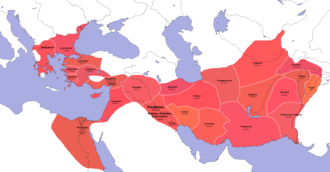


The Genesis and Evolution of the Satrapal System
The institution of the satrap, a governor of a province, reached its zenith under the Achaemenid Persian Empire (c. 550–330 BCE). While earlier Near Eastern empires utilized regional governors, the Achaemenids professionalized and standardized the system, dividing their immense territory into approximately twenty to thirty satrapies. Each satrapy was governed by a satrap, often a member of the Persian nobility or a relative of the king, who served as the king's viceroy.
The satrap held significant executive, judicial, and military authority within their domain. They were responsible for implementing royal decrees, collecting tribute and taxes, administering justice, and raising and commanding local levies. This administrative framework was so effective that it was largely inherited by Alexander the Great and his successors, the Hellenistic rulers, and later by the Sasanian Empire, demonstrating its enduring utility in managing diverse and expansive territories across millennia.
The system's adaptability underscores its importance as a model for imperial governance.
Functionality and Autonomy
The satrap's role was a delicate balancing act between representing the supreme authority of the king and exercising considerable regional autonomy. Satraps were granted broad powers to manage their provinces, fostering economic development, infrastructure projects (like roads and irrigation systems), and cultural integration within the empire. This autonomy was essential for effective governance, allowing satraps to respond to local conditions and needs without constant direct oversight from the distant capital.
However, this power was inherently checked. The king maintained ultimate authority, capable of appointing, promoting, or dismissing satraps. Furthermore, the Achaemenids famously employed 'King's Eyes and Ears' – inspectors who traveled the empire, reporting directly to the king on the satraps' conduct and the state of the provinces.
This dual system of delegated authority and royal oversight was crucial for preventing rebellion and ensuring the empire's cohesion.
Symbols of Power and Potential Tyranny
The immense power and wealth concentrated in the hands of satraps inevitably led to their portrayal as figures of great splendor and, at times, ostentatious luxury. They resided in lavish palaces, maintained large retinues, and commanded significant resources, making them appear almost king-like within their own satrapies. This perception is reflected in historical accounts and the subsequent evolution of the term 'satrap.' In later usage, particularly in Western languages, 'satrap' often carries pejorative connotations, implying a subordinate ruler who is corrupt, tyrannical, or excessively proud.
This negative association highlights the historical tension between the necessity of strong regional authority for imperial stability and the potential for such power to be abused, leading to resentment or challenges to central authority. The historical satrap was a complex figure, embodying both the administrative genius of empire and the inherent risks of concentrated power.
The Enduring Legacy of the Satrapal Model
The satrapal system, originating with the Achaemenids, provided a blueprint for provincial administration that influenced governance for centuries. Its success lay in its ability to integrate diverse regions into a cohesive imperial structure while allowing for local adaptation. Satraps were not merely tax collectors; they were administrators, judges, military commanders, and cultural intermediaries.
They played a vital role in fostering trade, disseminating technologies, and maintaining the vast communication networks that characterized empires like Persia. The concept of a powerful, appointed governor responsible for a defined territory became a recurring feature in subsequent empires, from the Roman provinces to later administrative divisions in various states. The legacy of the satrap underscores the enduring challenge of governing large, complex societies and the critical role of effective regional administration in maintaining imperial power and stability.
Key Figures and Historical Context
While the Wikipedia source does not name specific satraps, historical records mention numerous individuals who held this powerful position. For instance, in the Achaemenid Empire, figures like Mazaeus served as satrap of Babylon and Beyond the River, demonstrating the significant roles these individuals played. After Alexander the Great's conquests, his generals, known as the Diadochi, often took control of satrapies, transforming them into independent kingdoms.
For example, Ptolemy I Soter became satrap of Egypt before establishing the Ptolemaic Dynasty. These examples illustrate how satraps could transition from imperial officials to independent rulers, further highlighting the immense power and potential for political maneuvering inherent in the position. Understanding these historical contexts reveals the dynamic nature of power within ancient empires and the pivotal role of the satrap.
Go deeper
Frequently Asked Questions
What is a satrap?+
How many satrapies did the Persian Empire have?+
What jobs did a satrap do?+
Why did the king watch over satraps?+
Did satraps always act like kings?+
Based on content from Wikipedia · Licensed under CC BY-SA 4.0