

Salmonella: Tiny Germs, Big Trouble!
Images
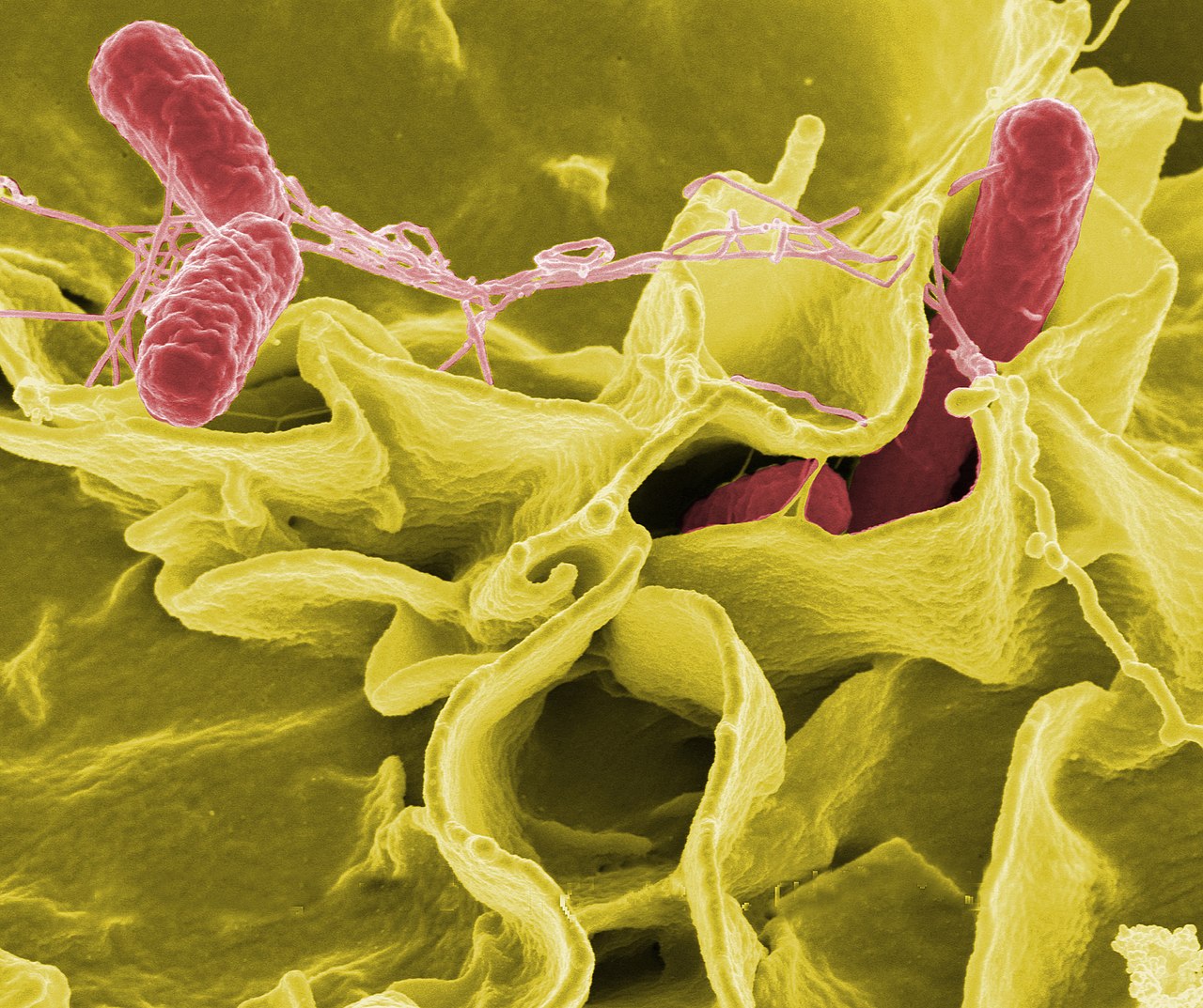
Salmonella


The Multifaceted Nature of Salmonella Pathogens
Salmonella are Gram-negative, facultative anaerobic bacteria belonging to the Enterobacteriaceae family. The genus Salmonella encompasses over 2,500 serotypes, but a subset, primarily within the species Salmonella enterica, are responsible for the vast majority of human infections. These bacteria are facultative intracellular pathogens, meaning they can survive and replicate both inside and outside host cells.
Their pathogenesis is complex, involving the secretion of effector proteins via type III secretion systems into host cells, which manipulate cellular processes to facilitate invasion and survival. Key virulence factors include adhesins for attachment, invasion factors for entry into epithelial cells, and mechanisms to evade the host immune response, such as preventing phagosome-lysosome fusion within macrophages. This intricate interplay allows Salmonella to establish infection and cause a range of illnesses, from self-limiting gastroenteritis to invasive systemic disease.
Ecological Niches and Transmission Dynamics
Salmonella exhibits remarkable ecological adaptability, thriving in diverse environments. Its primary reservoir is the gastrointestinal tract of a wide range of vertebrates, including birds (poultry, wild birds), mammals (cattle, pigs, rodents), and reptiles. Transmission occurs through the fecal-oral route, with contaminated food and water serving as major vehicles for human exposure.
Poultry and eggs are particularly significant sources due to the potential for transovarian transmission and contamination during processing. Reptiles, despite being less common food sources, are significant reservoirs, often asymptomatically shedding Salmonella. Environmental contamination of soil and water, especially in areas with intensive animal agriculture, further perpetuates the cycle.
Understanding these transmission dynamics is crucial for developing targeted control strategies, from farm-level biosecurity to consumer-level food safety practices.
From Farm to Fork
Controlling Salmonella infections requires a multi-pronged approach encompassing surveillance, prevention, and intervention at various stages of the food chain. National and international surveillance programs monitor Salmonella prevalence in animal populations and food products, providing data to inform risk assessments and regulatory actions. At the farm level, biosecurity measures, vaccination programs for livestock, and improved hygiene practices aim to reduce the incidence of infection in animals.
In food processing, rigorous sanitation, temperature control, and pathogen detection methods are employed to minimize contamination. Public health campaigns educate consumers on safe food handling, cooking, and hygiene practices. Despite these efforts, challenges persist, including the emergence of antibiotic-resistant strains, the global nature of food trade, and the difficulty in completely eradicating Salmonella from complex agricultural ecosystems.
The Broader Significance of Salmonella in Microbial Ecology and Medicine
Beyond its role as a human pathogen, Salmonella serves as a model organism for studying bacterial pathogenesis, host-pathogen interactions, and microbial ecology. Research into Salmonella has significantly advanced our understanding of bacterial invasion mechanisms, immune evasion strategies, and the dynamics of microbial communities within host environments. Furthermore, the increasing prevalence of antibiotic-resistant Salmonella strains poses a significant global health threat, driving research into novel therapeutic strategies, including phage therapy and antimicrobial stewardship.
The study of Salmonella also highlights the interconnectedness of animal, human, and environmental health – the 'One Health' concept – emphasizing the need for integrated approaches to disease prevention and control in an increasingly globalized world.
Beyond Gastroenteritis
While most Salmonella infections manifest as self-limiting gastroenteritis characterized by diarrhea, fever, and abdominal cramps, a subset of infections can lead to severe, life-threatening complications. Invasive salmonellosis occurs when the bacteria translocate from the intestinal lumen into the bloodstream (bacteremia), potentially spreading to distant organs such as the meninges, bones, joints, or heart valves. This invasive form is more common in immunocompromised individuals, infants, the elderly, and those with underlying medical conditions like sickle cell disease.
The rise of multidrug-resistant Salmonella serotypes further complicates treatment, necessitating careful antibiotic selection and increasing the risk of treatment failure and mortality. Understanding the factors that predispose individuals to invasive disease and the mechanisms of antimicrobial resistance is critical for improving patient outcomes and public health strategies.
Go deeper
Frequently Asked Questions
What are Salmonella germs?+
How do Salmonella germs make us sick?+
Where do Salmonella germs usually live?+
How can we stop Salmonella from making us sick?+
Why is it hard to get rid of Salmonella?+
Based on content from Wikipedia · Licensed under CC BY-SA 4.0