

Saarland
Images

Epipactis microphylla Saarland 02




Geopolitical Crossroads and Shifting Sovereignties
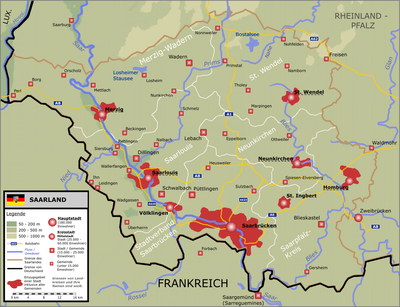
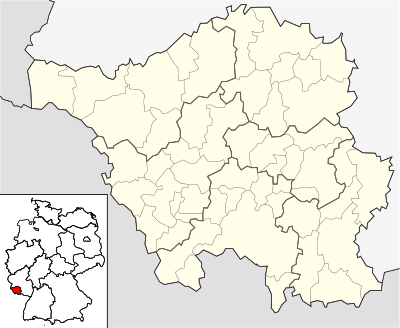
Saarland's geographical location in the southwest of Germany is not merely a cartographical detail; it is the fundamental determinant of its complex history and identity. Nestled against the French border, and also touching Rhineland-Palatinate and Luxembourg, Saarland has perpetually existed at a cultural and political nexus. This proximity has fostered a unique blend of influences, evident in its linguistic nuances and historical allegiances.
Historically, the region was a contested territory, its sovereignty a subject of intense Franco-German rivalry. The discovery and exploitation of its rich coal deposits in the 19th century amplified its strategic importance, making it a focal point for industrial development and, consequently, political maneuvering. The post-World War I era saw the establishment of the Territory of the Saar Basin under League of Nations mandate, administered by France.
This period was crucial in shaping a distinct Saarish identity, separate from both Germany and France, yet intrinsically linked to both. The plebiscite in 1935 returned it to Nazi Germany, only for it to be occupied by France again after World War II, leading to the Saar Protectorate. This protracted period of external administration and shifting allegiances underscores Saarland's unique journey in defining its place within the European landscape, culminating in its reintegration into the Federal Republic of Germany in 1957.
The Industrial Engine and its Metamorphosis
The economic narrative of Saarland is inextricably linked to its coal and steel industry. The abundant coal seams provided the raw material for a burgeoning heavy industrial sector that dominated the region from the 19th century onwards. This industrial might positioned Saarland as a vital contributor to Germany's economic strength, but also made it vulnerable to the cyclical nature of global heavy industry and the devastating impacts of war.
The post-war period presented a critical juncture: how to sustain an economy built on industries facing global decline? Saarland embarked on a remarkable process of economic transformation. While coal mining has largely ceased and steel production has consolidated, the region has strategically pivoted.
It has cultivated new strengths in sectors such as automotive manufacturing, mechanical engineering, and advanced materials. Furthermore, Saarland has become a significant hub for research and development, particularly in fields like computer science, nanotechnology, and artificial intelligence, exemplified by institutions like Saarland University and its associated research centers. This metamorphosis from a coal-and-steel heartland to a knowledge-based economy demonstrates remarkable resilience and foresight, adapting to global economic shifts while leveraging its historical industrial expertise.
A Distinctive Political and Cultural Identity
Saarland's political evolution is as unique as its economic trajectory. The experience of being a separate political entity, first as a territory and then as a protectorate, fostered a sense of distinct identity among its inhabitants. This identity is characterized by a pragmatic approach to governance and a deep-seated desire for stability, forged through decades of fluctuating sovereignty.
The decision to rejoin Germany in 1957 was a conscious choice by the Saarlanders to embrace their German heritage while retaining the lessons learned from their period of distinct administration. Culturally, Saarland exhibits a fascinating synthesis of German and French influences. While German is the official language, the proximity to France means that French vocabulary and cultural norms often permeate daily life.
This linguistic and cultural duality contributes to a rich tapestry of traditions, cuisine, and social customs. The state's capital, Saarbrücken, serves as the administrative and cultural heart, hosting significant institutions and events that celebrate this unique Franco-Germanic heritage. The people, known for their directness and strong sense of community, are proud custodians of this multifaceted identity.
The Educational Landscape
Saarland places a strong emphasis on education as a cornerstone for its future economic and social development. The educational system mirrors the broader German model, offering a comprehensive pathway from early childhood education through to higher learning and vocational training. At the tertiary level, Saarland University in Saarbrücken is a key institution, renowned for its pioneering work in computer science, artificial intelligence, and the natural sciences.
Its interdisciplinary approach and strong links to industry foster innovation and prepare graduates for a rapidly evolving job market. Beyond the university, the state hosts numerous research institutes, including those focused on cutting-edge fields like nanotechnology and materials science. This robust research infrastructure not only drives technological advancement but also attracts international talent and investment, positioning Saarland as a significant player in scientific innovation.
The commitment to vocational training also ensures a skilled workforce capable of supporting the state's diverse industrial base, from automotive engineering to advanced manufacturing. This integrated approach to education and research is vital for Saarland's ongoing transition towards a knowledge-based economy.
See also
Frequently Asked Questions
What is Saarland and where is it located?+
Why has Saarland been a special place in history?+
How did Saarland change its economy after coal and steel?+
When did Saarland become part of Germany again?+
What makes Saarland's culture unique?+
Based on content from Wikipedia · Licensed under CC BY-SA 4.0