

Russian Premier League
Images

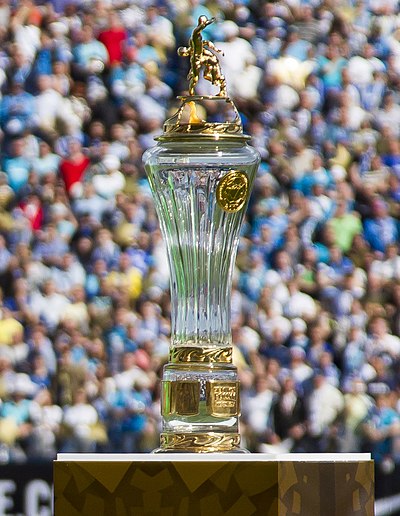
FC Zenit lift 2020-21 Russian Premier League




Geographical Scope and Competitive Landscape
The Russian Premier League (RPL) operates within the vast geographical expanse of Russia, the largest country in the world by land area. This immense territory presents unique logistical challenges for scheduling and travel, with clubs representing cities spread across multiple time zones and diverse climatic regions. The league comprises 16 teams, forming the apex of the Russian football league system.
The RPL's structure is designed to foster intense competition, with teams vying for the championship title, European competition berths, and crucially, survival in the top flight. The league's geographical diversity means that clubs often develop distinct playing styles influenced by their regional contexts and fan bases, contributing to the league's rich tapestry.
Historical Trajectory
The origins of the RPL can be traced back to the Soviet Top League, which was the primary football competition during the Soviet era. Following the dissolution of the Soviet Union in 1991, Russian football underwent a significant transformation. The Russian Football Championship served as the top division from 1992 to 2001.
In 2001, the league was reorganized and rebranded as the Russian Football Premier League (RFPL), officially commencing play in 2002. This marked a pivotal moment, establishing a more independent and commercially driven professional league. In 2018, a further rebranding occurred, leading to the current name, Russian Premier League.
More recently, for sponsorship purposes, it has been known as the Mir Russian Premier League, reflecting the ongoing commercialization and evolution of the league's identity.
Dominant Dynasties and Shifting Power Balances
The history of the Russian Premier League is marked by the dominance of a few select clubs. Zenit Saint Petersburg and Spartak Moscow are the most decorated teams, each having secured 10 league titles, establishing themselves as perennial powerhouses. CSKA Moscow follows with 6 titles, showcasing a period of significant success.
Lokomotiv Moscow has won the league 3 times, and Rubin Kazan has claimed the title twice. These clubs have not only achieved on-field success but have also built substantial fan bases and significant commercial operations. The competition among these established giants, alongside emerging contenders, creates a dynamic and compelling narrative for the league title race each season.
Competitive Structure
The Russian Premier League operates with a clear hierarchy and significant stakes for all participants. The primary objective for the top-ranked teams is to secure the championship title, which grants prestige and qualification for prestigious European club competitions like the UEFA Champions League and Europa League. However, the league also incorporates a crucial relegation system.
The bottom two teams are automatically demoted to the Russian First League, the second tier of Russian football. Furthermore, the teams finishing 13th and 14th in the RPL must compete in a two-legged playoff against the 3rd and 4th placed teams from the National League, respectively. This playoff system adds an element of high drama and uncertainty, as teams fight desperately to maintain their status in the elite division.
Sponsorship, International Context, and Future Outlook
The commercial aspect of the Russian Premier League is evident in its naming rights, with the league currently known as the Mir Russian Premier League due to sponsorship from the Mir payment system. This reflects the league's efforts to secure financial stability and growth through partnerships. Historically, the RPL has served as a pathway for Russian talent to reach international prominence and has also attracted foreign players.
However, recent geopolitical events have led to the suspension of Russian clubs' participation in UEFA competitions, significantly impacting the league's international standing and opportunities. This situation presents a considerable challenge for the RPL, requiring adaptation and strategic planning to navigate its future trajectory and maintain its competitive integrity.
See also
Frequently Asked Questions
What is the Russian Premier League?+
How many teams play in the Russian Premier League?+
Why do Russian Premier League teams travel so far?+
Which teams have won the most titles in the Russian Premier League?+
What happens to the teams that finish at the bottom of the Russian Premier League?+
Based on content from Wikipedia · Licensed under CC BY-SA 4.0