

Robot
Images
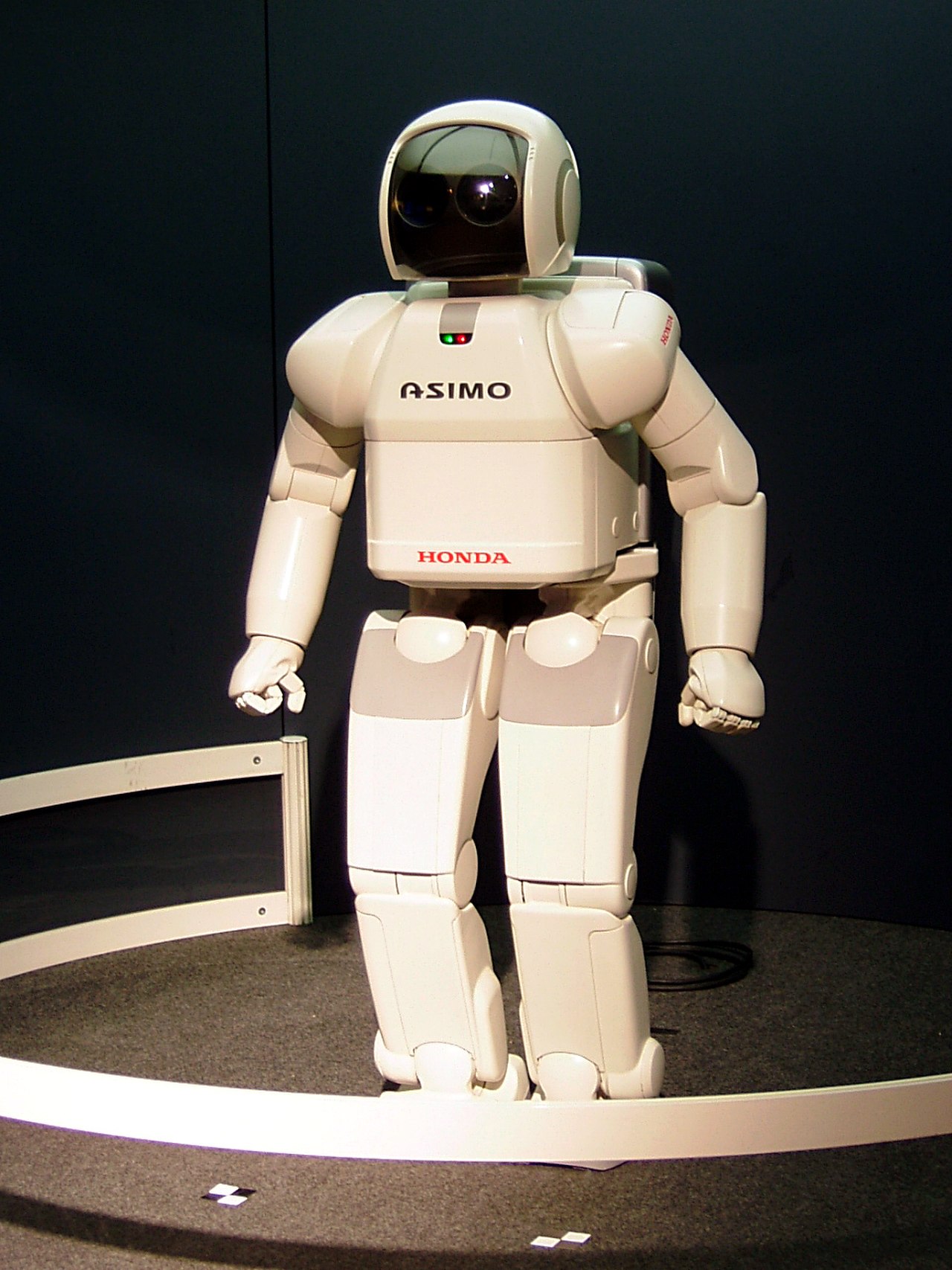
Robot



Defining the Modern Robot
A robot is fundamentally a programmable machine capable of carrying out a sequence of actions automatically. This definition distinguishes them from simple automated devices by emphasizing their programmability and adaptability. Modern robots often possess the ability to sense their environment through various sensors (optical, auditory, tactile, etc.), process this information using onboard computers or external control systems, and then execute physical actions via actuators like motors and servos.
The concept has evolved significantly from early mechanical automatons to sophisticated systems that can learn, adapt, and interact with complex, unstructured environments. The field of robotics is interdisciplinary, drawing from mechanical engineering, electrical engineering, computer science, and artificial intelligence.
From Industrial Arms to Intelligent Agents
The genesis of modern robotics can be traced to the mid-20th century, with the development of the first industrial robots in the 1950s and 1960s. George Devol and Joseph Engelberger are often credited with creating the first industrial robot, the Unimate, in 1961, which was used for tasks like welding and handling hot metal parts in factories. These early machines were primarily programmed for repetitive tasks and lacked sophisticated sensing capabilities.
Over the subsequent decades, advancements in computing power, sensor technology, and artificial intelligence have led to increasingly complex and versatile robots. This evolution has seen robots move from controlled factory settings into more dynamic environments, including space, underwater, healthcare, and domestic spaces, reflecting a continuous push towards greater autonomy and intelligence.
The Multifaceted Significance of Robotics
Robots play a crucial role in modern society by enhancing productivity, improving safety, and enabling new frontiers of exploration and research. In industrial settings, they drive efficiency, precision, and consistency, leading to higher quality goods and reduced manufacturing costs. Their ability to operate in hazardous conditions – such as in nuclear decommissioning, deep-sea exploration, or disaster response – mitigates risk to human life.
In healthcare, surgical robots allow for minimally invasive procedures with enhanced dexterity and visualization, leading to faster recovery times. Furthermore, robots are vital tools in scientific research, enabling the study of extreme environments like the surface of Mars or the deep ocean. As AI advances, robots are increasingly being developed for social interaction, elder care, and education, highlighting their expanding societal impact.
The Architecture of Automation
The operational framework of a robot involves a sophisticated interplay between its perception, cognition, and action subsystems. Perception is achieved through a suite of sensors, which might include cameras for vision, microphones for hearing, lidar or sonar for distance measurement, and tactile sensors for touch. This raw data is then fed into the robot's cognitive system, typically an onboard computer or a networked processing unit.
Here, algorithms process the sensor data, interpret the environment, make decisions based on pre-programmed logic or learned behaviors, and plan subsequent actions. Finally, the action subsystem, comprising motors, actuators, and effectors (like robotic arms or wheels), translates these decisions into physical movements, enabling the robot to interact with its surroundings and perform its designated tasks. This feedback loop of sensing, thinking, and acting is fundamental to robotic operation.
Robotic Applications
The applications of robots are remarkably diverse and continue to expand. In manufacturing, robotic arms are ubiquitous in automotive plants for welding, painting, and assembly, while collaborative robots ('cobots') work alongside humans on shared tasks. Space exploration relies heavily on robotic probes and rovers, such as NASA's Mars rovers, to gather data from distant celestial bodies.
In medicine, surgical robots like the da Vinci system enhance surgeon precision for complex procedures. Logistics and warehousing utilize autonomous mobile robots (AMRs) to sort and transport goods. Consumer robots, including robotic vacuum cleaners and lawnmowers, are becoming increasingly common in homes. Emerging applications include drones for delivery and surveillance, robots for agriculture, and humanoid robots designed for complex human interaction and assistance.
Go deeper
Frequently Asked Questions
What is a robot?+
How does a robot learn and adapt?+
Where do robots work?+
Why are robots useful to people?+
How did the first robot come about?+
Based on content from Wikipedia · Licensed under CC BY-SA 4.0