

Brain
Images
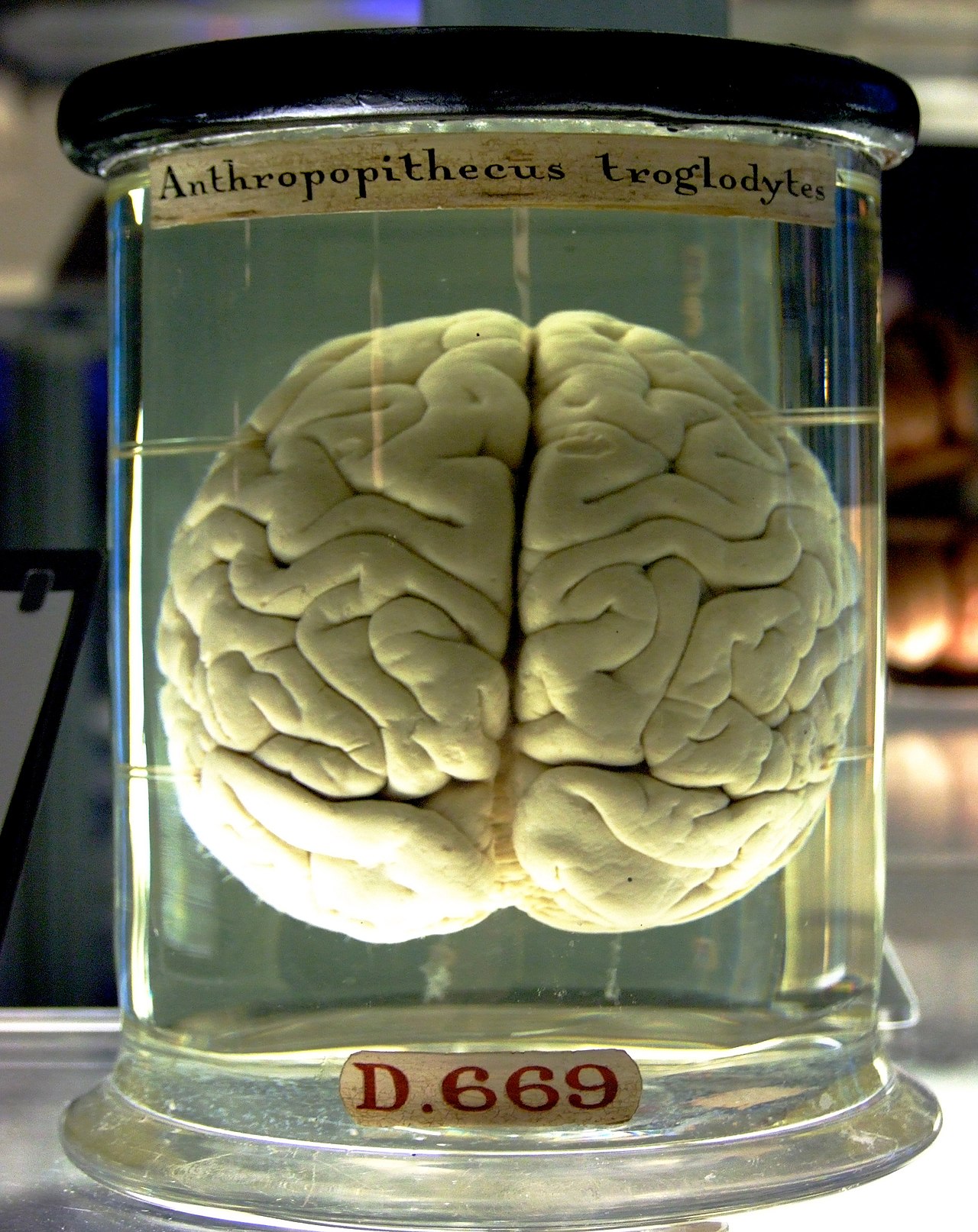
Brain
The Evolutionary Trajectory of the Encephalon
The human brain, or encephalon, represents the pinnacle of a long evolutionary process, originating from simple neural networks in early multicellular organisms. These rudimentary systems allowed for basic environmental responses, gradually evolving into more complex structures capable of sophisticated processing. Key milestones include the development of a centralized nervous system and the subsequent differentiation into distinct brain regions.
The vertebrate brain, for instance, saw the emergence of the forebrain, midbrain, and hindbrain, each with specialized roles. In primates, and particularly in humans, the cerebrum, especially the neocortex, underwent dramatic expansion, facilitating advanced cognitive functions such as abstract reasoning, language, and complex social behaviors. This evolutionary journey is not merely about size but also about intricate connectivity and specialized neural architecture, enabling unparalleled adaptability and problem-solving capabilities.
The Indispensable Role of the Brain in Human Function
The brain serves as the central command for virtually all bodily functions, from autonomic processes like respiration and circulation to voluntary actions and abstract thought. It is the substrate of consciousness, personality, memory, and emotion, making it fundamental to our identity and experience of the world. Damage to specific brain regions can result in profound deficits, highlighting the critical importance of each component.
The brain's ability to integrate sensory input, generate motor output, and engage in complex cognitive tasks is essential for survival and thriving. Furthermore, its plasticity allows it to adapt and reorganize in response to experience, injury, or learning, a remarkable capacity that underpins lifelong development and recovery.
Mechanisms of Neural Computation and Information Processing
The brain's functionality relies on the complex interplay of billions of neurons, interconnected via trillions of synapses. Information is processed through electrochemical signaling. Neurons receive input signals through dendrites, integrate these signals in the cell body, and if a threshold is reached, generate an action potential that travels down the axon. At the synapse, this electrical signal is converted into a chemical signal, with neurotransmitters released into the synaptic cleft to bind to receptors on the postsynaptic neuron, thereby transmitting the information.
Different neurotransmitters have excitatory or inhibitory effects, modulating neural activity. This intricate network allows for parallel processing of vast amounts of data, enabling rapid decision-making and complex computations that are far beyond the capabilities of current artificial intelligence systems.
The Brain's Historical Development and Modern Relevance
The study of the brain has a long and evolving history, from ancient philosophical inquiries to modern neuroscience. Early understandings were often based on speculation and limited anatomical observation. The advent of tools like the microscope, electrophysiology, and neuroimaging techniques (fMRI, EEG) has revolutionized our comprehension.
Today, neuroscience is a vibrant field, exploring everything from the molecular mechanisms of memory to the neural basis of mental disorders. Understanding the brain is crucial for developing treatments for neurological and psychiatric conditions, enhancing learning and cognitive performance, and even for designing more sophisticated artificial intelligence. The ongoing research into brain function continues to push the boundaries of our knowledge, offering profound insights into what it means to be human.
The Brain's Structure
The human brain is broadly divided into three main parts: the cerebrum, the cerebellum, and the brainstem. The cerebrum, the largest part, is responsible for higher-level cognitive functions and is divided into two hemispheres, each with four lobes: frontal, parietal, temporal, and occipital. The frontal lobe is crucial for planning, decision-making, and personality; the parietal lobe processes sensory information like touch and temperature; the temporal lobe is involved in memory and auditory processing; and the occipital lobe handles visual information.
The cerebellum, located at the back of the brain, coordinates movement, balance, and posture. The brainstem connects the cerebrum and cerebellum to the spinal cord, controlling vital autonomic functions such as breathing, heart rate, and sleep-wake cycles. This hierarchical and interconnected structure allows for seamless integration of diverse functions.
Go deeper
Frequently Asked Questions
What is the brain and why is it important?+
How did the brain evolve over time?+
How do neurons send messages in the brain?+
Why can the brain change after learning or injury?+
What tools do scientists use to study the brain?+
Based on content from Wikipedia · Licensed under CC BY-SA 4.0