

Robert Schumann
Images
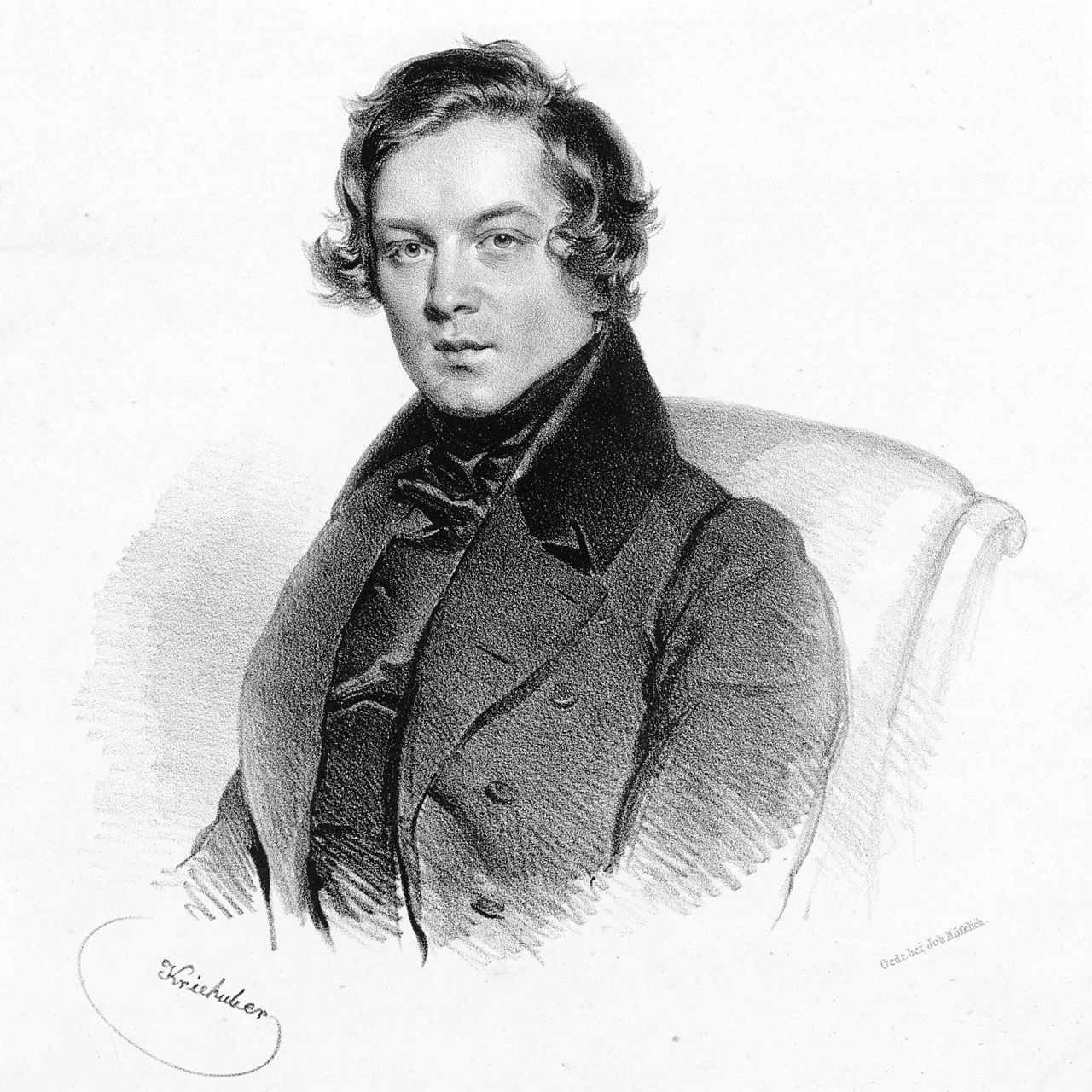
Robert Schumann
The Genesis of a Romantic Mastermind
Born in Zwickau, Saxony, in 1810, Robert Schumann emerged from a middle-class family with no prior musical lineage, yet he became a towering figure of the early Romantic era. Initially drawn to law and literature, his profound musical inclinations soon overshadowed academic pursuits. His early tutelage under Friedrich Wieck ignited dreams of a virtuoso piano career, but a debilitating hand injury irrevocably shifted his focus towards composition.
This pivotal moment channeled his creative energy into a prolific output of piano miniatures, including seminal works like 'Carnaval,' 'Davidsbündlertänze,' 'Fantasiestücke,' 'Kreisleriana,' and the evocative 'Kinderszenen' (Scenes from Childhood). These pieces, characterized by their intimate scope, emotional depth, and innovative harmonic language, established Schumann as a distinctive voice in German music, embodying the era's spirit of subjective experience and poetic expression.
The Florestan-Eusebius Dichotomy
A defining characteristic of Schumann's compositional and critical output was his exploration of contrasting personality facets, famously personified as Florestan and Eusebius. Florestan represented his impetuous, passionate, and forward-looking self, while Eusebius embodied his gentle, introspective, and lyrical nature. This internal dialogue wasn't merely a theoretical construct; it permeated his music, creating a dynamic tension and richness.
He employed these alter egos not only in his compositions, often weaving their distinct musical characters into single works, but also in his influential writings for the 'Neue Zeitschrift für Musik' (New Musical Journal), which he co-founded in 1834 and edited for a decade. Through these writings, he championed emerging talents and articulated his aesthetic ideals, distinguishing between musical approaches that mirrored his own complex psyche.
Clara, Compositional Cycles, and Orchestral Ambitions
The year 1840 marked a profound personal and creative turning point for Schumann with his marriage to Clara Wieck, a celebrated pianist and composer in her own right. Despite significant opposition from her father, their union fostered an intensely creative period. The immediate post-nuptial years saw Schumann composing prolifically in vocal music, producing masterpieces such as the song cycles 'Frauenliebe und Leben' and 'Dichterliebe,' which remain cornerstones of the lied repertoire.
By 1841, his ambitions expanded to orchestral writing, culminating in his first symphony. The subsequent year was dedicated to chamber music, yielding three string quartets, a Piano Quintet, and a Piano Quartet, showcasing his mastery across diverse genres. This period, however, was also punctuated by bouts of severe mental and physical ill health, which would continue to challenge him throughout his life.
Later Career, Mental Health Struggles, and Enduring Influence
Seeking stability, Schumann accepted the position of music director in Düsseldorf in 1850. However, his inherent shyness and deteriorating mental health proved formidable obstacles in this public role, leading to his resignation after three years. A significant encounter occurred in 1853 when the Schumanns met the young Johannes Brahms, whom Robert enthusiastically championed in the press.
Tragically, Schumann's mental condition worsened drastically the following year, culminating in a suicide attempt by jumping into the Rhine River. Rescued, he spent his final two years in a private sanatorium near Bonn, passing away at the age of 46. While his later works, including the opera 'Genoveva,' received less acclaim during his lifetime, and a perception persisted that his early music was superior, contemporary scholarship increasingly recognizes the depth and innovation across his entire oeuvre.
Schumann's profound influence is undeniable, shaping the trajectory of German music and inspiring subsequent generations of composers, including Mahler, Strauss, Schoenberg, Bizet, Debussy, and Tchaikovsky, solidifying his legacy as a central figure of musical Romanticism.
Go deeper
Based on content from Wikipedia · Licensed under CC BY-SA 4.0