

Reuters: Your Window to the World!
Images
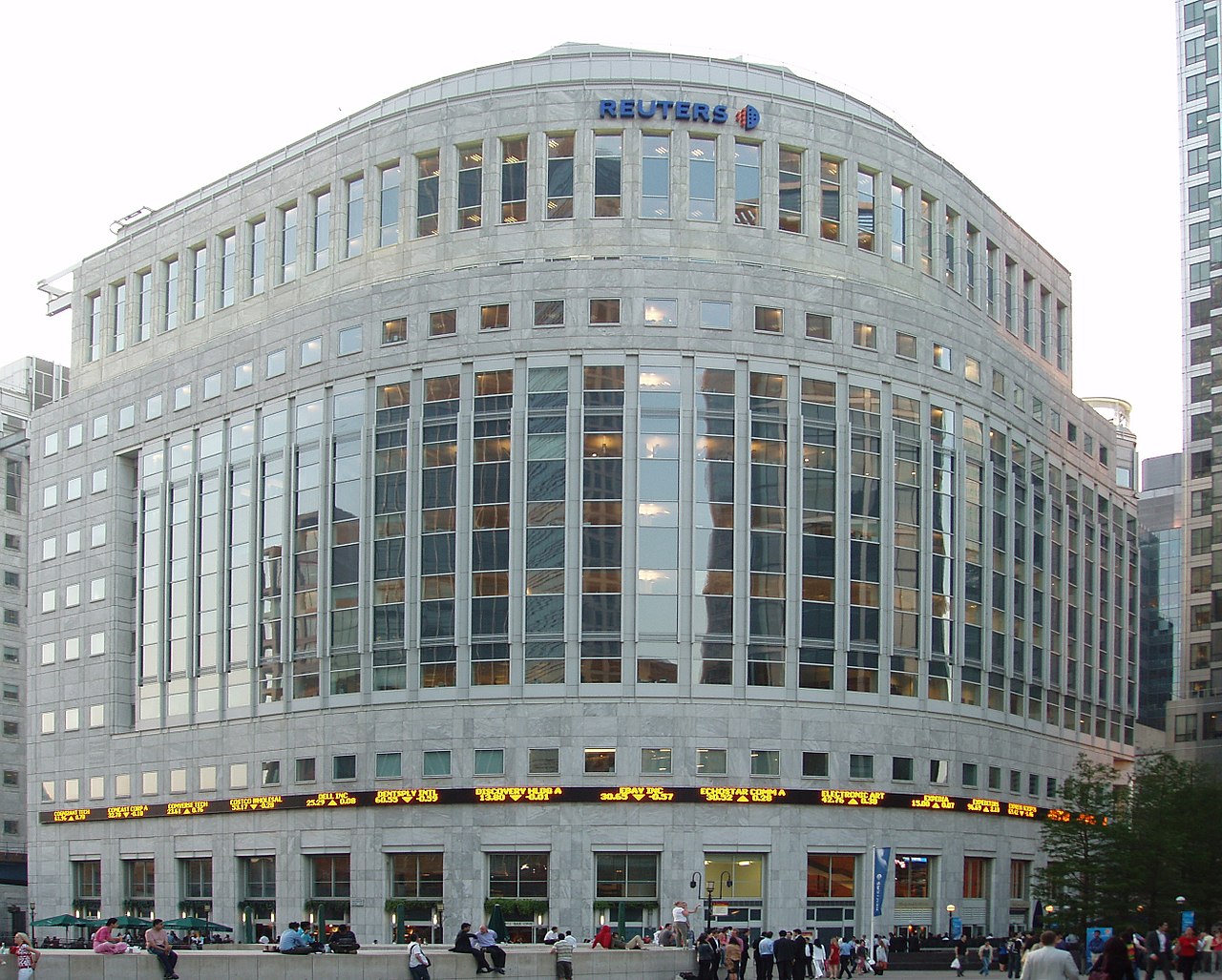
Reuters-Building-30SC


From Pigeon Post to Digital Streams
The story of Reuters begins in 1851, founded by the enterprising Paul Reuter in London. In an era predating instantaneous global communication, Reuter's innovation lay in leveraging emerging technologies to accelerate the flow of information, particularly financial data. Initially, he utilized carrier pigeons and later the electric telegraph, a revolutionary leap that allowed for near real-time transmission of news and market prices across continents.
This focus on speed and accuracy in financial reporting quickly established Reuters as a vital conduit for businesses and governments. The agency's expansion throughout the 19th and 20th centuries saw it evolve into a comprehensive news provider, covering political, social, and cultural events alongside its financial roots. The pivotal acquisition by Canada's Thomson Corporation in 2008, creating Thomson Reuters, marked a new chapter, integrating vast data services with traditional news gathering and solidifying its position as a dominant force in the information industry.
The Indispensable Role of Reuters in the Modern World
Reuters' significance extends far beyond simply reporting the news; it is a fundamental pillar of the global information ecosystem. As one of the world's largest and most respected news agencies, Reuters serves as a primary source for an immense array of media outlets, from major international broadcasters to niche online publications. Its output is critical for journalists worldwide, providing them with verified facts, images, and context that form the backbone of countless news stories.
The sheer volume of its readership, evidenced by over 105 million monthly visitors to its website in December 2024, underscores its pervasive influence. In an age often characterized by misinformation, Reuters' commitment to journalistic standards, impartiality, and rapid dissemination of verified information is more crucial than ever, enabling informed public discourse and decision-making on a global scale.
Operational Scale and Global Intelligence Network
The operational scale of Reuters is staggering, reflecting its commitment to comprehensive global coverage. Employing approximately 2,500 journalists and 600 photojournalists across roughly 200 locations worldwide, the agency possesses an unparalleled network for gathering intelligence. This extensive presence allows Reuters to report on events as they unfold, providing immediate and on-the-ground perspectives from diverse regions.
The ability to produce content in 16 different languages further amplifies its reach, breaking down linguistic barriers and making vital information accessible to a broader international audience. This vast infrastructure is not merely about quantity; it is about the quality and depth of reporting that comes from having dedicated professionals in virtually every significant news-generating locale, ensuring a nuanced and far-reaching understanding of global affairs.
The Mechanics of News Production and Distribution
The process by which Reuters generates and distributes news is a marvel of modern logistical and journalistic coordination. It begins with a decentralized network of reporters and photographers who are tasked with identifying, verifying, and documenting events. These individuals operate under strict editorial guidelines emphasizing accuracy, impartiality, and speed.
The collected information, whether text, images, or video, is then funneled through a sophisticated editorial process. Fact-checking, legal review, and translation are critical stages before content is finalized. Subsequently, this meticulously prepared news is disseminated rapidly through proprietary distribution systems and feeds to subscribing media organizations globally. The sheer volume of content produced daily, coupled with the imperative for real-time delivery, necessitates advanced technological infrastructure and highly skilled personnel, making Reuters a prime example of efficient, large-scale information management.
Impact and Future Trajectories
Reuters' impact is deeply embedded in the fabric of global communication. It has consistently shaped how events are perceived and understood, influencing public opinion, financial markets, and political discourse. Its historical role in providing timely financial data has been instrumental in the functioning of global economies.
Looking forward, Reuters, as part of Thomson Reuters, continues to navigate the evolving media landscape. The challenges of digital disruption, the rise of social media as a news source, and the ongoing fight against misinformation are constant considerations. However, its established reputation for reliability and its extensive global network position it to remain a critical player.
The agency's adaptability, demonstrated through its historical embrace of new technologies, suggests a continued capacity to evolve and serve its vital function in providing credible information in an increasingly complex world.
Go deeper
Frequently Asked Questions
What is Reuters and why is it important?+
Who started Reuters and when?+
How did Reuters first send news before computers?+
How many people work for Reuters and where are they?+
How many languages does Reuters use to share news?+
Based on content from Wikipedia · Licensed under CC BY-SA 4.0