

Reno, Nevada
Images

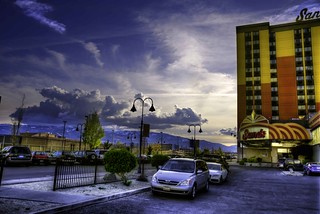
DSC223870, Silver Legacy Casino Hotel, Reno, Nevada, USA



Geographic Setting and Environmental Context
Reno is strategically situated in the northwestern corner of Nevada, straddling the border with California. Its location within the high desert foothills of the Sierra Nevada, specifically in the Truckee River valley, dictates its environmental characteristics. The city experiences a semi-arid climate, marked by significant diurnal temperature variations and distinct seasonal shifts.
Summers are typically hot and dry, while winters are cold with substantial snowfall, influenced by its elevation of approximately 4,400 feet (1,340 m). The Truckee River, a vital water source, flows through the city, shaping its landscape and historical development. Its proximity to Lake Tahoe, a renowned freshwater lake, positions Reno as a key access point for tourism and outdoor recreation in the broader Sierra Nevada region.
This geographical setting presents both opportunities, such as abundant sunshine and recreational access, and challenges, including water management and susceptibility to drought.
Historical Trajectory
Reno's origins are tied to the railroad, established as a stop along the transcontinental railroad route. It was named in honor of Union Major General Jesse L. Reno, who died in the Civil War.
However, its most prominent historical identity emerged in the mid-20th century when Nevada's liberal divorce laws transformed Reno into a national destination for those seeking quick dissolutions of marriage. This era, often referred to as the 'divorce mill' period, significantly boosted Reno's economy and cemented its reputation, attracting a transient population and fostering a unique cultural milieu characterized by entertainment and hospitality.
This period laid the groundwork for its subsequent development as a major tourist and gambling center, a legacy that continues to influence its identity, even as the city strives for economic diversification.
Demographics and the 'Biggest Little City' Identity
Reno's self-proclaimed title, 'The Biggest Little City in the World,' encapsulates its paradoxical nature: a city of substantial size and activity that retains a sense of community and accessibility. As of the 2020 census, Reno's population was 264,165, making it the third-most populous city in Nevada and the 78th most populous in the United States. It serves as the county seat of Washoe County and is the core of the Reno-Sparks metropolitan area, often referred to as Greater Reno.
This metropolitan region extends across multiple counties and even into California, highlighting Reno's role as a regional hub. The population is diverse, reflecting its history as a destination and its ongoing economic development. Residents benefit from a lifestyle that blends urban amenities with unparalleled access to outdoor pursuits in the surrounding Sierra Nevada.
Economic Landscape
Historically, Reno's economy was heavily reliant on casino gambling and tourism, a direct outgrowth of its past as a divorce destination. While these industries remain significant, Reno has actively pursued economic diversification to build a more resilient and robust financial base. The city has become an increasingly attractive location for technology companies, logistics and distribution centers, and advanced manufacturing, benefiting from Nevada's business-friendly environment, including favorable tax policies.
The presence of the University of Nevada, Reno, also fuels innovation and provides a skilled workforce, contributing to the growth of sectors like biosciences and engineering. This strategic shift aims to reduce dependence on cyclical industries and foster sustainable long-term economic growth.
Educational and Cultural Institutions
The University of Nevada, Reno (UNR), stands as a pivotal institution in the city, serving as the flagship campus of the University of Nevada System and the state's second-largest university by enrollment. UNR is a comprehensive research university offering a wide array of undergraduate and graduate programs across various disciplines, including engineering, business, health sciences, and liberal arts. Its research endeavors contribute significantly to scientific advancement and economic development within the region.
Beyond higher education, Reno boasts a growing cultural scene, with museums, performing arts venues, and a vibrant arts community. The city's educational infrastructure, anchored by UNR, fosters a culture of learning, innovation, and intellectual engagement, making it a significant center for knowledge creation and dissemination in the Intermountain West.
See also
Frequently Asked Questions
What is Reno called the "Biggest Little City in the World"?+
Why did people come to Reno for divorces in the past?+
Where is Reno located and what natural features are nearby?+
How does the climate in Reno change between summer and winter?+
What kinds of jobs are people doing in Reno now besides gambling?+
Based on content from Wikipedia · Licensed under CC BY-SA 4.0