

René Coty
Images
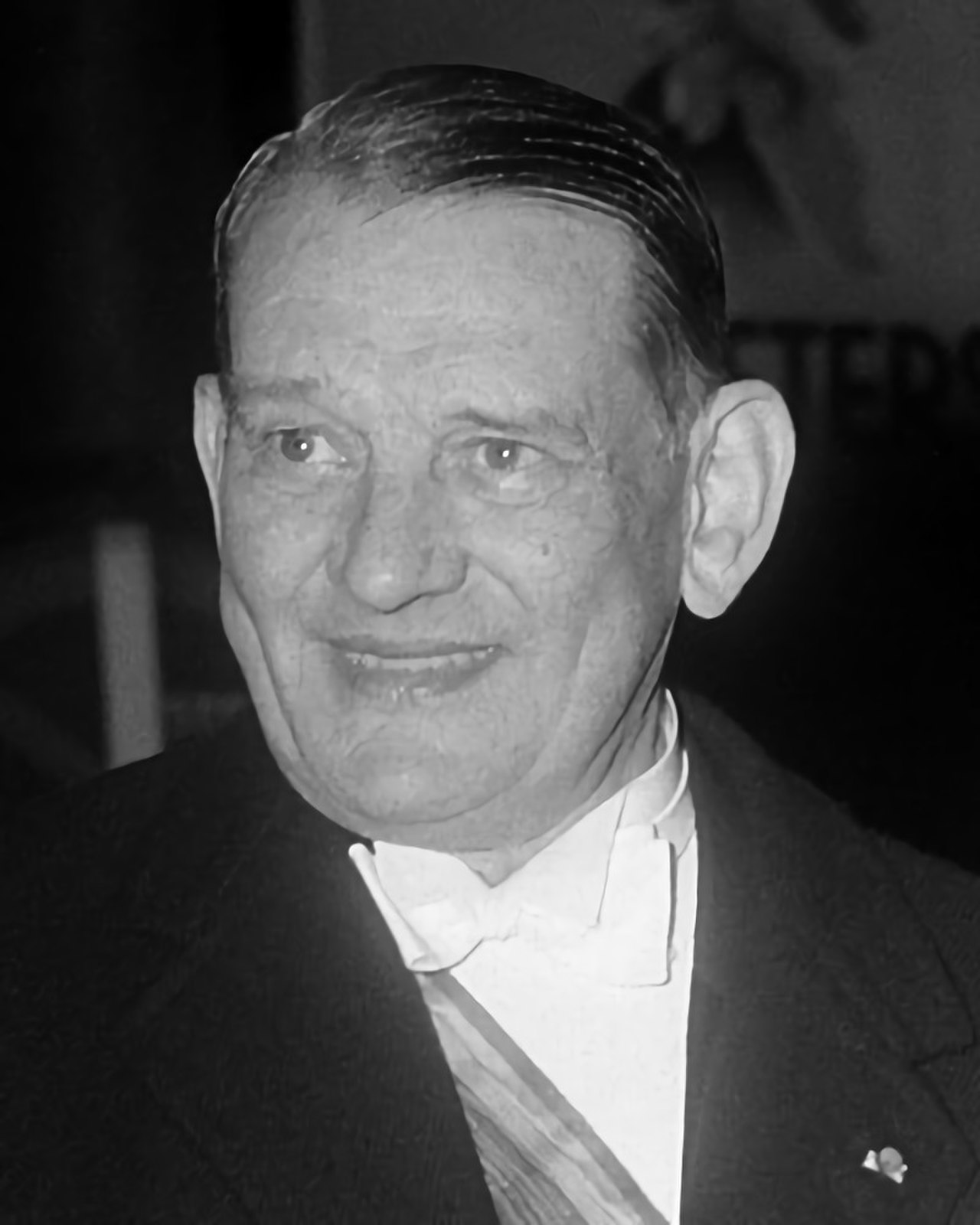
René Coty - 1954


The Presidency of René Coty
Gustave Jules René Coty (1882–1962) occupied the office of President of France from December 23, 1954, to January 8, 1959. His tenure is historically significant not just for his actions within the Fourth Republic, but for being its final occupant. Born in Le Havre, Coty had a long career in law and politics before ascending to the presidency.
The Fourth Republic, established in 1946, was characterized by a strong parliamentary system and frequent government changes, leading to political instability. Coty, as president, was largely a ceremonial figurehead, with executive power vested in the Prime Minister and the Council of Ministers. His election itself was a protracted affair, highlighting the political divisions of the time.
He ultimately secured the presidency after multiple ballots, demonstrating the challenges inherent in the Fourth Republic's political landscape. His presidency thus began under a cloud of political maneuvering, setting the stage for the eventual dissolution of the republic he presided over.
Navigating the Twilight of the Fourth Republic
René Coty's presidency coincided with the latter, increasingly unstable years of the Fourth French Republic. The period was marked by significant decolonization struggles, most notably the Algerian War, which deeply divided French society and politics. The constant shifts in government under the Fourth Republic made it difficult to implement consistent long-term policies.
Coty, as president, was tasked with maintaining the stability of the state amidst this turmoil. His role became particularly crucial in 1958, when the Algerian crisis threatened to plunge France into civil war. It was during this crisis that Charles de Gaulle was recalled to power, leading to the establishment of the Fifth Republic.
Coty played a pivotal role in this transition, advocating for a new constitution that would grant the presidency more executive authority, a system that de Gaulle would embody.
The Significance of Being the Last
The historical importance of René Coty's presidency is intrinsically linked to his status as the final president of the Fourth Republic. He was the figurehead who presided over the republic's demise and the birth of the Fifth Republic. This transition was not merely a change in leadership but a fundamental restructuring of French governance.
The Fourth Republic's perceived weaknesses, particularly its inability to effectively manage foreign policy and maintain stable governments, led to widespread calls for reform. Coty, by stepping down and facilitating the rise of de Gaulle and the new constitution, effectively closed one chapter of French history and opened another. His legacy is therefore one of transition, a leader who, perhaps unintentionally, became the symbol of an era's end and the precursor to a new political order.
From President to Elder Statesman
After his presidency concluded on January 8, 1959, René Coty retired from active political life. He had served his term as the last president of the Fourth Republic, a period marked by significant challenges and a profound constitutional shift. His departure from office coincided with the full establishment of the Fifth Republic under Charles de Gaulle, which introduced a more powerful presidency.
Coty's post-presidency was spent in relative quietude, a stark contrast to the intense political pressures he had faced. He passed away in 1962, leaving behind a legacy as a president who, while perhaps not as dominant as some others, played a crucial role in navigating France through a period of immense change and constitutional evolution. His tenure remains a key point of study for understanding the dynamics of French political history.
Contextualizing Coty's Role in French Governance
To fully appreciate René Coty's presidency, it's essential to understand the constitutional framework of the Fourth French Republic. Unlike the current Fifth Republic, where the President holds significant executive power, the Fourth Republic's President was primarily a symbolic head of state. The real power resided with the President of the Council of Ministers (Prime Minister) and the National Assembly.
This division of power often led to governmental instability, with frequent votes of no confidence and cabinet reshuffles. Coty's role, therefore, was more about representing the nation and providing a sense of continuity rather than actively directing policy. His influence was often exercised through consultation and moral suasion.
The crises of the late 1950s, particularly the Algerian War, exposed the limitations of this system, ultimately paving the way for de Gaulle's return and the creation of a more presidential system in the Fifth Republic, a system Coty helped usher in.
See also
Frequently Asked Questions
Who was René Coty?+
What did René Coty do as president?+
Why was René Coty's presidency important?+
What happened in France while Coty was president?+
What did René Coty do after leaving office?+
Based on content from Wikipedia · Licensed under CC BY-SA 4.0