

Rajiv Gandhi
Images

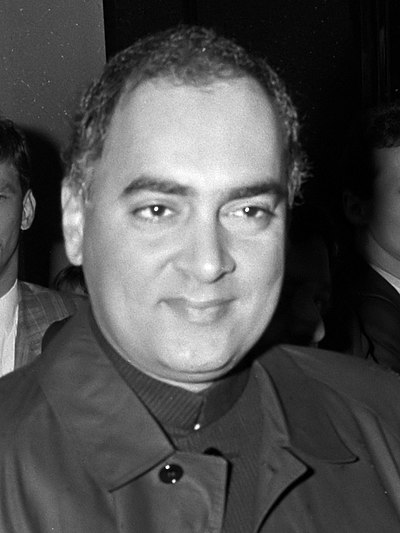
Rajiv Gandhi meeting Russian Hare Krishna devotees in New Delhi 1989




An Unforeseen Destiny
Rajiv Gandhi's life trajectory was far from the conventional path of a political scion. Born on August 20, 1944, in Bombay, he hailed from the influential Nehru-Gandhi dynasty, a family synonymous with India's independence movement and early governance. His maternal grandfather, Jawaharlal Nehru, was India's first Prime Minister, and his mother, Indira Gandhi, would later hold the office.
Despite this political lineage, Rajiv initially eschewed public life. He pursued a career as a professional pilot for Indian Airlines, marrying Sonia Maino in 1968 and embracing a relatively private existence with their children, Rahul and Priyanka. This period of apolitical detachment lasted through the 1970s, even as his mother and brother, Sanjay Gandhi, were deeply entrenched in national politics.
The Catalyst of Tragedy
The pivotal moment that irrevocably altered Rajiv Gandhi's life was the tragic death of his younger brother, Sanjay Gandhi, in a plane crash in 1980. This loss created a void in the political landscape and propelled Rajiv into the public sphere. At his mother's behest, he reluctantly entered politics, winning Sanjay's former parliamentary seat of Amethi in 1981.
He was quickly integrated into the Congress party's leadership, serving as its general secretary and playing a crucial role in organizing the 1982 Asian Games. This rapid ascent marked his transition from a private citizen to a key political figure, groomed for leadership under his mother's guidance.
Assuming the Mantle
On October 31, 1984, India was plunged into mourning by the assassination of Prime Minister Indira Gandhi by two of her Sikh bodyguards, a direct consequence of Operation Blue Star. Later that same day, Rajiv Gandhi was sworn in as Prime Minister, becoming the youngest leader in India's history at the age of 40. His premiership commenced amidst immense turmoil, including widespread anti-Sikh riots in Delhi following his mother's murder.
Despite the challenging circumstances, the Congress party secured a landslide victory in the subsequent general election, granting Gandhi a significant mandate. His tenure, however, was soon embroiled in complex issues, including the devastating Bhopal gas tragedy and the controversial Bofors scandal, alongside significant legal cases like Mohd. Ahmed Khan v.
Shah Bano Begum.
Modernization and Foreign Policy
Rajiv Gandhi's vision for India was deeply rooted in modernization and technological advancement. He is widely credited with ushering in a new era of information technology and telecommunications in India. His government introduced policies aimed at liberalizing the economy and promoting computer literacy and the development of the software industry, laying the groundwork for India's future IT boom.
In foreign policy, Gandhi took decisive action, notably reversing a coup in the Maldives in 1988. He also intervened in Sri Lanka by sending peacekeeping troops in 1987 to quell ethnic conflict, a move that unfortunately led to an open confrontation with the Liberation Tigers of Tamil Eelam (LTTE).
The End of a Political Journey and a Lasting Legacy
Following his party's defeat in the 1989 general election, Rajiv Gandhi continued to serve as the President of the Congress party. His political career was tragically cut short on May 21, 1991, when he was assassinated by a suicide bomber from the LTTE while campaigning for the upcoming elections. The assassination sent shockwaves across India and the world.
In recognition of his service and contributions to the nation, the Indian government posthumously awarded him the Bharat Ratna, India's highest civilian honor, in 1991. Rajiv Gandhi's legacy is multifaceted, encompassing his role as a modernizer of India, a leader who grappled with profound national and international challenges, and a figure whose life and death left an indelible mark on the country's political history.
See also
Frequently Asked Questions
Who was Rajiv Gandhi?+
How did Rajiv Gandhi become a politician?+
When did Rajiv Gandhi become Prime Minister?+
What did Rajiv Gandhi do for technology in India?+
How did Rajiv Gandhi help other countries?+
Based on content from Wikipedia · Licensed under CC BY-SA 4.0