

The Netherlands' Awesome Provinces!
Images

Provinces of the Netherlands - Limburg


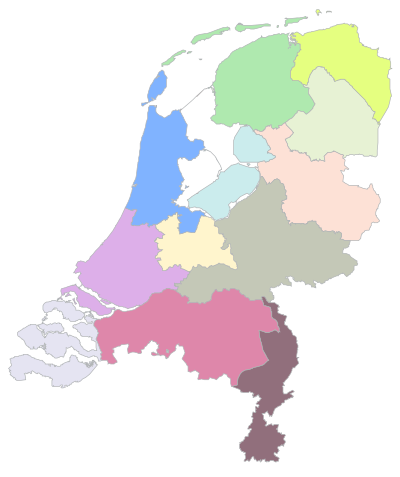


The Provincial Framework
The Netherlands operates with a multi-layered governance system, where the twelve provinces serve as crucial administrative entities situated between the national government and local municipalities. Each province is headed by a King's Commissioner, appointed by the Crown, and a provincial council elected by the citizens. This structure empowers provinces to manage regional affairs, including spatial planning, environmental policy, public transportation, and economic development initiatives.
While the national government sets overarching policies, provinces have considerable autonomy in implementing them and addressing specific regional needs. This decentralization allows for tailored governance, responding to the diverse geographical and socio-economic realities across the country. For instance, coastal provinces like Zeeland might focus heavily on water management and flood defense, while inland provinces like Gelderland might prioritize agricultural development and nature conservation.
The Association of Provinces of the Netherlands (IPO) acts as a collective voice, advocating for provincial interests in national policy debates and fostering inter-provincial cooperation on shared challenges.
Historical Genesis
The current provincial structure of the Netherlands is a product of centuries of historical evolution, tracing its origins back to the feudal era. Initially, the territory was divided into various lordships, counties, and duchies, each with its own distinct identity and governance. The formation of the Dutch Republic in the late 16th century marked a pivotal moment, as these semi-autonomous regions united for mutual defense and economic prosperity.
This union led to the gradual standardization of administrative structures, though regional differences persisted. The Batavian Republic and subsequent French occupation in the late 18th and early 19th centuries further reshaped administrative boundaries. The modern concept of provinces solidified in the mid-19th century, establishing a more uniform system that balances national unity with regional representation.
This historical legacy continues to influence provincial identities, with many areas retaining strong cultural ties to their pre-republican origins, evident in regional languages, traditions, and even political leanings. Understanding this historical trajectory is key to appreciating the nuanced role provinces play today.
Socio-Cultural Tapestry
The twelve provinces of the Netherlands, while united under one nation, exhibit a rich tapestry of socio-cultural diversity. This variation is most apparent in language, where Dutch is the official language, but regional languages and dialects, such as West Frisian in Friesland, hold significant cultural importance and are protected by law. This linguistic heritage reflects the historical autonomy and distinct identities of different regions.
Daily life and cultural practices also vary considerably. Densely populated provinces like South Holland are characterized by urban dynamism, technological innovation, and a fast-paced lifestyle, driven by major economic centers. In contrast, provinces like Drenthe offer a more pastoral setting, with a strong emphasis on agriculture, nature, and a slower pace of life.
These differences are not merely superficial; they shape local traditions, community structures, and even political attitudes. Festivals, local cuisine, and historical landmarks further accentuate the unique cultural footprint of each province, making the Netherlands a fascinating study in regional identity within a cohesive national framework.
Economic Engines
The economic landscape of the Netherlands is a mosaic of provincial strengths and specializations. Provinces like South Holland, with its major port of Rotterdam and thriving financial sector, are critical hubs for international trade, logistics, and advanced manufacturing. North Brabant is a leader in high-tech industries and design, while Gelderland leverages its agricultural heartland and growing logistics sector. Flevoland, largely reclaimed from the sea, is a prime example of innovative land use, supporting significant agricultural production.
The economic activities within each province are often influenced by their geographical location, natural resources, and historical development. For example, coastal provinces are heavily involved in maritime industries and water management technologies, while provinces with extensive natural areas focus on tourism and sustainable land use. The provincial governments play a vital role in fostering economic growth through infrastructure development, support for innovation, and attracting investment.
The IPO facilitates collaboration among provinces to address cross-border economic challenges and opportunities, ensuring a balanced and robust national economy.
Education and Provincial Governance
While the Ministry of Education, Culture and Science sets the national curriculum and standards for primary, secondary, and higher education in the Netherlands, provinces play a supporting and regulatory role. Provincial governments are responsible for aspects like the provision and maintenance of secondary vocational education (MBO) facilities, and they often collaborate with educational institutions on regional development and workforce training initiatives.
Furthermore, provincial policies on spatial planning and infrastructure can indirectly impact educational access and opportunities. For instance, investments in public transportation can make it easier for students to reach schools and universities across provincial borders. The provincial administration itself, employing around 10,000 people, also offers employment opportunities and contributes to the local economy, indirectly supporting educational institutions through tax revenues.
The emphasis on regional development by provinces also encourages educational programs tailored to local economic needs, ensuring that graduates possess skills relevant to the provincial job market, thereby fostering a symbiotic relationship between education and regional economic vitality.
See also
Frequently Asked Questions
What is a province in the Netherlands?+
Why do some provinces focus on water and others on farms?+
How do provinces help people in their area?+
Who talks together about province problems?+
Are there different languages in the provinces?+
Based on content from Wikipedia · Licensed under CC BY-SA 4.0