

Pouligny-Saint-Pierre Cheese: A Pyramid of Deliciousness!
Images

Pouligny-saint-pierre (fromage) 09

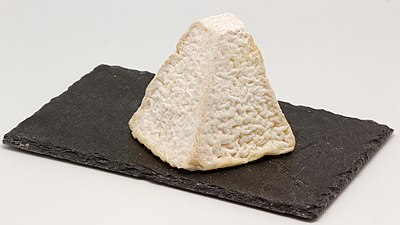


The Architectural Elegance of Pouligny-Saint-Pierre
Pouligny-Saint-Pierre cheese stands as a testament to the sophisticated artistry of French cheesemaking, particularly within the realm of goat cheeses. Hailing from the Berry region, specifically the Indre department, this cheese is instantly recognizable by its distinctive truncated pyramid shape, a design that is both aesthetically striking and functionally significant in its production.
It is crafted exclusively from raw, unpasteurized goat's milk, primarily from the Alpine and Saanen breeds, which are integral to the local agricultural landscape. The specific flora of the Berry region, characterized by its diverse grasses and wild herbs, directly influences the milk's complex flavor profile, contributing subtle herbaceous and floral notes to the finished cheese. The texture is typically soft, creamy, and slightly chalky, evolving into a more crumbly consistency with extended aging.
Its flavor is delicate yet pronounced, offering a balanced tanginess and a lingering, refined finish that distinguishes it from mass-produced alternatives. This intricate sensory experience is a direct result of the unique terroir and the meticulous adherence to traditional cheesemaking practices.
The Artisanal Alchemy
The production of Pouligny-Saint-Pierre is a carefully orchestrated process that emphasizes artisanal skill and traditional techniques. The journey begins with the collection of fresh goat's milk, which is gently warmed. Specific lactic acid cultures are introduced to initiate fermentation, followed by the addition of rennet to coagulate the milk into a delicate curd.
The defining characteristic of its production is the precise ladling of these curds into unique, pyramid-shaped molds. These molds are not merely for aesthetic purposes; they are crucial for facilitating the gradual draining of whey, a process that dictates the cheese's final moisture content and texture. After the curds have settled and drained sufficiently, the cheeses are carefully removed from the molds, salted, and then transferred to aging cellars.
The aging period, typically ranging from three to five weeks, is critical for the development of its characteristic rind, the maturation of its flavor, and the refinement of its texture. This slow transformation is a hallmark of high-quality artisanal cheese, where time and environment work in harmony.
Guardians of Gastronomy
Pouligny-Saint-Pierre cheese is a celebrated example of a product protected by stringent geographical indications. It holds both the French Appellation d'Origine Contrôlée (AOC) and the European Union's Appellation d'Origine Protégée (AOP) designations. These labels are not mere marketing tools; they are legal frameworks that safeguard the authenticity, quality, and traditional production methods of the cheese.
To be officially recognized as Pouligny-Saint-Pierre, the cheese must be produced exclusively within a designated geographical area in the Berry region, using milk from specific goat breeds, and adhering to a detailed set of production and aging protocols. This rigorous system ensures that consumers receive a product that is true to its heritage and origin, preventing fraudulent imitations and preserving the unique character of the cheese. The AOC/AOP status is vital for maintaining the economic viability of local producers and for upholding the rich tapestry of French culinary traditions.
Echoes of the Past
The historical roots of Pouligny-Saint-Pierre cheese are deep, with evidence suggesting its existence dates back to at least the 10th century, making it one of France's oldest known cheeses. Its origins are intertwined with the agricultural practices of the Berry region, where goat herding has been a long-standing tradition. Historical accounts and folklore suggest that the cheese was a staple for local farmers, produced using the milk from their own herds for sustenance and local trade.
The distinctive pyramid shape is a subject of much speculation; some theories propose it was inspired by ancient Egyptian pyramids, possibly introduced by returning crusaders or simply an independent artistic innovation by local cheesemakers. Its reputation grew over centuries, eventually gaining recognition beyond its regional origins. The formalization of its protected status in the 20th century cemented its legacy, ensuring that this ancient cheese continues to be appreciated for its historical significance and exceptional quality in the modern era.
Culinary Versatility and Modern Relevance
Beyond its historical and cultural importance, Pouligny-Saint-Pierre cheese offers remarkable culinary versatility, making it a valuable ingredient in contemporary cuisine. Its delicate yet distinct flavor profile allows it to shine in various applications. It can be enjoyed simply on its own, perhaps with a crusty baguette and a glass of local wine, allowing its nuanced notes to be fully appreciated.
When warmed, its creamy texture becomes even more pronounced, making it an excellent choice for melting into sauces or gratins. It pairs beautifully with fruits such as figs or pears, and its tanginess can cut through the richness of other ingredients. In modern gastronomy, chefs often feature it in salads, where its crumbly texture adds an interesting dimension, or as a sophisticated element in cheese platters.
Its protected status also contributes to its modern relevance by promoting sustainable agricultural practices and supporting rural economies, demonstrating how traditional food production can remain vital and cherished in the 21st century.
See also
Frequently Asked Questions
What is Pouligny-Saint-Pierre cheese?+
Why does the cheese have a pyramid shape?+
Where is Pouligny-Saint-Pierre cheese made?+
How long does the cheese age?+
What makes this cheese special compared to other cheeses?+
Based on content from Wikipedia · Licensed under CC BY-SA 4.0