

Population Growth: How Our World Gets Crowded!
Images
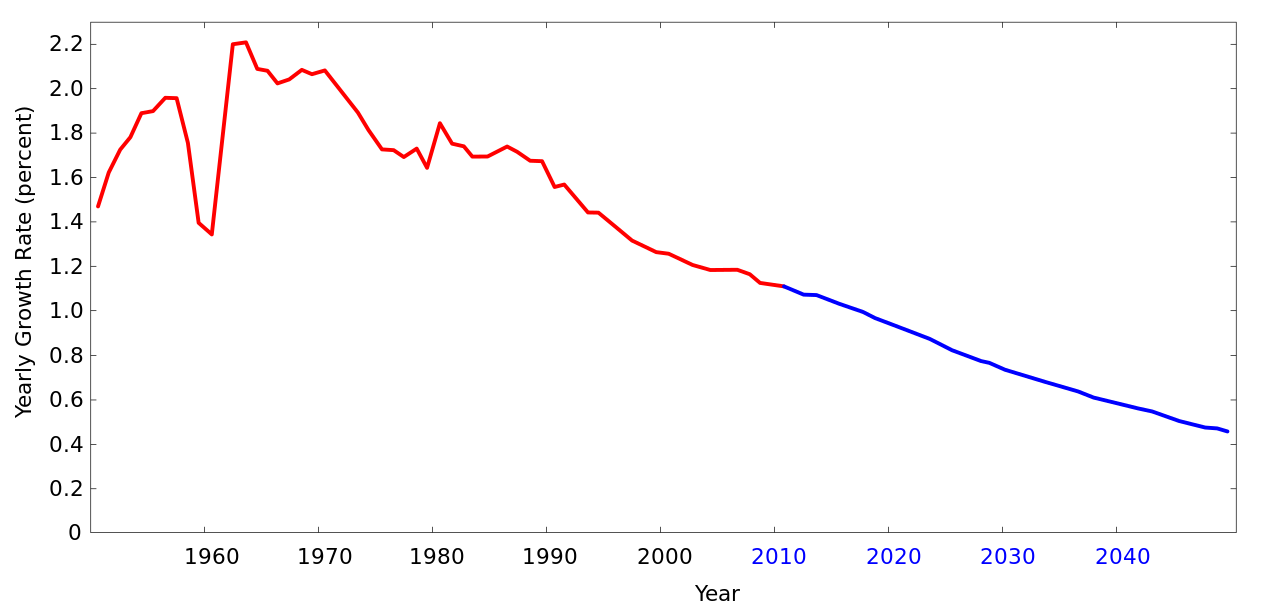
World population growth rate 1950–2050


The Exponential Trajectory
Human population growth has not been linear but rather exponential, particularly since the Industrial Revolution. For millennia, growth was slow, constrained by high mortality rates due to disease, famine, and conflict. The end of the Black Death around 1350 marked a turning point, ushering in an era of gradual increase.
However, the true explosion began with advancements in agricultural productivity, sanitation, and medicine. These innovations drastically reduced mortality rates, allowing more individuals to survive childhood and reach reproductive age, while simultaneously supporting larger populations. This period saw unprecedented demographic expansion, transforming the scale of human presence on Earth from roughly 1 billion in 1800 to over 8 billion by the mid-2020s.
Drivers of Change
The fundamental drivers of population change are fertility (births), mortality (deaths), and migration. Historically, high fertility rates were balanced by equally high mortality rates. As societies progress through what is known as the demographic transition, mortality rates fall first due to improved healthcare, nutrition, and living conditions.
Subsequently, fertility rates tend to decline as access to education, family planning, and changing social norms influence reproductive choices. This transition leads to a period of rapid population growth when birth rates significantly outpace death rates, followed by stabilization or even decline as birth rates approach death rates. While migration plays a role in regional population shifts, global population growth is primarily determined by the balance of births and deaths worldwide.
The Interplay with Environmental Sustainability
Population growth, especially when coupled with increasing per capita consumption, is a significant factor influencing environmental challenges. The demand for resources such as food, water, energy, and land intensifies with more people. This can lead to deforestation, biodiversity loss, increased greenhouse gas emissions contributing to climate change, and pollution of air and water.
Overexploitation of natural resources to support human development raises critical questions about planetary boundaries and the long-term sustainability of current growth patterns. Addressing these environmental concerns necessitates a multifaceted approach that considers not only population dynamics but also consumption patterns and technological solutions.
Global Projections and Policy Considerations
The trajectory of future population growth is a subject of ongoing research and projection. While the global growth rate has declined from its peak in the 1960s, the sheer size of the current population means that absolute numbers continue to increase significantly each year. The United Nations projects that the world population will likely peak at around 10.3 billion in the mid-2080s, with recent downward revisions reflecting declining birth rates globally.
However, projections vary, and some argue that current models may underestimate future growth. International policy, as reflected in the Sustainable Development Goals, aims to manage the impacts of population growth by improving living standards, promoting well-being, and mitigating environmental degradation, while respecting individual life choices.
Go deeper
Based on content from Wikipedia · Licensed under CC BY-SA 4.0