

Fertility: Making Babies!
Images

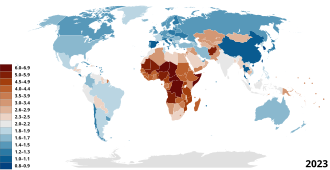
Income and Fertility by Country Chart
![A word to the wise is sufficient - use the Bay State fertilizer [front]](https://live.staticflickr.com/2842/9785724626_8649d7b12b_n.jpg)




Defining Fertility
Fertility, in its most fundamental biological sense, refers to the capacity of an organism to produce offspring. However, in demographic and medical contexts, the term is nuanced. Demographers distinguish between fertility (the actual birth of children) and fecundity (the physiological ability to reproduce).
A high fecundity rate doesn't automatically translate to a high fertility rate, as social, economic, and environmental factors play significant roles. Medically, infertility is defined as the inability to conceive after a specific period, typically one year, of unprotected sexual intercourse. This distinction is crucial for understanding population dynamics and individual reproductive health.
The antithesis of fertility is infertility, and the antithesis of fecundity is sterility, highlighting the spectrum of reproductive potential.
Evolutionary Roots and Historical Context of Fertility
The drive for reproduction, and thus fertility, is an evolutionary imperative deeply ingrained in all life forms. From the earliest single-celled organisms to complex mammals, the continuation of the species has been paramount. Historically, human societies have viewed fertility through diverse lenses.
In agrarian societies, higher fertility was often economically advantageous, providing labor for farms and ensuring lineage continuity. Religious and cultural beliefs have also profoundly shaped attitudes towards procreation, family size, and reproductive practices. The advent of modern medicine has introduced new dimensions, allowing for the study and intervention in reproductive processes, leading to increased control over fertility and the management of infertility, a stark contrast to historical reliance solely on natural outcomes.
The Multifaceted Significance of Fertility
The significance of fertility extends across biological, social, economic, and personal spheres. Biologically, it is the cornerstone of species survival and biodiversity. Socially and demographically, fertility rates are critical indicators of population growth, age structure, and future societal needs, influencing everything from education and healthcare planning to economic development and migration patterns.
High fertility can strain resources, while low fertility can lead to aging populations and workforce shortages. On a personal level, the ability to conceive and bear children is often a deeply cherished aspect of human experience, influencing identity, family structure, and emotional well-being. Conversely, infertility can present significant emotional and psychological challenges.
Mechanisms of Human Fertility
Human fertility is a complex interplay of hormonal, genetic, and anatomical factors. It typically involves the production of viable gametes (sperm in males, eggs in females), their successful union through sexual intercourse, fertilization of the egg by sperm, and the subsequent implantation and development of the embryo in the female reproductive tract. For conception to occur, ovulation must align with intercourse, and the sperm must be able to reach and fertilize the egg.
The female reproductive system must be receptive to implantation, and hormonal support is necessary for pregnancy to be sustained. Infertility can arise from disruptions at any of these stages, affecting either the male or female reproductive systems, or both, and is a subject of extensive medical research and treatment.
Contemporary Relevance and Future Directions in Fertility
In the modern era, fertility is a topic of significant global discussion, influenced by factors such as increased access to education and career opportunities for women, delayed childbearing, and advancements in reproductive technologies like in vitro fertilization (IVF). Understanding fertility trends is crucial for policymakers addressing demographic shifts, such as declining birth rates in many developed nations and rapid population growth in others. Research continues to explore the genetic, environmental, and lifestyle factors that influence fertility and infertility.
The ethical considerations surrounding assisted reproductive technologies and the societal impact of changing fertility patterns are also subjects of ongoing debate and scientific inquiry, shaping the future of human reproduction.
Go deeper
Frequently Asked Questions
What does fertility mean?+
Why can a family have many babies even if people can make babies?+
How do doctors decide if someone has infertility?+
Why is fertility important for families and society?+
What happens during a baby’s first steps inside the mother?+
Based on content from Wikipedia · Licensed under CC BY-SA 4.0