

Pontvallain
Images

Pontvallain - Chapelle Notre-Dame de la Faigne 12


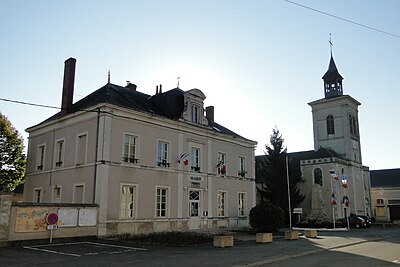


Pontvallain
Pontvallain, a commune in the Sarthe department of northwestern France, occupies a place of historical significance far exceeding its modest size. During the tumultuous events of June 1940, as the Wehrmacht's Blitzkrieg carved through French defenses, Pontvallain emerged as a crucial, albeit often overlooked, strategic node. It was not merely a geographical location but a designated defensive sector intended to impede the relentless German advance.
The fighting that transpired here was emblematic of the broader French struggle: a desperate attempt to impose friction on a superior, rapidly moving mechanized force. The engagements around Pontvallain were part of a larger, ultimately unsuccessful, effort to stabilize the front lines and prevent the complete collapse of French resistance, underscoring the critical nature of even seemingly minor defensive stands in the face of overwhelming operational success by the enemy.
Tactical Engagements and Strategic Imperatives at Pontvallain
The battles fought near Pontvallain in June 1940 were intrinsically linked to the overarching strategic objectives of the French high command during the Battle of France. As German panzer divisions surged westward, the French sought to establish delaying actions using available mobile reserves and fortified positions. Pontvallain was identified as a key point for such a defense, likely chosen for its terrain and its position relative to anticipated German axes of advance.
French armored units, including elements of the 3rd Armoured Division and infantry formations, were tasked with holding this sector. The fighting was characterized by fierce, close-quarters combat, often involving tank-on-tank engagements and infantry assaults against entrenched positions. The primary goal was attrition and delay; to bleed the German advance, disrupt their operational tempo, and buy precious time for the redeployment of French forces or the establishment of more robust defensive lines, such as the Somme or Seine rivers, further to the west.
The Enduring Significance of Pontvallain's Defense
While the Battle of France concluded with a French defeat and subsequent armistice, the engagements at Pontvallain hold a distinct historical resonance. They serve as a poignant illustration of the courage and determination displayed by French soldiers under extreme duress. The resistance offered at Pontvallain, though unable to alter the ultimate strategic outcome, contributed to the broader narrative of French defiance.
It demonstrated that even as the nation faced collapse, pockets of fierce opposition persisted, inflicting casualties and forcing the German command to adapt its operational tempo. Furthermore, the study of these engagements provides valuable insights into the tactical challenges of defending against Blitzkrieg tactics, highlighting the limitations of conventional defenses against highly mobile, combined-arms warfare. The memory of Pontvallain thus functions not just as a historical marker, but as a case study in military resilience and the human cost of large-scale conflict.
Preserving the Memory
The historical importance of Pontvallain is maintained through meticulous archival research, military historical analysis, and local commemoration. It represents a critical juncture where the rapid German advance met determined, albeit ultimately outmatched, resistance. Understanding the events at Pontvallain allows for a more nuanced appreciation of the Battle of France, moving beyond a simple narrative of swift German victory to acknowledge the complex, often brutal, tactical engagements that characterized the campaign.
The actions of the soldiers who fought there contribute to the collective memory of wartime sacrifice and the enduring struggle for national sovereignty. Pontvallain stands as a testament to the fact that even in the darkest hours of conflict, strategic points can become symbols of valor and resistance.
See also
Frequently Asked Questions
What is Pontvallain?+
Why was Pontvallain important during the Battle of France?+
What happened in Pontvallain during the war?+
How did the fighting at Pontvallain affect the war?+
How do people remember Pontvallain today?+
Based on content from Wikipedia · Licensed under CC BY-SA 4.0