

Polypores: The Forest's Amazing Shelf Fungi!
Images

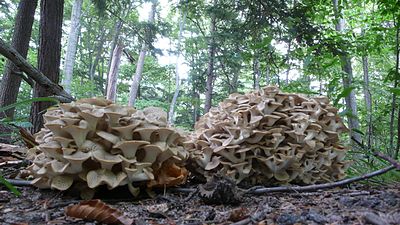
Hexagonia vesparia ( Wasp Nest Polypore)




Morphology and Taxonomy
Polypores represent a morphological group within the Basidiomycota, characterized by their distinctive fruiting bodies, known as conks. These conks are typically woody, leathery, or corky in texture, and exhibit a range of shapes, most commonly shelf-like or bracket-like. A defining feature is the presence of pores or tubes on the underside, which house the basidia responsible for producing basidiospores.
This contrasts with gilled mushrooms, which have lamellae. Polypores can be arranged in planar groupings, either as single rows or multiple interconnected tiers, and their size can be substantial, with some perennial species accumulating significant mass over many years. Their perennial nature allows for continuous growth and spore production, contributing to their ecological impact over extended periods.
The classification of polypores is complex, with many species historically grouped based on morphology rather than strict phylogenetic relationships.
Ecological Niches and Roles
The ecological significance of polypores is immense, primarily stemming from their role as wood decomposers. They are among the most important agents of wood decay in forest ecosystems, targeting both dead woody debris and, in some cases, living trees. Saprophytic polypores break down lignin and cellulose, the primary components of wood, releasing essential nutrients like carbon, nitrogen, and phosphorus back into the soil.
This nutrient cycling is fundamental for supporting primary productivity and the overall health of the forest. Some polypores are also pathogens, capable of causing significant damage to living trees, particularly in managed forests or plantations, leading to timber spoilage and economic losses. Conversely, certain soil-dwelling polypores form mycorrhizal associations with tree roots, facilitating nutrient and water uptake for the host plant in exchange for carbohydrates.
Distribution, Diversity, and Conservation Concerns
Polypore diversity is strongly correlated with forest age and structure. Old-growth natural forests, with their abundance of standing dead trees (snags) and large fallen logs, provide ideal habitats for a wide array of polypore species. In contrast, younger, managed forests or plantations often have less coarse woody debris and a more uniform structure, leading to reduced polypore diversity.
This disparity highlights their role as bioindicators of forest health and maturity. Consequently, many polypore species have experienced drastic population declines and are now threatened with extinction due to habitat loss driven by logging and deforestation. The conservation of old-growth forests is therefore critical for preserving polypore biodiversity and the ecological functions they perform.
Human Interactions
Beyond their ecological roles, polypores have a long history of interaction with humans. Several species are utilized in traditional medicine across various cultures, with ongoing scientific research investigating their potential pharmacological properties, including anti-cancer, anti-inflammatory, and immune-modulating effects. Furthermore, polypores are being explored for diverse industrial applications, such as bioremediation, the production of enzymes, and the development of novel biomaterials.
However, their role as pathogens also presents challenges, particularly in forestry and agriculture, where they can cause significant economic damage to timber and crops. Understanding the complex life cycles and ecological requirements of polypores is essential for both conservation efforts and harnessing their beneficial properties.
See also
Based on content from Wikipedia · Licensed under CC BY-SA 4.0