

Political status of Taiwan
Images
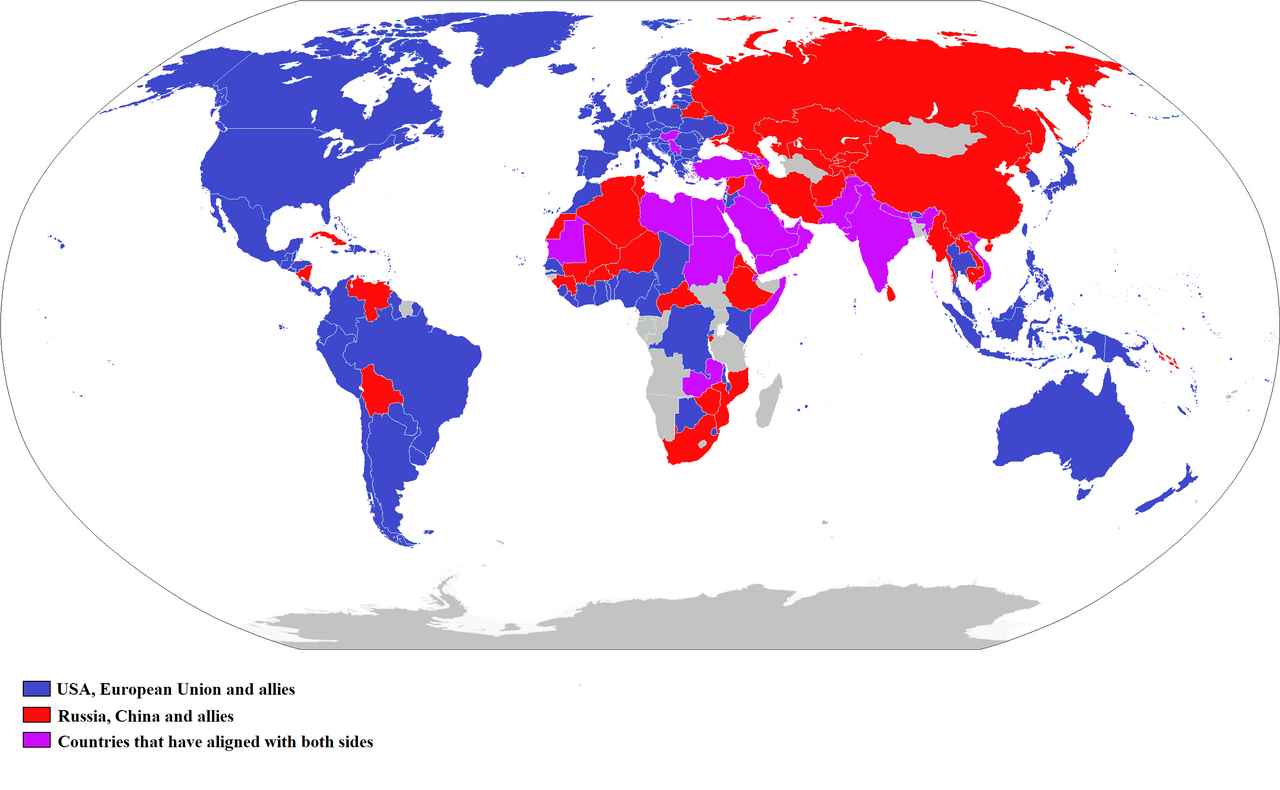
Cold War2-US+EU+allies vs Russia+China+allies


The Enduring Dispute
The political status of Taiwan is one of the most sensitive and complex geopolitical issues in the world. It centers on the question of sovereignty over the island of Taiwan and its surrounding territories. The dispute intensified in 1945 following Japan's surrender in World War II, when Taiwan was placed under the administration of the Republic of China (ROC).
However, the ROC's central government was forced to retreat to Taiwan in 1949 after losing the Chinese Civil War to the Chinese Communist Party (CCP), which then established the People's Republic of China (PRC) on the mainland. The PRC, despite never having exercised control over Taiwan, asserts its sovereignty based on the theory of state succession, viewing itself as the successor to the pre-1949 ROC and denying the ROC's continued existence as a sovereign entity.
This fundamental disagreement forms the bedrock of the ongoing political standoff across the Taiwan Strait.
Navigating the 'One China' Maze
Both the PRC and the ROC officially adhere to the concept of 'one China,' but their interpretations diverge dramatically. The PRC insists it is the sole legitimate government of China and considers Taiwan an inalienable province, refusing to rule out military force for unification. It proposes a 'one country, two systems' model, which has been consistently rejected by Taiwan's government.
The ROC, while its constitution technically still includes mainland China as territory, has, through constitutional amendments and legislation, shifted its stance. It no longer actively claims governance over the mainland and treats the PRC in practice as an equal political entity. This has created a scenario often described as 'two Chinas' or 'one China, one Taiwan,' where the international community grapples with recognizing which entity holds legitimate authority, leading to complex diplomatic maneuvering and varying 'One China' policies among nations.
Taiwan's Technological Dominance and Global Economic Stakes
Taiwan's political status is inextricably linked to its critical role in the global economy, particularly in the semiconductor industry. Taiwan is the undisputed leader in manufacturing advanced semiconductor chips, producing over 90% of the world's most cutting-edge chips used in everything from smartphones and data centers to sophisticated military hardware. The Taiwan Strait is also a vital artery for global trade, with trillions of dollars in goods passing through it annually.
Any disruption to Taiwan's chip production or stability in the region could have catastrophic consequences for the global economy, potentially wiping trillions from global GDP. This economic leverage makes Taiwan's political situation a matter of significant international concern, influencing trade policies and geopolitical strategies worldwide.
International Recognition and Shifting Alliances
Since 1949, the international community has faced a constant challenge in recognizing Taiwan's political status. Initially, the ROC was recognized as the legitimate representative of China and held its seat at the United Nations. However, over time, the PRC gained broader international recognition, leading to the ROC's expulsion from the UN in 1971.
Today, the ROC maintains formal diplomatic relations with only a handful of countries, though it engages in robust unofficial ties and participates in international organizations as a non-state entity. The United States, for instance, views Taiwan as a crucial element in its Indo-Pacific strategy, balancing PRC influence, while China perceives this as containment. This complex web of recognition and unofficial relationships underscores the delicate geopolitical balance surrounding Taiwan.
Internal Dynamics
Within Taiwan itself, there is a dynamic spectrum of political thought regarding its future. A significant portion of the population supports eventual unification with mainland China, often emphasizing a shared Chinese identity. Conversely, a strong movement advocates for formal independence, promoting a distinct Taiwanese identity and complete separation from the PRC.
In the 21st century, a pragmatic approach favoring the status quo – maintaining de facto independence without formally declaring it – has gained considerable traction and broad appeal among the electorate. This internal political landscape, shaped by evolving identities and aspirations, adds another layer of complexity to the ongoing debate about Taiwan's ultimate political destiny.
See also
Frequently Asked Questions
What is the political status of Taiwan?+
Why does Taiwan make so many chips?+
How did Taiwan become separate from mainland China?+
What does "one China" mean?+
Why is Taiwan's political status important to other countries?+
Based on content from Wikipedia · Licensed under CC BY-SA 4.0