

Oyster Mushrooms: Nature's Amazing Eaters!
Images

Pleurotus ostreatus


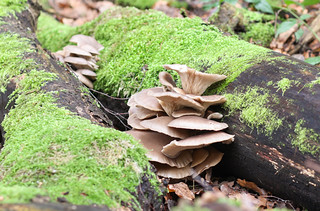


Global Distribution and Ecological Niche as a Saprophyte
The oyster mushroom, Pleurotus ostreatus, is a cosmopolitan species with a remarkable distribution spanning temperate and tropical zones across the Northern Hemisphere and extending into parts of the Southern Hemisphere. Its ecological success is largely attributed to its potent saprophytic capabilities. As a primary decomposer of lignocellulosic biomass, it plays a pivotal role in forest ecosystems. P. ostreatus primarily colonizes dead or dying hardwood trees, including species like oak (Quercus spp.), beech (Fagus spp.), and maple (Acer spp.), though it can also grow on conifers and other substrates.
The fungus secretes a cocktail of extracellular enzymes, such as cellulases, xylanases, and laccases, which efficiently break down the complex polymers of wood. This decomposition process is fundamental to nutrient cycling, releasing bound carbon and other essential elements back into the soil, thereby supporting plant regeneration and overall forest health. Its ability to thrive on a wide range of woody debris makes it a keystone species in the decomposition pathway.
Beyond Decomposition
A fascinating aspect of Pleurotus ostreatus biology is its facultative predatory nature. While wood decomposition provides a substantial nutrient base, the fungus can supplement its diet by capturing and consuming microscopic soil invertebrates, particularly nematodes. This predatory behavior is an adaptation to environments where essential nutrients, such as nitrogen, might be scarce in the woody substrate.
The mycelium of P. ostreatus can develop specialized structures to facilitate prey capture. These include adhesive knobs that ensnare nematodes upon contact and, in some strains, constricting rings that rapidly tighten around the worm. Once a nematode is immobilized, the fungus secretes proteolytic enzymes to digest the prey externally and absorb the released amino acids and other nitrogenous compounds.
This dual strategy of saprophytism and predation allows P. ostreatus to exploit diverse nutrient sources and thrive in varied ecological conditions.
Cultivation, Culinary Value, and Economic Significance
The oyster mushroom is one of the most widely cultivated edible fungi globally, owing to its rapid growth, adaptability to various substrates, and relatively simple cultivation requirements. It can be grown on a wide array of agricultural and industrial by-products, including straw, sawdust, coffee grounds, and spent grains, transforming waste materials into a valuable food source. This makes its cultivation economically significant, particularly in developing countries, providing income and improving food security.
Nutritionally, P. ostreatus is a good source of protein, dietary fiber, B vitamins (niacin, riboflavin, pantothenic acid), and essential minerals like potassium, phosphorus, and selenium. Its mild, savory flavor and firm, slightly chewy texture make it a versatile ingredient in global cuisine, featured in stir-fries, soups, stews, and various other dishes. The commercial cultivation of oyster mushrooms also contributes to waste management by utilizing organic residues.
Biotechnological Applications and Future Potential
The enzymatic machinery of Pleurotus ostreatus has garnered significant interest for various biotechnological applications. Its powerful ligninolytic and cellulolytic enzymes are being explored for bioremediation, such as the breakdown of pollutants like phenols and polycyclic aromatic hydrocarbons in contaminated soils and wastewater. These enzymes also hold potential in the pulp and paper industry for bio-bleaching and in the textile industry for bio-polishing.
Furthermore, research is ongoing into the medicinal properties of P. ostreatus, with studies investigating its potential immunomodulatory, antioxidant, and cholesterol-lowering effects due to the presence of bioactive compounds like beta-glucans and ergothioneine. The fungus's ability to degrade complex organic matter and its rich biochemical profile position it as a valuable resource for sustainable technologies and health-promoting applications.
See also
Frequently Asked Questions
What are oyster mushrooms and where do they grow?+
How do oyster mushrooms eat bugs and worms?+
Why are oyster mushrooms good for forests?+
Can we grow oyster mushrooms at home?+
What nutrients do oyster mushrooms have?+
Based on content from Wikipedia · Licensed under CC BY-SA 4.0