

Planet Nine: The Mystery Planet!
Images

Planet nine-etnos now


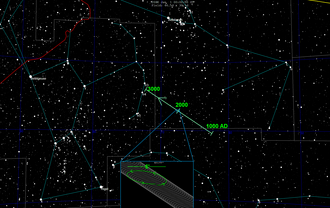
The Gravitational Signature of an Unseen World
The hypothesis of Planet Nine emerged as a compelling explanation for the anomalous clustering of extreme trans-Neptunian objects (ETNOs) in the outer solar system. These distant bodies, orbiting at distances exceeding 250 AU, exhibit a peculiar alignment in their perihelia (closest approach to the Sun) and orbital inclinations. This collective behavior suggests the gravitational influence of a massive, unseen perturber.
The statistical significance of this alignment, as analyzed by astronomers like Konstantin Batygin and Michael Brown, points towards a planet with a mass approximately five to ten times that of Earth. Such a planet, if it exists, would reside in an eccentric and highly inclined orbit, far beyond the known planets, exerting a subtle yet persistent gravitational tug on these remote icy bodies, shaping their long-term orbital evolution.
Tracing the Genesis
The existence of Planet Nine necessitates a discussion about its formation and emplacement in the solar system's frigid outer reaches. Several compelling theories attempt to reconcile its presence with our understanding of planetary system formation. One prominent hypothesis suggests that Planet Nine is the remnant core of a gas giant that was gravitationally ejected by Jupiter during the chaotic period of planetary migration in the early solar system.
Alternatively, it may have been captured from another star system during the Sun's birth within a stellar nursery. Another possibility is that it originated as a rogue planet, a celestial body that formed independently and wandered through interstellar space before being gravitationally bound to our Sun. These scenarios highlight the dynamic and often violent processes that shaped our solar system.
The Observational Challenge
Directly detecting Planet Nine presents a formidable observational challenge. Its immense distance from the Sun means it receives very little sunlight, making it exceedingly faint. Furthermore, its predicted orbit is vast, meaning it could be located in any number of regions across the sky at any given time.
Large-scale sky surveys, such as the Wide-field Infrared Survey Explorer (WISE) and Pan-STARRS, have conducted extensive searches but have not yet yielded a definitive detection. The sensitivity and coverage of these surveys are crucial factors; an object like Planet Nine might be missed if it is particularly dim or located in a region not thoroughly surveyed. Ongoing and future observational efforts, utilizing advanced instruments like the Subaru Telescope, are critical for either confirming its existence or ruling it out.
Debates and Alternatives
While the Planet Nine hypothesis offers an elegant solution to the ETNO orbital clustering, it is not without its detractors. Some astronomers propose that the observed alignments could be a result of observational biases. The difficulty in detecting and tracking faint, distant objects means that astronomers might inadvertently be selecting for objects with certain orbital characteristics.
Recent discoveries of ETNOs, such as 2017 OF201 and 2023 KQ14, whose orbits do not align with the proposed Planet Nine model, have further fueled this debate. These objects, if stable, would be difficult to maintain in their current orbits if Planet Nine were present as predicted. This has led to the exploration of alternative explanations, including different configurations of smaller trans-Neptunian objects or more complex gravitational interactions within the Kuiper Belt.
Implications for Solar System Formation and Dynamics
The confirmation of Planet Nine would have profound implications for our understanding of solar system formation and evolution. It would provide direct evidence for significant planetary migration and gravitational interactions in the early solar system, potentially validating models that predict the ejection or capture of planets. Its existence would also necessitate a reevaluation of the outer solar system's mass distribution and dynamics.
Furthermore, Planet Nine could serve as a unique laboratory for studying the composition and atmospheric properties of a planet formed and existing under extreme conditions of cold and low solar irradiation. The ongoing search and the scientific discourse surrounding Planet Nine highlight the dynamic nature of scientific inquiry and the continuous quest to unravel the mysteries of our cosmic neighborhood.
Go deeper
Frequently Asked Questions
What is Planet Nine?+
Why do scientists think there might be a planet out there?+
How big would Planet Nine be compared to Earth?+
How do scientists look for Planet Nine?+
Are there any arguments against the idea of Planet Nine?+
Based on content from Wikipedia · Licensed under CC BY-SA 4.0