

Pitcairn Islands
Images

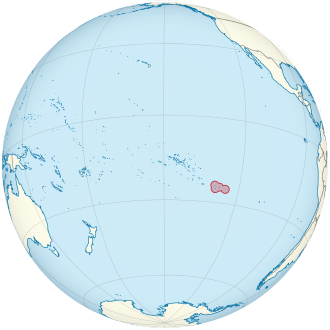
Pitcairn Islands in its region



Opens Google Maps in new tab
Geographical Extremes and Ecological Significance
The Pitcairn Islands are a quartet of volcanic islands situated in the remote southern Pacific Ocean, representing the sole British Overseas Territory in this vast oceanic expanse. Their geographical isolation is profound; the nearest inhabited landmasses are Mangareva, part of French Polynesia, located 688 kilometers (428 miles) to the west, and Easter Island, a staggering 1,929 kilometers (1199 miles) to the east.
This immense distance means that the islands are virtually untouched by the rapid pace of global development. The combined land area of the four islands is approximately 47 square kilometers (18 square miles), with Henderson Island comprising a significant 86% of this total. However, only Pitcairn Island itself is permanently inhabited.
The ecological distinctiveness of these islands is considerable, with Henderson Island, in particular, recognized for its unique biodiversity and status as a UNESCO World Heritage Site, showcasing rare species that have evolved in isolation. The surrounding waters are also rich in marine life, supporting a delicate ecosystem.
The Enduring Legacy of the Bounty Mutiny
The human history of the Pitcairn Islands is inextricably linked to one of the most famous naval mutinies in history. In 1790, a group of nine British Royal Navy sailors from the HMS Bounty, led by Fletcher Christian, along with twelve Tahitian companions (primarily women), established a settlement on Pitcairn Island. They sought to escape retribution from the British Crown and forge a new society free from the strictures of naval discipline.
This founding event has shaped the island's identity for over two centuries, with the current population being direct descendants of these original settlers. The story is a compelling narrative of survival, adaptation, and the creation of a unique cultural and social fabric in an extremely challenging environment, a testament to human resilience and the desire for self-determination.
A Society Defined by Community and Isolation
The Pitcairn Islands boast the distinction of being the smallest territory in the world by permanent population, with approximately 35 residents recorded in 2023. This minuscule population fosters an intensely close-knit community where social cohesion and mutual reliance are paramount. The islanders have developed a unique creole language, Pitkern, which is a fascinating linguistic fusion of 18th-century English and Tahitian, reflecting their dual heritage.
This language is a vital element of their cultural identity and a living link to their past. The extreme isolation, while preserving their unique way of life, also presents significant logistical and economic challenges, necessitating a high degree of self-sufficiency and resourcefulness among the inhabitants.
Economic Realities and Governance in a Remote Outpost
The economy of the Pitcairn Islands is modest and heavily reliant on external support and niche markets. Key revenue streams include the sale of collectible postage stamps and coins, which are highly sought after by philatelists and numismatists worldwide. Fishing also plays a role in subsistence and some trade. Due to the remoteness, importing goods is expensive, and the islanders must carefully manage their resources.
Governance is structured as a parliamentary democracy under a British Overseas Territory framework, with a Governor appointed by the British monarch as the head of state. The local administration is led by an elected mayor and council, reflecting the community's self-governing spirit within the broader British system. The challenges of maintaining infrastructure and providing essential services in such a remote location are ongoing.
Education and Cultural Preservation
Education on Pitcairn Islands is provided through a single school, the Pitcairn Island Community School. This school serves students from kindergarten through secondary school. Given the small student population, the curriculum is often adapted to the needs of the islanders, with a strong emphasis on practical skills, environmental awareness, and the preservation of their unique heritage.
The Pitkern language is taught alongside English, ensuring that this distinct linguistic tradition continues. The educational system aims to equip young Pitcairners with the knowledge and skills necessary to thrive on the island, while also preparing them for potential interactions with the wider world. Cultural preservation is a core objective, with traditions, storytelling, and the Pitkern language actively maintained and passed down through generations, ensuring the continuity of their unique identity.
Go deeper
Frequently Asked Questions
What are the Pitcairn Islands?+
How far are the Pitcairn Islands from other places?+
Who first lived on Pitcairn Island?+
How many people live on Pitcairn Island?+
What do the islanders sell to earn money?+
Based on content from Wikipedia · Licensed under CC BY-SA 4.0