

Pinyon Pine
Images

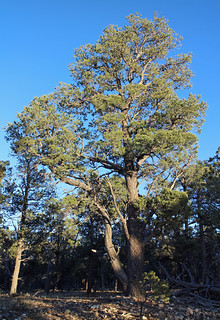
Pinyon Pines (Pinus edulis) Grand Canyon National Park South Rim 7984






Ecological Niche and Adaptations of the Pinyon Pine
The Pinyon pine group (Pinus subg. Cembroides) occupies a critical ecological niche across the arid and semi-arid landscapes of the southwestern United States and northern Mexico. These conifers are characterized by their resilience in environments with low precipitation and nutrient-poor soils.
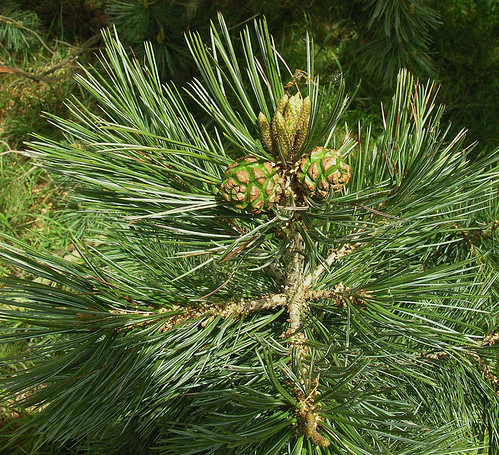
Typically growing to moderate heights, often not exceeding 20 meters, they form characteristic pinyon-juniper woodlands, a biome that is a defining feature of the region's topography. Their short, stiff needles are adapted to minimize water loss, and their root systems are adept at capturing scarce moisture. The Pinyon pine's reproductive strategy is also noteworthy; its large, energy-dense seeds, the pinyon nuts, are a crucial food source for a wide array of wildlife, including birds, rodents, and insects, playing a significant role in seed dispersal and ecosystem dynamics.
Some species exhibit hybridization, such as between P. quadrifolia and P. monophylla, demonstrating ongoing evolutionary processes within the genus.
Cultural Significance and Ethnobotanical Legacy
The relationship between humans and the Pinyon pine is ancient and profound, particularly for the indigenous peoples of the Southwest. The edible pinyon nuts have been a dietary staple for millennia, providing essential fats, proteins, and calories necessary for survival in this challenging environment. Prehistoric Native American communities developed sophisticated harvesting and storage techniques for these nuts, many of which are still employed today, underscoring their enduring cultural and practical importance.
This ethnobotanical legacy continues into modern times, with pinyon nuts being a significant component of regional cuisine, especially in New Mexican cooking, and a popular commercial snack. The Spanish term 'piñón' reflects this long history of human interaction and reliance on the tree's bounty.
Beyond Sustenance
The Pinyon pine's influence extends beyond its role as a food source. The tree actively modifies its environment, notably enhancing soil fertility. Pinyon pines are known to increase the concentration of both macronutrients (like nitrogen and phosphorus) and micronutrients in the soil beneath their canopy.
This soil enrichment benefits not only the Pinyon pine itself but also supports a more diverse understory of herbaceous plants and shrubs, contributing to the overall health and biodiversity of the woodland ecosystem. Furthermore, the wood of the Pinyon pine possesses a distinctive and highly valued fragrance when burned. This aromatic quality makes it a preferred fuel for chimeneas and hearths, adding a sensory dimension to its ecological and cultural contributions.
Conservation Status and Ecological Importance
While many Pinyon pine species are currently classified as 'Least Concern' by conservation organizations, their populations face increasing pressures from climate change, drought, and altered fire regimes. The resilience that has allowed them to thrive in arid conditions may be tested by rapid environmental shifts. The Pinyon pine is more than just a tree; it is an ecological engineer and a cultural icon.
Its designation as the official state tree of New Mexico (Pinus edulis) highlights its symbolic importance. Understanding the Pinyon pine's life cycle, its interactions with wildlife, its role in soil development, and its historical human uses is crucial for appreciating its vital contribution to the ecological integrity and cultural heritage of the American Southwest.
See also
Frequently Asked Questions
What are pinyon pine nuts and why are they important?+
How does the pinyon pine help the soil?+
Why do pinyon pine needles stay short and stiff?+
What makes pinyon pine wood special?+
Can we eat pinyon pine nuts?+
Based on content from Wikipedia · Licensed under CC BY-SA 4.0