

Peter Debye
Images
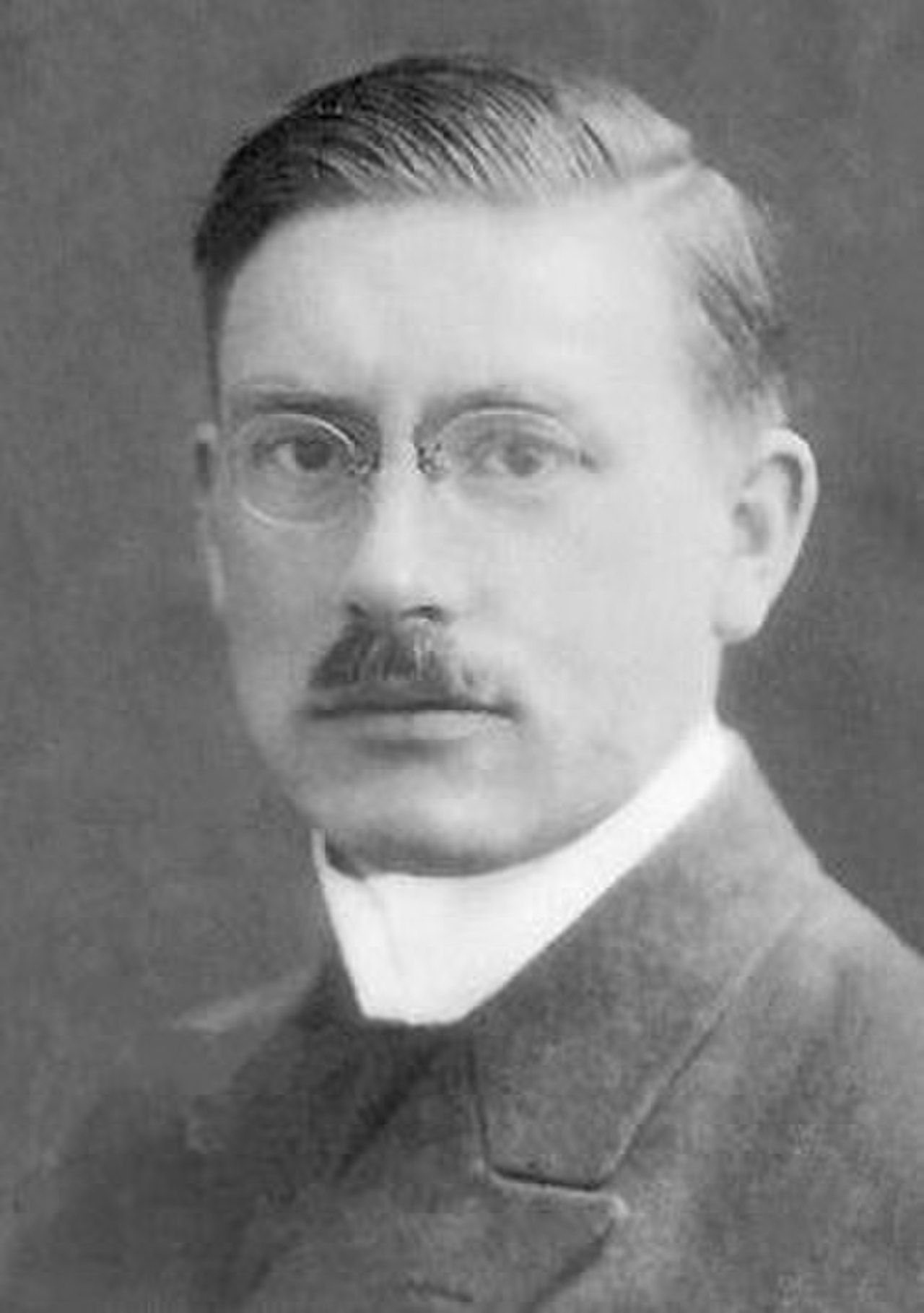
Peter Debye
The Genesis of a Scientific Visionary
Peter Debye, born Petrus Josephus Wilhelmus Debye on March 24, 1884, in Maastricht, Netherlands, emerged as one of the 20th century's most influential physicists and chemists. His early academic career was marked by a relentless pursuit of fundamental knowledge, leading him to study under luminaries like Arnold Sommerfeld. Debye's intellectual trajectory was shaped by the burgeoning fields of quantum mechanics and atomic physics.
He possessed an exceptional ability to bridge theoretical concepts with experimental verification, a skill that would define his career. His formative years were spent at institutions like the University of Göttingen and later the ETH Zurich, where he began to formulate the ideas that would later earn him global acclaim. His early work focused on the behavior of electrons and the properties of matter at the atomic level, setting the stage for his later groundbreaking contributions.
Revolutionizing Molecular Structure and Behavior
Debye's most significant contributions lie in his pioneering work on molecular structure and the interaction of matter with electromagnetic radiation. He developed sophisticated methods, notably using X-ray diffraction, to determine the arrangement of atoms within molecules and crystals. This technique allowed scientists to visualize the intricate architecture of substances, a critical step in understanding their properties.
Furthermore, his theoretical work on dielectric polarization explained how molecules align themselves in response to an external electric field. This led to the concept of the 'Debye length,' a fundamental parameter in plasma physics and electrolyte solutions, defining the distance over which electrostatic forces are screened. His research provided the essential framework for understanding the behavior of a vast array of materials, from simple gases to complex polymers.
The Nobel Laureate and His Enduring Legacy
The pinnacle of Debye's scientific achievements was recognized in 1936 when he was awarded the Nobel Prize in Chemistry. The citation specifically lauded his investigations on molecular structure, his development of X-ray diffraction for studying molecules, and his work on dipole moments and dielectric constants. This award cemented his status as a leading figure in scientific research.
Beyond the Nobel Prize, Debye's influence extended through his prolific career as a professor at prestigious institutions, including the University of Leipzig, ETH Zurich, and Cornell University. He mentored generations of scientists and fostered a collaborative research environment. His work continues to be foundational in fields such as materials science, physical chemistry, and condensed matter physics, underscoring the enduring relevance of his discoveries.
Impact and Applications
The theoretical frameworks and experimental techniques pioneered by Peter Debye have had profound and far-reaching practical applications. His understanding of dielectric polarization and molecular interactions is indispensable in the design and development of advanced materials, including polymers, liquid crystals, and semiconductors. The principles he elucidated are crucial for creating more efficient electronic components, such as capacitors and insulators.
Moreover, his work on light scattering and molecular structure informs technologies like spectroscopy and advanced imaging systems. The 'Debye model' and 'Debye length' remain vital tools for researchers studying plasmas, electrolytes, and colloidal suspensions, impacting fields from astrophysics to nanotechnology. Debye's legacy is not just in the equations and theories he developed, but in the tangible innovations they have enabled, shaping the technological landscape we inhabit today.
A Life Dedicated to Unraveling Nature's Mysteries
Peter Debye's life, spanning from March 24, 1884, to November 2, 1966, was a testament to intellectual curiosity and scientific rigor. Born in the Netherlands, he pursued his passion for science across Europe and eventually settled in the United States, where he continued his influential research and teaching at Cornell University. His career was marked by a consistent ability to tackle complex problems with elegant solutions, often bridging the gap between theoretical physics and experimental chemistry.
He was not only a brilliant researcher but also a dedicated educator, shaping the minds of future scientists. His comprehensive understanding of physical chemistry and his innovative experimental approaches left an indelible mark on scientific progress, making him one of the most significant scientific figures of the 20th century.
Go deeper
Frequently Asked Questions
Who was Peter Debye?+
What did Debye discover about molecules?+
What is the Debye length?+
Why did Debye win the Nobel Prize?+
Where did Debye teach?+
Based on content from Wikipedia · Licensed under CC BY-SA 4.0