

Perissodactyla: The Odd-Toed Wonders!
Images
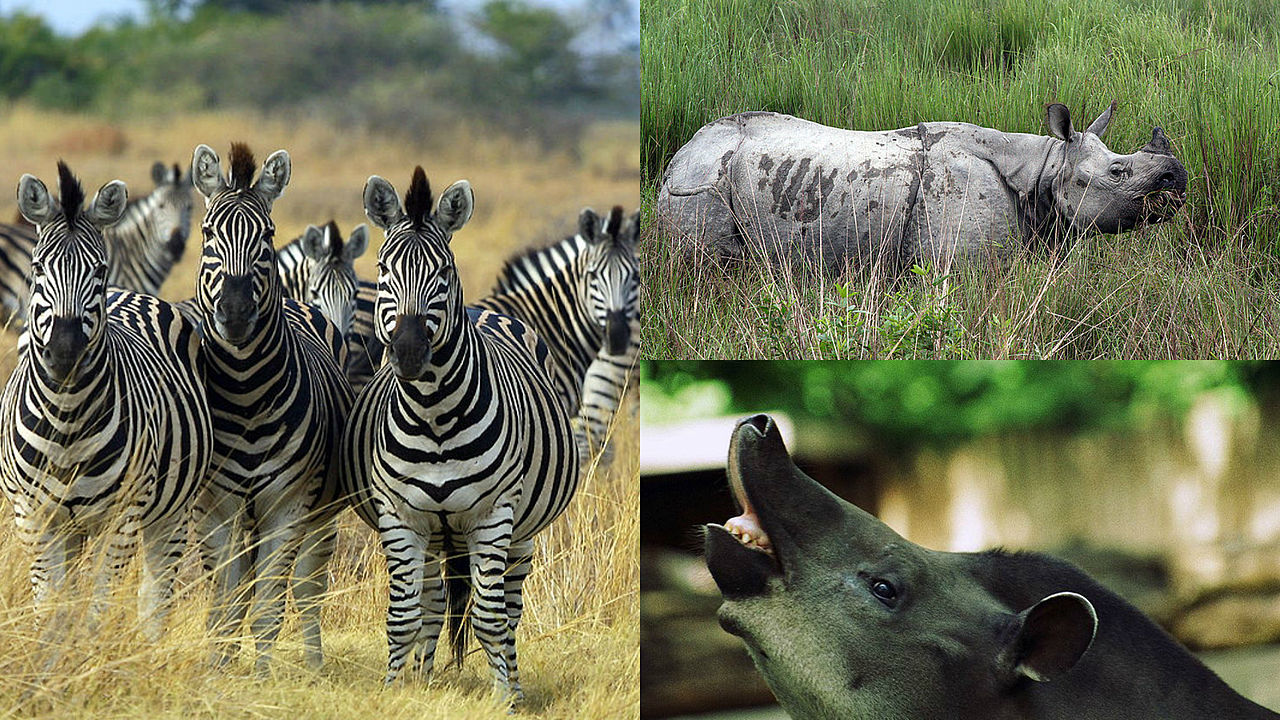
Perissodactyla


Anatomical Uniqueness and Evolutionary Divergence
The order Perissodactyla, encompassing horses, rhinoceroses, and tapirs, is defined by its characteristic mesaxonic foot structure, where the central toe (digit III) is the largest and bears the majority of the animal's weight. This contrasts sharply with the paraxonic foot structure of their artiodactyl relatives. This evolutionary divergence in limb morphology reflects distinct adaptive pressures and pathways.
The reduction in the number of toes, from the ancestral five digits, to the single hoof of equids or the three-toed feet of rhinos and tapirs, is a testament to millions of years of selection for cursorial (running) adaptations and efficient weight bearing. Their digestive systems are also noteworthy; Perissodactyla are hindgut fermenters, relying on microbial action in the cecum and colon to break down cellulose. This method is less efficient than the foregut fermentation of ruminants, necessitating a diet rich in high-quality, fibrous plant matter and frequent feeding.
The fossil record reveals a much greater diversity of Perissodactyla in the past, including now-extinct families like the Brontotheriidae and Chalicotheriidae, showcasing a rich evolutionary tapestry that has significantly narrowed to the three extant families.
Paleontological Insights
The evolutionary history of Perissodactyla is extensively documented in the fossil record, providing critical insights into mammalian evolution. Originating in the Paleocene or early Eocene epochs, approximately 55-60 million years ago, their ancestors were likely small, arboreal or semi-arboreal mammals. Early perissodactyls, such as the extinct family Phenacodontidae, exhibited more generalized limb structures with multiple functional toes.
Over millions of years, these lineages diversified rapidly, occupying ecological niches that were becoming available as other mammalian groups declined. The Eocene and Oligocene epochs were particularly significant, witnessing the rise of numerous extinct families that dominated terrestrial ecosystems. The evolution of specialized grazing adaptations, including hypsodonty (high-crowned teeth), allowed them to exploit the expanding grasslands that emerged during the Miocene.
The subsequent cooling and drying trends led to extinctions and the consolidation of the modern families, with the Equidae, Rhinocerotidae, and Tapiridae representing the surviving lineages that have adapted to a wide range of modern habitats, from tropical rainforests to arid savannas.
Ecological Roles and Anthropogenic Impacts on Perissodactyla
Perissodactyla play multifaceted and crucial roles within their respective ecosystems. As large herbivores, they are keystone species in many environments. Their grazing and browsing activities directly influence plant community structure, biomass, and species composition, impacting everything from soil erosion to habitat availability for smaller fauna.
For instance, the grazing of zebras and wildebeest (though wildebeest are artiodactyls, their ecological role is similar in savanna systems) maintains grassland health and prevents the encroachment of woody vegetation. Rhinoceroses, through their browsing and digging, can create microhabitats and disperse seeds. Historically, their populations were vast, contributing significantly to nutrient cycling through their dung.
However, anthropogenic pressures, including habitat destruction, fragmentation, and poaching, have severely impacted many Perissodactyla species. Several rhinoceros species are critically endangered, facing extinction due to the illegal trade in their horns. The conservation of these animals is not only an ethical imperative but also essential for maintaining the ecological integrity of the habitats they inhabit, underscoring the interconnectedness of biodiversity and ecosystem function.
Behavioral Adaptations and Conservation Imperatives
The behavioral repertoire of Perissodactyla is shaped by their ecological pressures and evolutionary history. Social structures vary widely, from the solitary nature of many tapirs and rhinoceroses to the complex herd dynamics of equids like horses and zebras. These social behaviors are often linked to predator avoidance strategies; herd living provides increased vigilance and dilution effects against predation.
For example, zebras' striped coats may serve as camouflage or confuse biting insects. Reproductive strategies also differ, with most species producing a single offspring at a time, reflecting the high energetic costs of gestation and parental care for large mammals. The relatively slow reproductive rates of many Perissodactyla species make them particularly vulnerable to population declines caused by external threats.
Modern conservation efforts focus on habitat protection, anti-poaching initiatives, and sometimes captive breeding programs to safeguard these species. Understanding their biology, behavior, and ecological needs is paramount for developing effective strategies to ensure their long-term survival in a human-dominated world.
Go deeper
Frequently Asked Questions
What makes Perissodactyla animals have odd toes?+
Why do horses have only one hoof?+
How do Perissodactyla eat their food?+
Which animals belong to Perissodactyla?+
Why are there only three living families of Perissodactyla?+
Based on content from Wikipedia · Licensed under CC BY-SA 4.0