

Paris-Charles de Gaulle Airport
Images
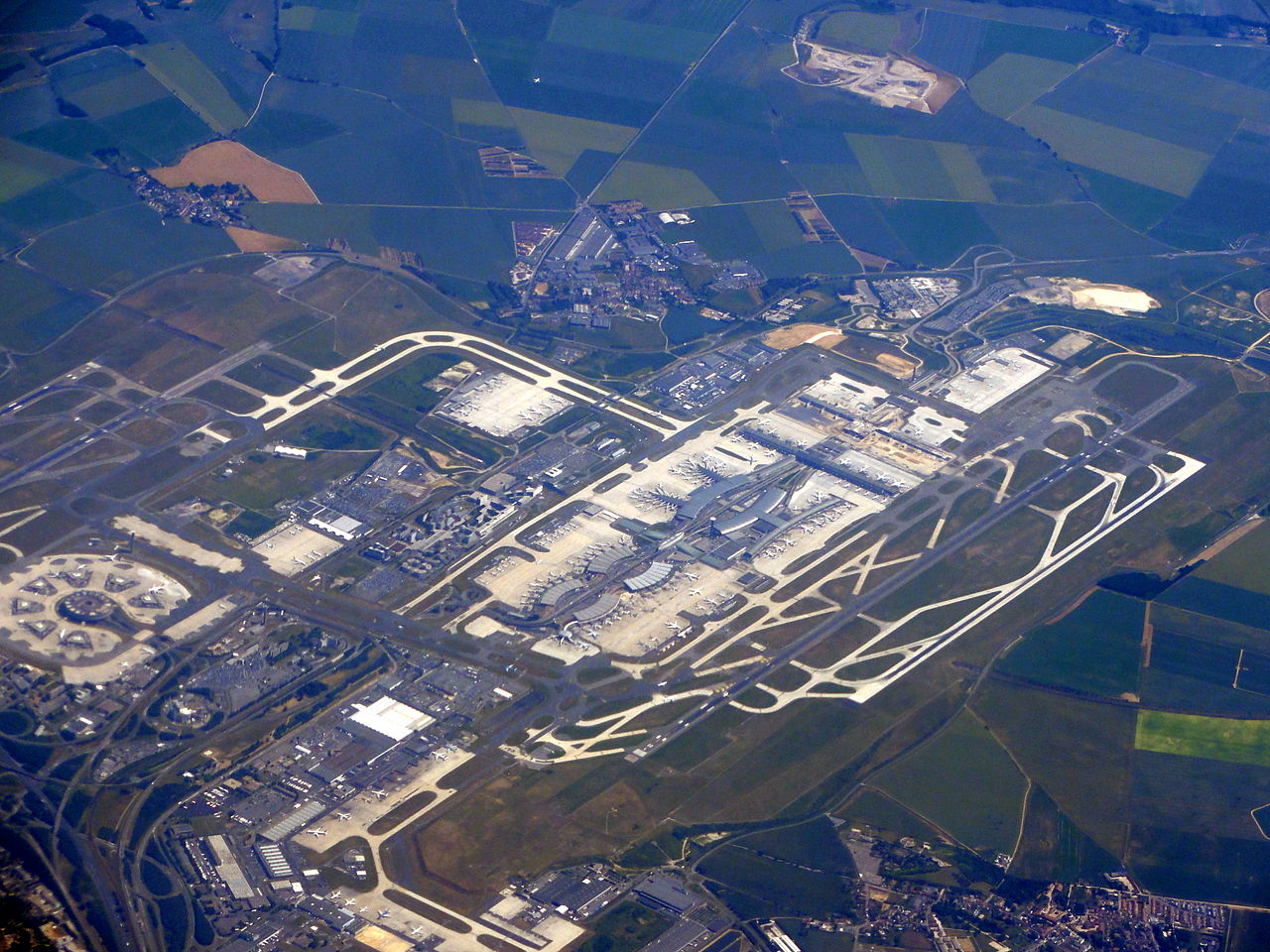
Aerial view of Paris-Charles de Gaulle airport


Geostrategic Positioning and Environmental Context
Paris-Charles de Gaulle Airport (CDG) is strategically situated in the Île-de-France region, approximately 23 kilometers (14 miles) northeast of Paris. This location was meticulously chosen to optimize accessibility to the capital while providing ample space for the airport's vast infrastructure and future expansion, a critical factor for a facility of its scale. The surrounding landscape is predominantly flat, a prerequisite for the extensive network of runways, taxiways, and aprons that define its operational footprint.
CDG experiences a temperate oceanic climate, characterized by moderate temperatures and precipitation throughout the year. While generally conducive to aviation, this climate can present challenges such as fog, particularly in autumn and winter, and occasional heavy snowfall, necessitating sophisticated operational protocols and advanced meteorological services to maintain safety and efficiency. The airport's sheer size, covering 32.5 square kilometers (12.5 square miles), makes it a significant land-use feature in the region, impacting local ecosystems and requiring careful environmental management.
Genesis and Evolution of a Global Gateway
The conception of CDG arose from the post-war boom in air travel and the limitations of Paris's existing airports. Recognizing the need for a state-of-the-art facility capable of handling the projected surge in international traffic, planning began in the early 1960s. Construction commenced in 1966, and the airport officially opened on March 8, 1974, bearing the name of Charles de Gaulle, the influential leader of the Free French Forces and founder of the French Fifth Republic.
Its initial design was innovative, featuring distinct terminals that were revolutionary for their time. Since its inauguration, CDG has undergone continuous development, including the construction of additional terminals (Terminals 2A-2F, 2G, and the newer Terminal 4), expansion of runways, and integration of advanced technologies. This ongoing evolution reflects its adaptation to changing aviation demands, technological advancements, and the increasing complexity of global air transport, solidifying its status as a premier international airport.
The Human Element
The operational success of CDG hinges on a highly skilled and diverse workforce numbering in the tens of thousands. This human capital encompasses a wide spectrum of professions, from the highly specialized roles of pilots and air traffic controllers, who manage the complex aerial ballet, to the essential ground staff responsible for baggage handling, aircraft maintenance, and passenger services. Beyond these visible functions, a vast array of support personnel, including engineers, IT specialists, security officers, customs officials, retail employees, and administrative staff, contribute to the seamless functioning of the airport.
The passenger experience is a paramount concern, with continuous efforts made to enhance efficiency, comfort, and security through technological integration, improved signage, and diverse amenities. The airport's multilingual environment, with French as the official language and English widely spoken, facilitates communication for its global clientele.
Economic Engine and Global Connectivity
Paris-Charles de Gaulle Airport functions as a critical economic powerhouse, not only for France but for Europe as a whole. Its status as one of the busiest airports globally in terms of passenger and cargo traffic makes it an indispensable hub for international trade and commerce. The efficient movement of goods through its cargo facilities supports global supply chains and facilitates the import and export of a vast array of products.
Furthermore, CDG is a primary driver of tourism, attracting millions of international visitors to Paris and the surrounding regions, thereby bolstering the hospitality, retail, and cultural sectors. The airport itself is a significant direct and indirect employer, generating substantial economic activity and contributing to regional development. Its extensive network of flight routes connects Paris to hundreds of destinations worldwide, underscoring its role as a vital nexus for business, diplomacy, and cultural exchange on a global scale.
Governance, Infrastructure, and Future Trajectories
CDG is managed by Groupe ADP (Aéroports de Paris), a state-owned company responsible for the development and operation of Paris's main airports. This governance structure ensures strategic planning and investment in the airport's infrastructure. The airport's physical layout is a marvel of modern engineering, featuring multiple terminals, extensive runways, and sophisticated air traffic management systems designed to handle immense volumes of air traffic safely and efficiently.
Future development plans often focus on increasing capacity, enhancing sustainability, and integrating new technologies such as advanced passenger processing systems and potentially autonomous ground vehicles. The airport is also increasingly focused on environmental initiatives, aiming to reduce its carbon footprint through measures like promoting sustainable aviation fuels and optimizing energy consumption. As global travel patterns evolve, CDG continues to adapt, reinforcing its position as a leading international aviation hub.
See also
Frequently Asked Questions
What is Paris-Charles de Gaulle Airport?+
Where is it located relative to Paris?+
When did it open and why was it built?+
How many terminals does it have and what are they called?+
What kinds of jobs do people do at the airport?+
Based on content from Wikipedia · Licensed under CC BY-SA 4.0