

Palmyra Atoll
Images
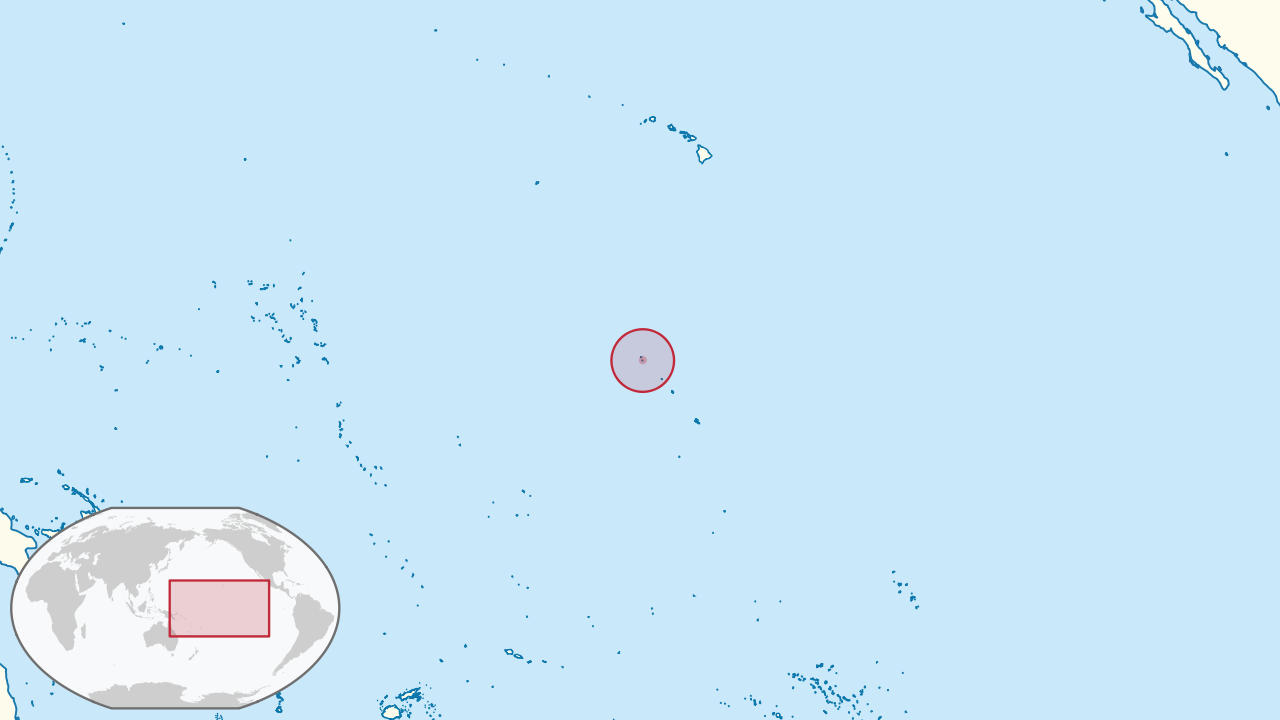
Palmyra Atoll in its region


Geographic Isolation and Ecological Significance
Palmyra Atoll's defining characteristic is its profound geographic isolation, situated at the approximate center of the Pacific Ocean. This remoteness, roughly one-third of the way between Hawaii and American Samoa, places it equidistant from North America and New Zealand, approximately 3,300 miles away. The atoll's landmass, totaling 4.6 square miles, is comprised of numerous islets, many of which have coalesced over time due to natural processes like sand deposition and tidal shifts.
This dynamic landscape is fringed by an extensive coral reef system, supporting a remarkable level of marine biodiversity. The western reef terrace, a significant shelf-reef measuring 2 by 3 miles, is a testament to the healthy coral growth. With over 150 coral species documented, Palmyra Atoll boasts double the diversity found in Hawaii, underscoring its ecological importance as a pristine marine environment.
From Military Outpost to Scientific Sanctuary
The human history of Palmyra Atoll, while brief, has seen significant transformations. During World War II, its strategic location led to its development as a Naval Air Station. This period saw the construction of an airstrip and the modification of West Lagoon into a boat anchorage, facilitating military operations.
The atoll experienced a minor act of aggression when it was shelled by a Japanese submarine in December 1941, shortly after the attack on Pearl Harbor, though it did not become a site of major conflict. Post-war, the atoll's military significance waned. In a pivotal conservation move in 2000, The Nature Conservancy acquired most of the land for $30 million, transforming it into a protected research and conservation area.
This transition highlights a global shift in recognizing the intrinsic value of such unique ecosystems.
Governance and Research Operations
Palmyra Atoll is administered as an incorporated unorganized territory of the United States, a unique governmental status. It is currently the only territory of its kind. The United States Fish and Wildlife Service, under the Department of the Interior, oversees its management.
Submerged portions of the atoll fall under the purview of the Department of the Interior's Office of Insular Affairs. The atoll hosts a transient population, typically ranging from 4 to 25 individuals, comprising scientists, researchers, and support staff from various U.S. government departments and The Nature Conservancy. The Palmyra Atoll Research Consortium facilitates the presence of visiting scholars, fostering a dynamic research environment.
This model ensures minimal human impact while maximizing scientific exploration and data collection.
Conservation as a Global Imperative
Palmyra Atoll's designation as part of the Pacific Islands Heritage Marine National Monument is profoundly significant. This monument represents the world's largest marine protected area, a bold commitment to safeguarding vast ocean ecosystems. The atoll's rich biodiversity, particularly its extensive coral reefs and diverse fish populations, makes it a critical site for studying the impacts of climate change and for developing effective conservation strategies.
The presence of over 150 coral species, a remarkable density, indicates a resilient ecosystem that can serve as a benchmark for other reef systems worldwide. The ongoing research conducted here provides invaluable data for understanding marine health and informs global conservation policies, positioning Palmyra as a vital laboratory for the future of ocean stewardship.
See also
Based on content from Wikipedia · Licensed under CC BY-SA 4.0