

Pakistani People: Friends from a Faraway Land!
Images
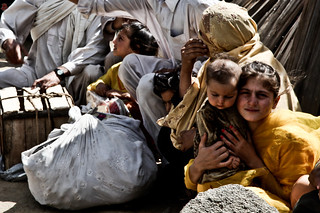
Pakistan Humanitarian Aid


Forging an Identity
Pakistani people represent a complex and dynamic demographic mosaic, primarily inhabiting the nation of Pakistan in South Asia. Their identity is a product of millennia of human settlement, migration, and interaction within a geographically strategic region that has historically served as a nexus for trade and cultural exchange. The population is characterized by significant ethnic and linguistic diversity, with major groups including Punjabis, Sindhis, Pashtuns, Baloch, Muhajirs, and numerous smaller communities.
This diversity is not merely a statistical fact but a lived reality that shapes social structures, political discourse, and cultural expressions. The official languages are Urdu and English, but a multitude of regional languages and dialects, such as Punjabi, Sindhi, Pashto, and Balochi, are spoken daily, each carrying its own rich literary and historical traditions. Understanding Pakistani people requires appreciating this intricate interplay of shared national identity and distinct regional affiliations, a constant negotiation that defines their collective experience.
Chronicles of Resilience
The historical narrative of Pakistani people is deeply rooted in the ancient civilizations that flourished in the Indus River basin, including the sophisticated Indus Valley Civilization (c. 2500–1900 BCE). Over subsequent centuries, the region was influenced by successive waves of migration and conquest, including the arrival of Indo-Aryan peoples, the expansion of empires like the Maurya and Gupta, and the establishment of Islamic rule, notably by the Mughals.
The Mughal era, in particular, left an enduring legacy on art, architecture, language, and governance. The modern nation-state of Pakistan emerged from the partition of British India in 1947, a momentous event that led to mass migrations and the formation of a new political entity. This historical trajectory has imbued Pakistani society with a profound sense of heritage, resilience, and a continuous adaptation to changing geopolitical landscapes.
The experiences of partition, nation-building, and regional conflicts have significantly shaped the collective consciousness and identity of Pakistani people.
Global Contributions and Enduring Significance
The significance of Pakistani people extends globally through their contributions across various domains. In academia and research, Pakistani scientists and scholars have made notable advancements in fields ranging from physics and medicine to computer science and engineering. The nation's rich cultural output, including literature, music (such as Qawwali), and film, has garnered international recognition and influenced global artistic trends.
Pakistani cuisine, a vibrant fusion of regional flavors and aromatic spices, is celebrated worldwide, with dishes like biryani and nihari becoming global favorites. Furthermore, the strong emphasis on community, family, and hospitality is a cultural hallmark that resonates internationally. In the realm of international relations and humanitarian efforts, Pakistani individuals and organizations often play crucial roles in global development and disaster relief.
Their enduring impact lies in their intellectual prowess, artistic creativity, and commitment to social progress, making them integral to the global community.
The Fabric of Society
Pakistani society is characterized by a complex interplay of deeply ingrained cultural values and evolving modern influences. Family remains a central institution, with strong intergenerational bonds and a collective sense of responsibility. Hospitality ('mehman nawazi') is a revered virtue, where guests are treated with utmost respect and generosity.
Religious observance, primarily Islam, plays a significant role in daily life and cultural practices for the majority of the population, influencing social norms and festivals. The country's cultural landscape is a vibrant tapestry woven from diverse regional traditions, evident in its folk music, dance, crafts, and festivals like Eid al-Fitr, Eid al-Adha, and Basant. While traditional values are cherished, Pakistan is also a dynamic society grappling with modernization, technological advancements, and global interconnectedness.
This dynamic tension between tradition and modernity shapes the evolving identity and aspirations of Pakistani people in the 21st century.
See also
Frequently Asked Questions
What are the main ethnic groups in Pakistan?+
Why do people in Pakistan speak many languages?+
How did Pakistan become a country?+
What kinds of food do people in Pakistan like?+
Why are Pakistani scientists and artists famous around the world?+
Based on content from Wikipedia · Licensed under CC BY-SA 4.0