

Paddington Station: A Busy Train Hub!
Images

Two Generations At Paddington - D1023




Brunel's Vision
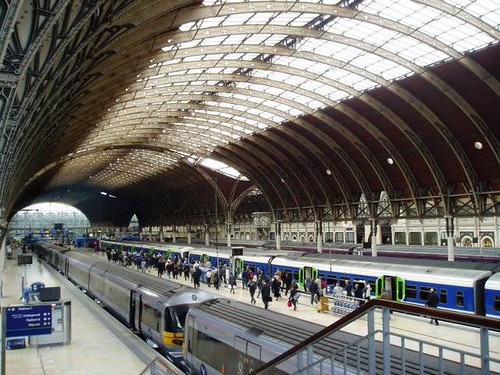
Paddington Station, inaugurated on August 1, 1854, stands as a testament to the engineering prowess of Isambard Kingdom Brunel and the ambition of the Great Western Railway (GWR). Brunel's design was revolutionary, featuring a series of three timber-and-glass train sheds, the largest of which spans an impressive 210 feet (64 meters). This expansive roof, supported by wrought-iron ribs, was not merely an aesthetic choice but a functional necessity, allowing for ample natural light and ventilation in an era of coal-fired steam engines.
The station's construction was integral to the GWR's expansion westward, facilitating faster and more efficient travel between London and its western territories. Its strategic location and innovative design set a new standard for railway architecture, influencing subsequent station developments across the globe and solidifying its role as a critical node in Britain's burgeoning industrial landscape.
Adapting to the Age of Speed and Air Travel
Throughout its long history, Paddington Station has continuously adapted to technological advancements and changing travel patterns. From the dominance of steam locomotives in the Victorian and Edwardian eras to the introduction of electric trains and, more recently, high-speed rail, the station has undergone numerous refurbishments and upgrades. A pivotal moment in its modern history was the development of the Heathrow Express service, launched in 1998.
This dedicated high-speed rail link connects Paddington directly to London Heathrow Airport, one of the world's busiest international airports. This integration highlights Paddington's evolving role, transitioning from a regional terminus to a crucial international gateway, facilitating seamless multimodal journeys for millions of passengers annually and underscoring its continued relevance in the global transportation network.
Cultural Resonance
Beyond its functional significance, Paddington Station holds a unique place in British popular culture, most notably as the point of arrival for the eponymous Paddington Bear. Michael Bond's creation, discovered by the Brown family at Paddington Station in his 1958 book 'A Bear Called Paddington,' has cemented the station's image in the global consciousness. The statue of Paddington Bear, often adorned with tributes from visitors, serves as a tangible link between the station's historical identity and its enduring literary legacy.
This cultural association transforms Paddington from a mere transit point into a destination in itself, attracting tourists and fans, and contributing to the station's multifaceted identity as both a vital piece of infrastructure and a beloved cultural landmark.
Socio-Economic Impact and Urban Development
The presence and continuous development of Paddington Station have had profound socio-economic impacts on its surrounding area and the wider London region. As a major transport interchange, it has spurred significant urban regeneration and economic activity in the Paddington district. The station facilitates commuting for a vast workforce, supports tourism by providing access to central London attractions, and enables the efficient movement of goods, contributing to regional and national economic growth.
Its role as a hub for both domestic and international travel underscores its strategic importance in connecting people, businesses, and opportunities. The ongoing evolution of Paddington, including potential future developments, continues to shape urban planning and economic strategy in the capital.
See also
Frequently Asked Questions
What is Paddington Station and why is it special?+
How did Paddington Station help people travel in the past?+
Why does Paddington Station have a statue of Paddington Bear?+
What is the Heathrow Express and when did it start?+
How does Paddington Station affect the city of London?+
Based on content from Wikipedia · Licensed under CC BY-SA 4.0