

Occitanie
Images

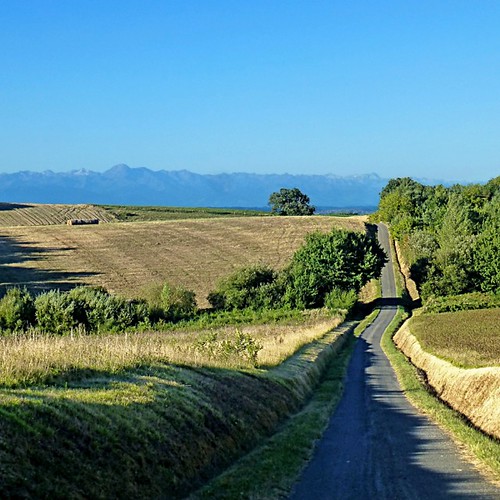
Aude, Occitanie, France



Geographical Tapestry
Occitanie's geography is defined by its immense scale and striking contrasts. Situated in the south of France, it stretches from the Mediterranean coast in the east to the Spanish border in the west, encompassing a significant portion of the country's southern expanse. The region is bisected by the Garonne River and its tributaries, shaping fertile plains ideal for agriculture.
To the south, the formidable Pyrenees mountain range forms a natural border with Spain, offering dramatic alpine landscapes, ski resorts, and challenging hiking trails. The Massif Central, a large upland area, also extends into the northern parts of Occitanie, characterized by volcanic plateaus and deep river valleys. The climate varies accordingly, from a Mediterranean climate with hot, dry summers and mild winters along the coast, to a more continental climate inland and a mountain climate in the Pyrenees.
This varied topography supports a rich biodiversity and influences the region's economic activities, from viticulture and tourism to hydroelectric power generation.
A Palimpsest of History
The historical narrative of Occitanie is exceptionally complex, reflecting centuries of distinct cultural development and geopolitical shifts. The region was historically known as Occitania, a territory where the Occitan language flourished. This area was a cradle of the troubadour tradition in the Middle Ages, a period marked by a sophisticated courtly culture and poetic expression.
The region also witnessed the Albigensian Crusade in the 13th century, a brutal conflict that significantly impacted its distinct identity and led to the decline of Catharism. Later, it became a frontier zone, experiencing periods of both royal consolidation and regional resistance. The French Revolution and subsequent administrative reforms led to the creation of numerous departments, many of which were merged in 2016 to form the modern Occitanie region.
This administrative union brought together former regions with unique historical trajectories, such as Languedoc-Roussillon and Midi-Pyrénées, creating a vast entity that now seeks to forge a unified regional identity while honoring its diverse historical legacies. Sites like the Cité de Carcassonne and the Pont du Gard are testaments to its enduring historical significance.
Cultural Mosaic
Occitanie's cultural landscape is a vibrant mosaic, deeply rooted in its historical Occitan heritage and enriched by centuries of interaction. While French is the official language, the Occitan language and its dialects, such as Gascon and Languedocien, are still spoken and actively preserved through cultural associations, festivals, and educational initiatives. This linguistic diversity is a key component of the region's identity.
Gastronomy plays a central role, with a culinary tradition that emphasizes fresh, local ingredients and hearty, flavorful dishes. Iconic specialties include cassoulet, confit de canard, Roquefort cheese, and a wide array of wines from appellations like Bordeaux (partially), Languedoc, and Cahors. The region is also a significant producer of fruits, vegetables, and olives.
Culturally, Occitanie is known for its lively festivals, traditional music (often featuring instruments like the accordion and bagpipes), and a strong artistic presence, particularly in cities like Toulouse, which boasts numerous theaters, museums, and galleries. The region's commitment to preserving its heritage is evident in its numerous UNESCO World Heritage sites and its vibrant contemporary arts scene.
Economic Engine
The economy of Occitanie is characterized by a dynamic interplay between traditional sectors and advanced industries. Agriculture remains a vital component, with the region being a leading producer of wine, fruits, vegetables, and livestock. The Mediterranean climate and fertile plains support extensive viticulture, making it one of France's largest wine-producing areas.
However, Occitanie is also a powerhouse of innovation and technology. Toulouse, the regional capital, is a global hub for the aerospace industry, home to Airbus and a significant concentration of aeronautical research and manufacturing. The space sector is also prominent, with the French National Centre for Space Studies (CNES) having a major presence.
Beyond aerospace, the region is investing heavily in renewable energy, particularly solar and wind power, aligning with national and European climate goals. Tourism is another crucial economic driver, attracting millions of visitors annually to its diverse attractions, including historical cities, coastal resorts, and mountain destinations. This multifaceted economic structure positions Occitanie as a significant contributor to the French national economy.
Governance and Education
Occitanie is governed as one of France's 18 administrative regions. The regional government, led by a President and a Regional Council, is responsible for a range of policy areas, including economic development, transportation infrastructure, vocational training, and the management of high schools (lycées). The creation of the unified Occitanie region in 2016 aimed to streamline administration, foster greater economic synergy, and enhance the region's competitiveness on a national and international scale.
The educational system in Occitanie mirrors the French national model, with a strong emphasis on public education. The region hosts several major universities, most notably the University of Toulouse, which is a comprehensive institution offering a wide array of programs across various disciplines. There is also a significant focus on vocational and technical education, particularly in fields related to the region's key industries like aerospace, agriculture, and tourism.
This commitment to education and training is crucial for equipping the workforce with the skills needed to thrive in Occitanie's evolving economic landscape and for fostering innovation and research.
Go deeper
Frequently Asked Questions
What is Occitanie?+
Where is Occitanie in France?+
What kind of mountains and beaches can you find in Occitanie?+
What yummy foods are famous in Occitanie?+
What languages are spoken in Occitanie?+
Based on content from Wikipedia · Licensed under CC BY-SA 4.0