

Nicolas Sarkozy
Images
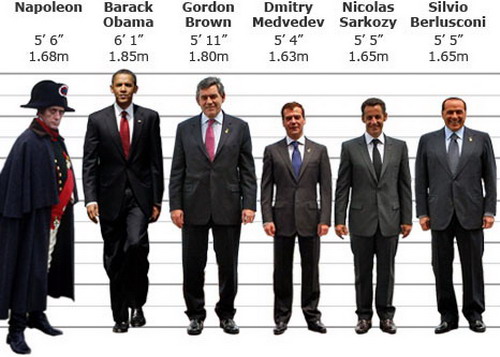
Heights of world leaders: Napoleon Bonaparte, Barack Obama, Gordon Brown, Dmitry Medvedev, Nicolas Sarkozy and Silivo Berlusconi via the behaviour guru


From Parisian Roots to Political Ascendancy
Nicolas Paul Stéphane Sarközy de Nagy-Bocsa, born in Paris on January 28, 1955, embodies a complex Franco-European identity. His paternal lineage traces back to Hungarian nobility, while his maternal side carries Greek Jewish and French Catholic heritage. This multicultural background undoubtedly informed his political outlook.
Sarkozy's early political career was marked by a steady climb through the ranks. He served as Mayor of Neuilly-sur-Seine, a wealthy Parisian suburb, for an impressive nineteen years (1983-2002). This tenure provided him with invaluable experience in municipal administration and public engagement.
His transition to national politics saw him hold significant ministerial portfolios, including Minister of the Budget (1993-1995) and later, under Jacques Chirac, Minister of the Interior and Minister of Finances. These roles exposed him to the intricacies of national economic policy and security matters, preparing him for the ultimate leadership challenge.
Presidency Amidst Global Turmoil and Reform Agendas
Sarkozy's victory in the 2007 presidential election propelled him to the forefront of French and international politics. His term (2007-2012) coincided with a period of significant global upheaval. He was tasked with steering France through the profound impact of the 2008 global financial crisis and the subsequent recession, a challenge that demanded decisive economic and fiscal measures.
On the international stage, Sarkozy demonstrated a proactive diplomatic approach. He played a crucial role in negotiating a ceasefire agreement to end the Russo-Georgian War in 2008, showcasing his commitment to conflict resolution. Domestically, his presidency was characterized by ambitious reform initiatives.
The reform of French universities in 2007 aimed to enhance their autonomy and competitiveness, while the controversial pension reform of 2010 sought to address the long-term sustainability of the French welfare system. These policies, while intended to modernize France, also generated considerable public debate and opposition.
The Arab Spring and Shifting Geopolitical Landscapes
The latter part of Sarkozy's presidency was significantly shaped by the unfolding events of the Arab Spring. Beginning in late 2010, this wave of protests and uprisings across the Middle East and North Africa presented France, as a major European power, with complex foreign policy decisions. Sarkozy's administration was particularly engaged in the situations in Tunisia, Libya, and Syria, navigating delicate diplomatic and humanitarian considerations.
France's involvement in the NATO-led intervention in Libya, aimed at protecting civilians, was a notable aspect of this period. The Arab Spring underscored the interconnectedness of global events and the challenges faced by leaders in responding to rapid geopolitical shifts and popular movements.
Political Comeback and Legal Reckoning
Following his defeat in the 2012 presidential election, Sarkozy initially announced his retirement from public life. However, his political instincts soon resurfaced, leading him to return as the leader of his party, which was rebranded as The Republicans in 2015. He sought a return to the presidency through the 2016 Republican primary but was ultimately unsuccessful, marking his definitive retirement from electoral politics.
The post-presidency era for Sarkozy has been largely defined by a series of legal proceedings. He has faced charges and convictions related to corruption, including allegations of improper dealings with Libyan officials during his 2007 campaign and other instances of alleged influence peddling. These legal battles have resulted in prison sentences, though often under appeal or with suspended terms, casting a long shadow over his legacy and highlighting the intense scrutiny faced by former heads of state.
See also
Frequently Asked Questions
Who is Nicolas Sarkozy?+
Where was Nicolas Sarkozy born?+
What roles did Sarkozy have before becoming president?+
What did Sarkozy do during the 2008 financial crisis?+
Did Sarkozy help stop wars?+
Based on content from Wikipedia · Licensed under CC BY-SA 4.0