

New York-Style Pizza: A Slice of Awesome!
Images

Enjoying some authentic New York style pizza in San Francisco. #ironicbutdelicious #fb


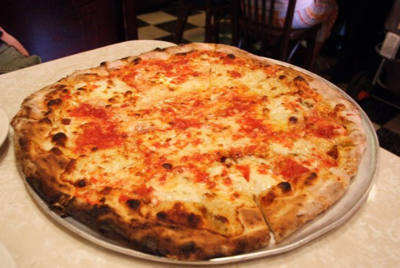


The Urban Crucible
New York-style pizza is inextricably linked to the urban geography of New York City, a sprawling metropolis on the Atlantic coast of the United States. The city's dense population, high-paced lifestyle, and diverse immigrant communities created a unique culinary landscape. The need for quick, affordable, and portable food solutions was paramount.
The city's grid system and extensive public transportation facilitated the widespread availability of pizza slices. The climate, characterized by distinct seasons, also plays a role, with pizza being a comforting staple during colder months and a convenient option during warmer ones. The sheer scale and energy of New York City provided the perfect incubator for a pizza style that is both robust and adaptable, reflecting the city's own dynamic character.
The architectural landscape, with its tall buildings and bustling streets, further emphasizes the need for a food that can be consumed efficiently and on the move.
From Naples to the Five Boroughs
The genesis of New York-style pizza is a fascinating narrative of cultural adaptation and culinary innovation, tracing its roots back to Italian immigration in the late 19th and early 20th centuries. Italian immigrants brought their traditional pizza-making techniques, primarily from Naples, to the burgeoning neighborhoods of New York City. However, American ingredients and consumer preferences necessitated modifications.
Bakers experimented with different flours, notably using higher-gluten bread flour, which allowed for a larger, thinner, and more elastic dough. They also discovered that baking at higher temperatures, often in coal-fired or gas ovens, produced a distinct crust with a crisp bottom and a slightly chewy interior. The size of the pizzas also increased significantly compared to their Neapolitan ancestors, enabling the creation of the iconic large, foldable slices.
This evolution was not just about taste but also about practicality, catering to a working-class population seeking a filling and economical meal.
The Art and Science of the Foldable Slice
The defining characteristics of New York-style pizza are its large diameter (typically 18-24 inches), thin crust, and pliable texture. The dough is hand-tossed, often with a technique that creates a thin base with a slightly raised, airy edge. The use of high-gluten flour is crucial, providing the elasticity needed for stretching the dough thinly without tearing.
Baking occurs at very high temperatures, often exceeding 500°F (260°C), frequently on a pizza stone or steel, which ensures a rapid bake and a crisp bottom crust. The sauce is typically a simple, uncooked blend of crushed tomatoes, seasoned minimally with salt, oregano, and garlic, allowing the fresh tomato flavor to dominate. A generous topping of low-moisture mozzarella cheese is standard, melting into a gooey, consistent layer.
The large size and thinness of the crust are what enable the signature 'fold,' a technique where the slice is bent lengthwise to create a more manageable eating experience, preventing toppings from sliding off and concentrating flavors.
A Culinary Emblem
New York-style pizza has transcended its status as mere food to become a cultural emblem and a significant economic driver. It represents the city's identity: diverse, energetic, and accessible. The pizza slice is a democratic symbol, enjoyed by people from all walks of life, from tourists to locals, business professionals to students.
Its ubiquity in the city's landscape, from corner delis to dedicated pizzerias, makes it an integral part of the urban experience. Economically, the pizza industry in New York is substantial, supporting numerous businesses and jobs. The style has also been exported globally, influencing pizza-making traditions worldwide.
The enduring popularity of New York-style pizza is a testament to its perfect balance of flavor, texture, affordability, and convenience, solidifying its place as a beloved and iconic culinary contribution from the Big Apple. It's a food that tells a story of immigration, innovation, and urban life.
The Educational Slice
Studying New York-style pizza offers a unique lens through which to explore various educational concepts. In geography, it highlights the impact of urban environments and cultural diffusion on food. Students can learn about the ingredients' origins and the supply chains involved. History lessons can delve into immigration patterns, the development of American cuisine, and the evolution of food businesses. Science comes into play when examining the chemical reactions of baking, the properties of gluten in dough, and the physics of heat transfer in ovens. Economics can be explored through the business models of pizzerias, market competition, and the global reach of this food style.
Even sociology can be touched upon by discussing how food serves as a social connector and a marker of identity. Understanding New York-style pizza provides a delicious and engaging way to learn about a wide range of subjects, demonstrating how everyday items can be rich with educational value.
See also
Frequently Asked Questions
What makes New York-style pizza different from other pizzas?+
Why do people fold a slice of New York pizza?+
Where did New York-style pizza come from?+
How is the crust of New York pizza made?+
Why is New York pizza a cultural symbol?+
Based on content from Wikipedia · Licensed under CC BY-SA 4.0