

Moscow Exchange: Where Money Plays!
Images

Smoke


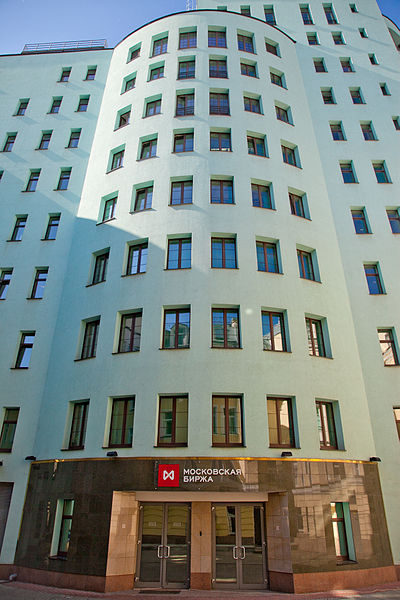


Geographic and Operational Nexus
The Moscow Exchange (MOEX) is strategically situated in Moscow, the political and economic heart of the Russian Federation. As Russia's largest exchange, its location is paramount, placing it at the nexus of national commerce and international financial flows. MOEX operates a comprehensive suite of trading markets, encompassing equities, bonds, derivatives, foreign exchange, money markets, and precious metals.
This diverse portfolio allows it to serve as a critical platform for capital formation, investment, and risk management for a wide array of participants, from individual investors to large corporations and governmental bodies. The exchange’s infrastructure is designed to facilitate high-volume, high-speed trading, reflecting its central role in the nation's economic machinery. Its operations are governed by stringent regulatory frameworks, ensuring transparency and stability within the Russian financial system.
Genesis and Consolidation
The modern Moscow Exchange is the product of a significant strategic consolidation that occurred in 2011. Prior to this, two major players dominated the Russian financial scene: the Moscow Interbank Currency Exchange (MICEX) and the Russian Trading System (RTS). MICEX was primarily known for its bond and currency trading, while RTS specialized in equities.
The merger was a deliberate move to create a more unified, efficient, and globally competitive exchange. By combining their strengths, resources, and technological capabilities, the new entity, MOEX, was able to offer a broader range of services, reduce operational costs, and enhance liquidity across all its markets. This consolidation was a pivotal moment in modernizing Russia's financial infrastructure and positioning it for greater integration into the global economy.
Beyond Trading
MOEX's influence extends far beyond its trading floors; it plays a crucial role in the foundational infrastructure of Russia's financial system. It operates the National Settlement Depository (NSD), which serves as Russia's central securities depository. The NSD is responsible for the safekeeping and administration of securities, ensuring the integrity of ownership records and facilitating the smooth settlement of trades.
Complementing this is the National Clearing Centre (NCC), the country's largest clearing service provider. The NCC acts as a central counterparty in trades, mitigating counterparty risk by guaranteeing the fulfillment of obligations. This dual role as a market operator and a provider of critical post-trade services underscores MOEX's systemic importance, providing a robust and reliable framework for financial transactions.
Economic Magnitude
The economic scale of the Moscow Exchange is truly immense, reflecting its deep integration into Russia's economic fabric. By the close of 2023, the total trading volume across all MOEX platforms had reached an astonishing 1.3 quadrillion rubles. This figure translates to approximately $14 trillion USD, a sum that highlights the sheer magnitude of financial activity channeled through the exchange.
This colossal volume signifies MOEX's role not only as a domestic financial powerhouse but also as a significant player in international financial markets. The exchange’s performance is a key indicator of Russia's economic health and its capacity to attract both domestic and foreign investment, influencing economic policy and market sentiment.
Governance and Future Trajectory
The governance of the Moscow Exchange involves a complex structure designed to ensure fairness, transparency, and adherence to international best practices. As a publicly traded company itself, MOEX operates under the oversight of regulatory bodies like the Central Bank of Russia. Its strategic decisions are crucial for shaping the future of Russian finance, including its adaptation to evolving global economic conditions, technological advancements, and geopolitical landscapes.
The exchange continuously invests in technology and product development to maintain its competitive edge and to meet the changing needs of its diverse client base. Its ability to navigate these complexities will determine its continued success and its role in fostering economic growth and stability for Russia.
See also
Based on content from Wikipedia · Licensed under CC BY-SA 4.0