

Modern architecture
Images
Modern architecture
The Genesis of Modernism
Modern architecture emerged as a radical departure from historical styles, deeply influenced by the seismic shifts of the Industrial Revolution. The late 19th and early 20th centuries witnessed unprecedented technological advancements, particularly in materials science and engineering. The widespread availability of steel allowed for the construction of skeletal frames, liberating architects from the load-bearing constraints of masonry.
This innovation enabled the creation of taller buildings with larger, uninterrupted interior spaces and expansive window openings, a stark contrast to the heavy, solid forms of previous eras. Furthermore, reinforced concrete offered new possibilities for shaping structures, allowing for curves and cantilevers previously unimaginable. This period saw a conscious rejection of applied ornamentation, with architects advocating for designs that expressed the honesty of materials and the clarity of structure.
The philosophy was to create buildings that were not merely shelters but efficient, rational, and aesthetically pure reflections of the modern age.
Ideological Pillars
At the heart of modern architecture lay a set of powerful ideologies. Functionalism, famously encapsulated by Louis Sullivan's adage 'form ever follows function,' posited that a building's design should be dictated by its purpose. This led to an emphasis on efficiency, clarity, and the elimination of superfluous decoration. Rationalism championed logic and order in design, often resulting in geometric purity and modularity.
Visionaries like Le Corbusier proposed 'machines for living,' envisioning standardized, mass-producible housing that could solve urban overcrowding and improve living conditions. The Bauhaus school, founded by Walter Gropius, became a crucible for these ideas, integrating art, craft, and technology to foster a holistic approach to design. Architects sought to create environments that were not only practical but also uplifting, believing that well-designed spaces could positively impact society and foster a better way of life, often with utopian aspirations for the future.
Key Figures and Their Enduring Legacies
The landscape of modern architecture was shaped by a pantheon of influential figures. Frank Lloyd Wright, though often forging his own path, championed organic architecture, designing buildings that harmonized with their natural surroundings, exemplified by Fallingwater. Walter Gropius, as the founder of the Bauhaus, established a pedagogical model that profoundly influenced design education worldwide, advocating for collaboration and the integration of art and industry.
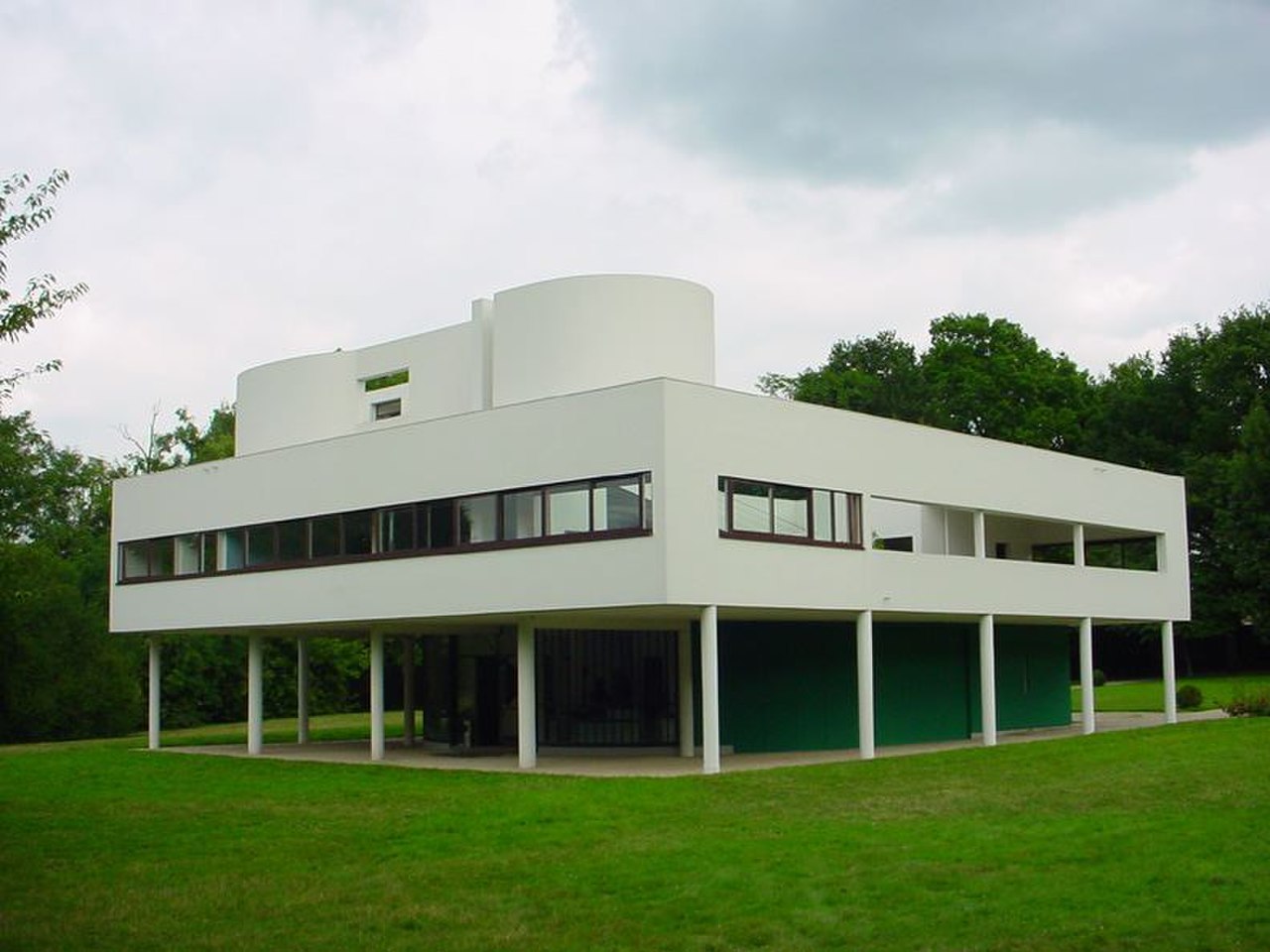
Mies van der Rohe, another Bauhaus director, became synonymous with elegant minimalism and the 'less is more' philosophy, perfecting the use of steel and glass in iconic structures like the Seagram Building. Le Corbusier's Five Points of Architecture (pilotis, free facade, open floor plan, ribbon windows, roof garden) provided a theoretical framework for many modern designs. These architects, through their built works and theoretical writings, laid the groundwork for much of the architecture that followed.
The Global Reach and Evolution of Modernism
Modern architecture quickly transcended its European origins, becoming a global phenomenon. Its principles were adopted and adapted in diverse cultural contexts, leading to variations and regional interpretations. The International Style, characterized by its emphasis on volume over mass, regularity, and the avoidance of applied ornament, became particularly dominant in the mid-20th century.
Iconic examples include the United Nations Headquarters in New York and numerous skyscrapers that defined urban skylines worldwide. While celebrated for its efficiency and aesthetic clarity, modern architecture also faced criticism for its perceived coldness, uniformity, and detachment from historical context. This eventually paved the way for subsequent movements like Postmodernism, which sought to reintroduce complexity, historical reference, and a greater sense of playfulness into architectural design, demonstrating the continuous evolution of building philosophies.
Modern Architecture's Enduring Impact on Contemporary Design
The legacy of modern architecture continues to resonate profoundly in contemporary design. Its core tenets-functionalism, structural honesty, and the innovative use of materials-remain fundamental principles for many architects today. The emphasis on natural light, open floor plans, and a connection between indoor and outdoor spaces, pioneered by modernists, is now a standard expectation in residential and commercial design.
Furthermore, the technological advancements in materials and construction methods that modern architecture embraced have laid the foundation for today's sustainable and technologically advanced buildings. While architectural styles have diversified, the modernist revolution fundamentally altered our perception of what a building can be, shifting the focus from historical imitation to forward-looking innovation and a deep consideration of human needs within the built environment.
Its influence is visible not just in grand structures but in the very fabric of our modern cities.
Go deeper
Frequently Asked Questions
What is modern architecture?+
Why did modern architects stop using lots of decorations?+
How did steel help modern buildings become taller?+
Who was Le Corbusier and what were his five ideas?+
What is the Bauhaus school and why is it important?+
Based on content from Wikipedia · Licensed under CC BY-SA 4.0