

MetLife Stadium
Images

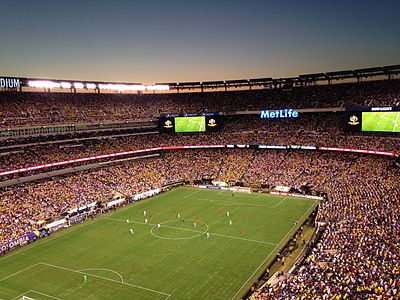
Metlife stadium (Aerial view)


The Dual-Team Tenancy
MetLife Stadium stands out in the National Football League not only for its impressive scale but also for its unique operational model: it is one of only two stadiums in the league that serves as the home ground for two distinct NFL franchises, the New York Giants and the New York Jets. This dual-team tenancy, a concept with historical precedents in the New York metropolitan area like the Polo Grounds and Shea Stadium, necessitates sophisticated logistical planning and a flexible design.
The stadium's infrastructure is engineered to facilitate rapid transitions between the branding and visual identities of both teams, a complex process that underscores the stadium's advanced capabilities. This shared arrangement is a testament to efficient stadium management and a strategic approach to maximizing the utilization of a high-cost, high-capacity facility, making it a model for other potential shared venues.
Architectural Ambition and Economic Impact
The construction of MetLife Stadium, completed in 2010, represented a significant investment in sports infrastructure, with an approximate cost of $1.6 billion. This figure positioned it as the most expensive stadium built in the United States at the time of its completion, reflecting a commitment to state-of-the-art design, advanced technology, and unparalleled fan amenities. The stadium replaced the aging Giants Stadium, signaling a new era for the Meadowlands Sports Complex.
Its development was not just about creating a new home for two football teams; it was about building a landmark that could attract major national and international events, thereby generating substantial economic benefits for the region through tourism, employment, and ancillary business activity.
A Global Stage
MetLife Stadium's prominence extends far beyond its role as an NFL venue. Its selection to host Super Bowl XLVIII in 2014 marked a significant achievement, bringing the NFL's championship game to a cold-weather, open-air stadium for the first time. More recently, its designation as the venue for the final of the 2026 FIFA World Cup underscores its status as a world-class international sporting arena.
This choice places the stadium at the epicenter of global soccer attention, anticipating a massive influx of international visitors and media. The stadium also played host to matches during the 2025 FIFA Club World Cup, further cementing its reputation for hosting elite international competitions and showcasing its versatility.
Scale and Sophistication
As the largest stadium in New Jersey and the largest venue within the NFL, MetLife Stadium's sheer dimensions are awe-inspiring, with a seating capacity exceeding 82,000 spectators. This immense scale is matched by its sophisticated design, which prioritizes an immersive fan experience through advanced audiovisual systems, extensive concourse areas, and a variety of premium seating options. The stadium's architectural features are engineered to enhance sightlines and acoustics, ensuring that every attendee feels connected to the action on the field.
Its capacity and modern amenities make it a highly sought-after location for a wide range of events, from major sporting championships to large-scale concerts and other entertainment spectacles.
See also
Frequently Asked Questions
What is MetLife Stadium?+
Why do the Giants and Jets share the same stadium?+
How many people can the stadium hold?+
When was MetLife Stadium built?+
What big events have taken place at MetLife Stadium?+
Based on content from Wikipedia · Licensed under CC BY-SA 4.0