

Marshall Islands
Images
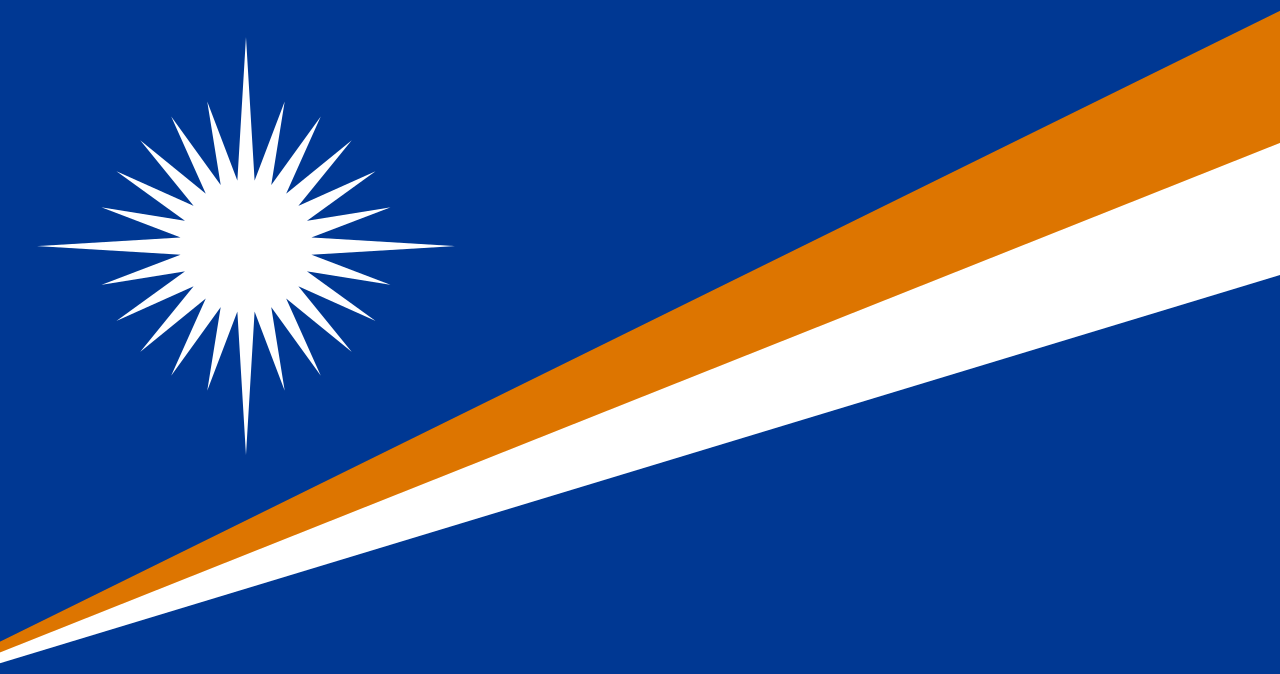
Marshall Islands
Opens Google Maps in new tab
Geographical Marvel
The Marshall Islands, officially the Republic of the Marshall Islands, is a sovereign state situated in Oceania, west of the International Date Line and north of the equator in the Micronesia region of the Northwestern Pacific Ocean. Its territory is comprised of 29 coral atolls and five main islands, alongside 1,220 smaller islets, divided into two chains: Ratak (east) and Ralik (west). What makes the Marshall Islands geographically unique is its extreme land-to-water ratio; 98.13% of its territory is water, the highest proportion of any sovereign state.
This vast expanse of ocean influences everything from its climate to its economy and culture. The capital and largest city, Majuro, is home to approximately half the nation's population, serving as its administrative and economic hub. The nation's existence as one of only four atoll-based nations globally underscores its distinct environmental and cultural identity.
A Tapestry of History
The human history of the Marshall Islands stretches back to the 2nd millennium BC, when Austronesian settlers arrived, establishing a sustainable existence with introduced crops like coconuts and breadfruit, and domesticated chickens. Spanish expeditions sighted the islands in the mid-16th century, but it was British Captain John Marshall who, in 1788, explored the region, lending his name to the archipelago. The late 19th century saw German economic influence and annexation.
The 20th century brought dramatic shifts: Japanese occupation in 1914 led to the islands becoming part of the Japanese South Seas Mandate. Following World War II, the United States occupied the islands and administered them as part of the Trust Territory of the Pacific Islands. A profoundly impactful and controversial period was the US nuclear testing program from 1946 to 1958, which conducted 67 tests at Bikini and Enewetak Atolls, causing significant environmental and health consequences that continue to affect the islands and their people.
Sovereignty, Governance, and International Relations
The path to modern self-governance for the Marshall Islands involved steps like the formation of the Congress of Micronesia in 1965. In May 1979, the United States recognized the Marshall Islands' constitution and president, Amata Kabua, granting independence. Full sovereignty was achieved through a Compact of Free Association with the United States, which outlines a relationship where the U.S. provides defense, subsidies, and access to federal agencies, while the Marshall Islands governs its internal affairs.
The nation has been a member of the United Nations since 1991 and the Pacific Community since 1983. This free association model is crucial for the nation's economy and security, though it also raises questions about true independence and long-term sustainability as aid structures evolve. The country utilizes the United States dollar as its currency, demonstrating a strong economic link.
Economic Realities and Cultural Resilience
The economy of the Marshall Islands is characterized by its limited natural resources and its reliance on external factors. Key industries include fishing and agriculture, particularly coconut cultivation. However, a substantial portion of the nation's Gross Domestic Product (GDP) is derived from financial aid provided by the United States under the Compact of Free Association.
While much of this aid was set to expire in 2023, it was extended for another 20 years, providing a degree of economic stability. The nation has also shown an interest in innovative economic solutions, such as its announcement of plans for a new cryptocurrency to be used as legal tender. The population is predominantly of Marshallese descent, with small immigrant communities.
The official languages are Marshallese and English, and religious life is significant, with a majority adhering to Christian denominations. This blend of traditional livelihoods, external economic support, and cultural continuity defines the nation's economic and social landscape.
Environmental Vulnerability and Future Outlook
The low-lying nature of the Marshall Islands' coral atolls makes them exceptionally vulnerable to the impacts of climate change, particularly sea-level rise. Rising ocean levels threaten freshwater sources, coastal infrastructure, and traditional ways of life, posing an existential risk to the nation. The legacy of nuclear testing also continues to be a significant concern, with ongoing environmental contamination and health issues in affected areas.
Despite these profound challenges, the Marshallese people demonstrate remarkable resilience and cultural strength. Their deep connection to the ocean and their ancestral lands, coupled with their active participation in international climate change discussions, highlights their determination to preserve their nation and culture for future generations. The nation's future hinges on addressing these environmental threats while navigating its unique geopolitical status.
Go deeper
Frequently Asked Questions
What is the Marshall Islands?+
Why are there so many islands in the Marshall Islands?+
Where is the capital of the Marshall Islands?+
How does the United States help the Marshall Islands?+
How did the Marshall Islands get its name?+
Based on content from Wikipedia · Licensed under CC BY-SA 4.0