

Mars Express: Our Robot Friend on Mars!
Images
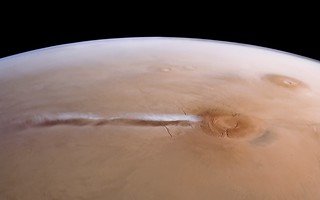
Arsia Mons Cloud - Mars Express


Pioneering European Interplanetary Endeavor
The Mars Express mission, launched by the European Space Agency (ESA) on June 2, 2003, stands as a landmark achievement, representing ESA's first foray into deep space planetary exploration. Conceived as a dual-component mission comprising the Mars Express Orbiter and the Beagle 2 lander, it aimed to conduct comprehensive in-situ and remote sensing investigations of Mars and its two moons, Phobos and Deimos. The Orbiter was equipped with a sophisticated suite of scientific instruments designed for high-resolution imaging, mineralogical mapping, atmospheric analysis, and subsurface sounding.
The Beagle 2 lander, though ultimately unsuccessful in its full deployment, was designed for exobiology and geochemistry research, representing a significant technological challenge for the agency at the time. The mission's success has fundamentally reshaped Europe's role in Mars exploration.
Unlocking Martian Secrets
Following the challenging landing of Beagle 2, the Mars Express Orbiter has become the linchpin of the mission, delivering an unprecedented wealth of scientific data since its arrival at Mars in December 2003. Its high-resolution stereo camera (HRSC) has generated detailed topographic maps and multispectral images, revealing geological features such as ancient riverbeds, volcanoes, and impact craters with remarkable clarity. The MARSIS radar sounder has been instrumental in probing the Martian subsurface, providing evidence for buried glaciers, permafrost, and potentially liquid water reservoirs, offering critical insights into the planet's hydrological history.
Spectrometers like OMEGA and SPICAM have meticulously analyzed the mineralogical composition of the surface and the atmospheric composition and structure, contributing to our understanding of Martian climate evolution and atmospheric escape processes.
Longevity and Adaptability
The exceptional scientific return and the inherent flexibility of the Mars Express mission profile have led to numerous mission extensions, far surpassing its initial operational design. This sustained performance, operating continuously around Mars for over two decades, places it among the longest-serving planetary spacecraft in history. As of March 7, 2023, its operational period has been confirmed through December 31, 2026, with a provisional extension reaching December 31, 2028.
This remarkable longevity, second only to NASA's Mars Odyssey among continuously active orbiters around planets other than Earth, is a testament to the robust engineering, meticulous operational planning, and the ongoing scientific relevance of the data being collected.
Broader Implications
The scientific findings from Mars Express have profound implications for our understanding of planetary habitability and the potential for extraterrestrial life. By characterizing the distribution of water ice and minerals indicative of past water activity, the mission provides crucial context for astrobiological investigations. Its atmospheric studies contribute to comparative planetology, helping scientists model the evolution of planetary atmospheres and the factors that can lead to habitability or its loss.
The mission's data informs future landing site selection for rovers and sample return missions, guiding the search for biosignatures. Furthermore, the continuous monitoring of the interaction between the Martian atmosphere and the interplanetary medium offers insights into space weather and its impact on planetary environments, relevant even to Earth's own magnetosphere.
Technological Innovations and Future Trajectories
Mars Express has not only been a scientific powerhouse but also a platform for technological advancement. The development and successful operation of instruments like MARSIS, capable of penetrating the Martian subsurface, pushed the boundaries of radar sounding technology. The mission's sustained operation also provides a valuable platform for testing new operational strategies and data analysis techniques.
As Mars Express continues its extended mission, it remains a vital asset in the global effort to explore Mars, complementing ongoing and future missions by providing a consistent orbital perspective and a wealth of historical data against which new discoveries can be measured. Its legacy is one of persistent scientific inquiry and European leadership in space exploration.
See also
Frequently Asked Questions
What is Mars Express and when did it launch?+
What did the Mars Express Orbiter do?+
Why was the Beagle 2 lander important?+
How long has Mars Express been working?+
What cool things has Mars Express discovered?+
Based on content from Wikipedia · Licensed under CC BY-SA 4.0