

Spectroscopy: Seeing the Unseen Rainbows!
Images
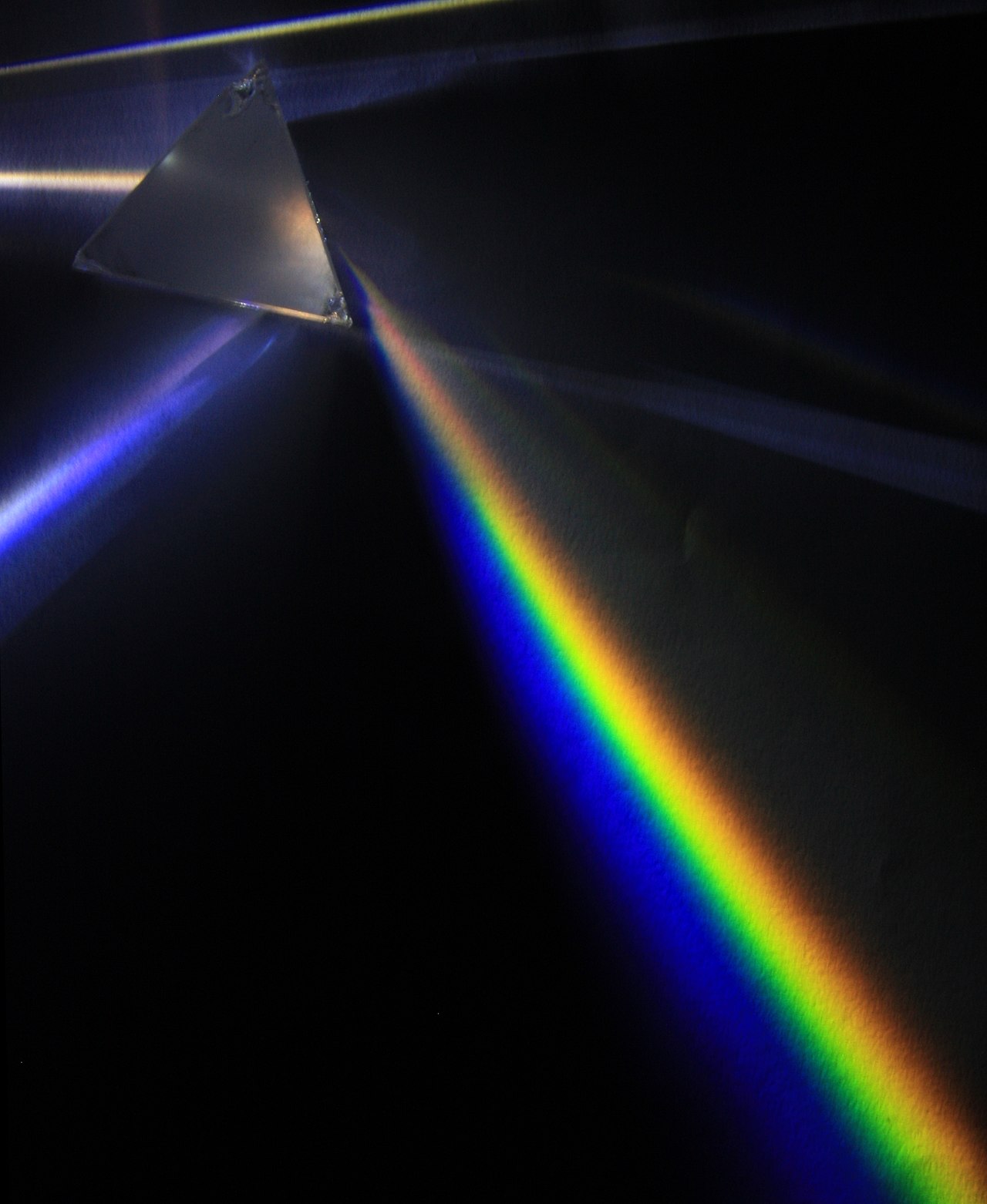
Spectroscopy


Foundations of Spectroscopy
Spectroscopy is the scientific discipline concerned with the measurement and interpretation of electromagnetic spectra. At its heart, it is the study of how matter interacts with electromagnetic radiation across the entire spectrum, from radio waves to gamma rays. This interaction can manifest as absorption, emission, or scattering of photons, with each process yielding unique spectral signatures.
These signatures are fundamentally determined by the quantum mechanical properties of atoms and molecules, specifically their energy levels. When radiation of a specific frequency matches the energy difference between two quantum states, absorption or emission occurs. By analyzing the wavelengths at which these events happen and their intensities, spectroscopists can deduce a wealth of information about the sample.
This includes elemental composition, isotopic ratios, molecular structure, electronic configuration, oxidation states, and even physical conditions like temperature and pressure. The precision of modern spectroscopic techniques allows for analysis at the atomic and molecular scale, making it an indispensable tool for scientific inquiry.
A Historical Trajectory
The genesis of spectroscopy can be traced to the early 19th century with observations of spectral lines. Joseph von Fraunhofer's meticulous study of dark lines in the solar spectrum (Fraunhofer lines) in 1814 marked a pivotal moment, demonstrating that these lines corresponded to specific elements absorbing light. This paved the way for Kirchhoff and Bunsen’s groundbreaking work in the 1850s, who established that heated elements emit characteristic spectra and that these spectral fingerprints could be used to identify elements.
Initially confined to visible light and optical prisms, spectroscopy rapidly evolved. The development of diffraction gratings offered greater resolution. Crucially, the understanding and manipulation of other parts of the electromagnetic spectrum, such as ultraviolet (UV), infrared (IR), and later X-ray and radio frequencies, dramatically expanded spectroscopy's reach.
This evolution was fueled by advancements in detector technology, from photographic plates to photomultiplier tubes, and eventually solid-state detectors like CCDs and bolometers, enabling more sensitive and precise measurements across a broader range of wavelengths.
The Indispensable Role of Spectroscopy in Scientific Advancement
Spectroscopy's significance lies in its versatility and power as an analytical technique, underpinning progress in virtually every scientific field. In astrophysics, it is the primary method for determining the chemical composition, temperature, radial velocity, and even magnetic fields of celestial objects, enabling the study of stellar evolution, galactic dynamics, and cosmology. For instance, redshift measurements derived from spectral lines are fundamental to understanding the expansion of the universe.
In chemistry, spectroscopy is essential for reaction monitoring, structural elucidation of complex molecules, and quality control of pharmaceuticals and fine chemicals. Materials science relies on it to characterize novel materials, understand their properties, and develop new alloys and polymers. Furthermore, its applications extend to environmental monitoring for detecting trace pollutants, forensic science for analyzing evidence, and even art history for authenticating and conserving artworks.
The ability to perform remote sensing and in-situ analysis makes spectroscopy a cornerstone of modern scientific research and technological development.
Mechanisms and Methodologies
Spectroscopic techniques are broadly categorized by the type of electromagnetic radiation used and the interaction mechanism. Absorption spectroscopy measures the amount of light absorbed by a sample at different wavelengths. Emission spectroscopy analyzes the light emitted by a sample, often after excitation by heat or other energy sources.
Scattering spectroscopy, such as Raman spectroscopy, studies how light is scattered by molecules, providing information about vibrational modes. Techniques like Nuclear Magnetic Resonance (NMR) spectroscopy probe the magnetic properties of atomic nuclei, offering detailed insights into molecular structure. Mass spectrometry, while not strictly electromagnetic spectroscopy, is often coupled with spectroscopic methods to provide complementary information about molecular mass and fragmentation patterns.
Modern spectrometers are sophisticated instruments, often incorporating advanced optics, high-sensitivity detectors, and sophisticated data processing algorithms to achieve high resolution, sensitivity, and accuracy. The choice of technique depends heavily on the sample's properties and the specific information required.
Contemporary Frontiers and Emerging Applications
Spectroscopy continues to evolve, pushing the boundaries of scientific understanding and technological application. In biomedical fields, techniques like diffuse optical tomography (DOT) and near-infrared spectroscopy (NIRS) are used for non-invasive monitoring of brain activity and tissue oxygenation, aiding in diagnosis and treatment. Astronomical spectroscopy is crucial in the search for exoplanets and biosignatures, with instruments like the James Webb Space Telescope providing unprecedented spectral data from distant worlds.
Materials science is leveraging spectroscopy for real-time monitoring of chemical reactions, developing new catalysts, and characterizing nanomaterials. Advances in computational spectroscopy are enabling more accurate theoretical predictions and interpretations of experimental data. Furthermore, the integration of spectroscopy with artificial intelligence and machine learning is accelerating data analysis and pattern recognition, leading to faster discoveries and more efficient applications in fields ranging from drug discovery to industrial process control.
The ongoing development of miniaturized and portable spectrometers also promises wider accessibility and on-site analysis capabilities.
Go deeper
Frequently Asked Questions
What is spectroscopy and why is it like a superpower?+
How does spectroscopy help scientists find out what stars are made of?+
Why do scientists use different kinds of light, like UV or IR, in spectroscopy?+
How do scientists turn light into useful information about a sample?+
What are some everyday uses of spectroscopy?+
Based on content from Wikipedia · Licensed under CC BY-SA 4.0