

Marriott World Trade Center
Images

3 World Trade Center, New York, New York

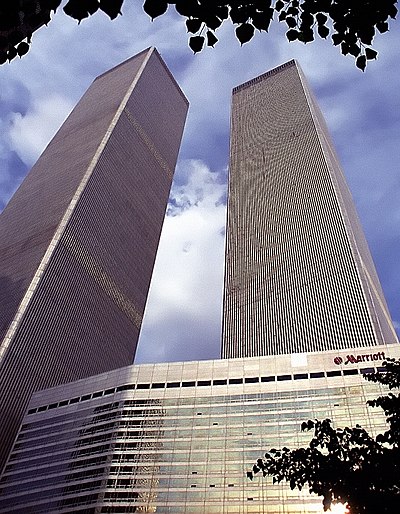


An Ambitious Addition to Manhattan's Skyline
The New York Marriott World Trade Center, designated as 3 World Trade Center, represented a significant urban development project upon its inauguration in April 1981. As the Vista International Hotel, it marked a pivotal moment for Lower Manhattan, being the first major hotel to open south of Canal Street in nearly 150 years, a testament to the area's evolving commercial and hospitality landscape.
This 22-story edifice, featuring 825 guest rooms, was strategically positioned within the original World Trade Center complex, designed to complement the towering presence of the Twin Towers. Its construction and opening underscored the ambition to create a comprehensive destination for business and tourism, integrating lodging directly into the heart of a global financial hub. The hotel was envisioned as a sophisticated amenity, enhancing the functionality and appeal of the entire World Trade Center site.
Endurance Through Adversity
The Marriott's structural integrity and operational continuity were severely tested on February 26, 1993, when a truck bomb detonated in the underground parking garage of the World Trade Center. The explosion inflicted substantial damage, including structural compromise and widespread smoke infiltration, rendering the hotel uninhabitable. In the aftermath, the Port Authority of New York and New Jersey faced a critical decision: demolish the damaged structure or undertake extensive repairs.
Opting for reconstruction, the building underwent significant reinforcement, a process that aimed to not only restore its functionality but also enhance its safety. The hotel successfully reopened in November 1994, demonstrating remarkable resilience. The subsequent acquisition by Marriott Corporation in November 1995 and its renaming to the New York Marriott World Trade Center solidified its identity as a key component of the revitalized complex, ready to serve a new era of visitors.
The Cataclysm of September 11th and Its Aftermath
The Marriott World Trade Center's existence was tragically cut short on September 11, 2001. During the coordinated terrorist attacks, the North and South Towers of the World Trade Center were struck by hijacked airplanes. The catastrophic collapse of these iconic structures led to the near-complete destruction of the Marriott hotel.
The immense forces involved resulted in the loss of 43 lives within the hotel, comprising 41 firefighters who were bravely responding to the crisis and two hotel employees. The southern extremity of the building was the only portion to withstand the initial collapse, though it was ultimately demolished to facilitate the reconstruction of the site. The Marriott hotel was not replaced as part of the post-2001 World Trade Center development; however, its former address, 3 WTC, has been reappropriated for the new tower located at 175 Greenwich Street, a symbolic continuation of its presence.
A Symbol of Urban Vulnerability and Collective Memory
The Marriott World Trade Center's narrative is more than just the story of a hotel; it is a microcosm of urban ambition, the devastating impact of terrorism, and the enduring spirit of a city. Its rise represented a period of significant growth and confidence in New York's future, while its destruction became an indelible part of a national tragedy. The events surrounding the hotel highlight the complex interplay between architectural ambition, security challenges, and the human cost of conflict.
The loss of life within its walls underscores the bravery of first responders and the innocent victims caught in the crossfire. Though the physical structure is gone, the Marriott World Trade Center remains a significant element in the collective memory of the World Trade Center site and the broader historical context of the early 21st century.
See also
Frequently Asked Questions
What was the Marriott World Trade Center?+
Why was the Marriott World Trade Center important in Lower Manhattan?+
How did the Marriott World Trade Center survive the 1993 truck bomb?+
What happened to the Marriott World Trade Center on September 11, 2001?+
Is there a new building at the Marriott World Trade Center's old location?+
Based on content from Wikipedia · Licensed under CC BY-SA 4.0