

The Great English Tug-of-War!
Images
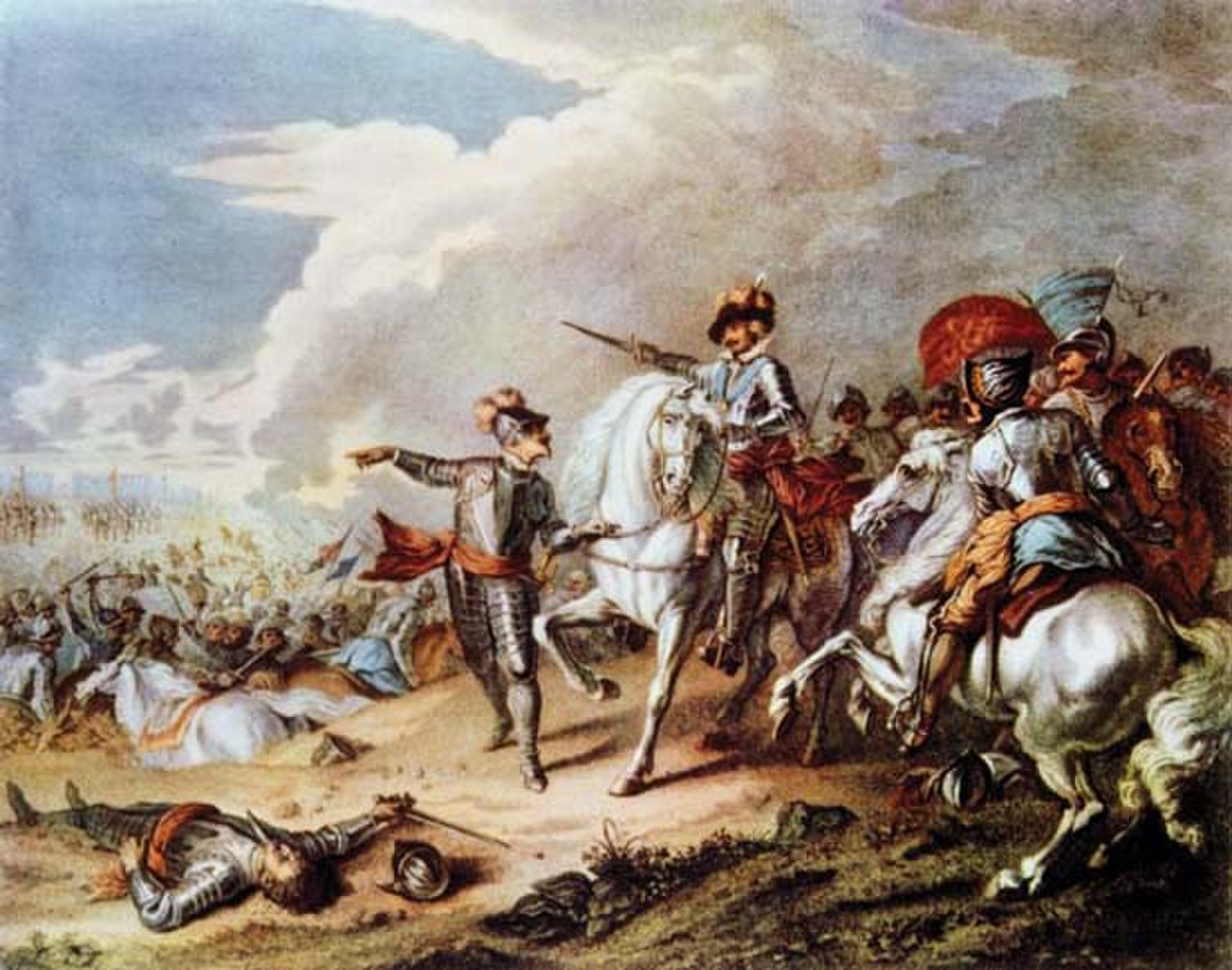
English Civil War
Seeds of Discord
The English Civil War (1642-1651) was not a sudden outburst but the culmination of decades of simmering tensions. At its heart lay a fundamental disagreement over sovereignty: the Divine Right of Kings championed by Charles I versus the burgeoning parliamentary assertion of its rights and privileges. Charles's belief that his authority was God-given meant he felt empowered to rule without parliamentary consent, particularly concerning taxation and religious policy.
His attempts to levy taxes like Ship Money without parliamentary approval, and his perceived leanings towards Catholicism and imposition of High Church practices, alienated Puritan members of Parliament and the wider populace. Parliament, increasingly dominated by those who sought to limit royal power and protect Protestantism, saw Charles's actions as tyrannical. The Personal Rule of Charles I (1629-1640), where he governed without Parliament, exacerbated these fears, leading to widespread discontent and ultimately, armed conflict when reconciliation failed.
The Crucible of Conflict
The war itself was a brutal and transformative experience for England. It pitted the Royalist forces, often comprising the aristocracy and traditional power structures, against the Parliamentarian armies, which evolved into the formidable New Model Army under Oliver Cromwell. This professional, meritocratic force, driven by religious conviction and a clear military objective, proved decisive.
Key battles like Marston Moor (1644) and Naseby (1645) marked significant Parliamentarian victories, crippling the Royalist military capacity. Beyond the battlefield, the war was also an ideological struggle. Debates raged within Parliament and the army about the future of England, encompassing ideas of religious toleration, republicanism, and the extent of popular sovereignty.
The radicalism of groups like the Levellers, who advocated for broader political rights, challenged the established order even within the Parliamentarian ranks.
Regicide and the Commonwealth Experiment
The capture and subsequent trial of Charles I represented a seismic shift in political thought and practice. The Rump Parliament's decision to put the King on trial for treason and execute him in 1649 was an act of unprecedented defiance against the concept of divinely ordained monarchy. This act ushered in the Commonwealth of England, a republic that lasted from 1649 to 1660.
Oliver Cromwell emerged as the dominant figure, first as a key leader of the army and then as Lord Protector from 1653. The Commonwealth era was marked by attempts to establish a new form of governance, religious reforms, and significant military campaigns, including the conquest of Ireland. However, it struggled with internal divisions and lacked broad popular legitimacy, leading to a period of instability and military rule.
The Restoration and Enduring Legacies
The instability and authoritarian nature of Cromwell's rule, coupled with a desire for a return to traditional order, paved the way for the Restoration of the monarchy in 1660. Charles II, the exiled son of Charles I, was invited back to the throne. While the monarchy was restored, the Civil War had irrevocably altered the political landscape.
The absolute power of the monarch had been challenged and, to a degree, curtailed. The principle that the monarch ruled with the consent of Parliament, even if imperfectly applied, gained significant traction. The Glorious Revolution of 1688, which further limited royal power and enshrined parliamentary supremacy through the Bill of Rights, can be seen as a direct consequence of the constitutional questions raised and fought over during the Civil War.
The conflict's legacy lies in its contribution to the development of constitutional monarchy and the enduring debate about the balance of power between the executive and legislative branches of government.
Echoes Through Time
The English Civil War was more than just a domestic conflict; it had profound implications for the development of political thought and governance across the globe. The execution of a monarch and the establishment of a republic challenged the prevailing European order, which was largely monarchical. Ideas about popular sovereignty, the rights of the people, and the limitations of governmental power, debated fiercely during this period, would influence later revolutions, including the American and French Revolutions.
The war's outcome solidified the idea that a ruler's legitimacy stemmed not solely from divine right but also from the consent of the governed, a concept that remains central to modern democratic societies. Furthermore, the religious dimensions of the conflict contributed to ongoing discussions about religious toleration and the separation of church and state, shaping the religious freedoms enjoyed in many countries today.
Go deeper
Frequently Asked Questions
What was the English Civil War about?+
Who were the main sides in the war?+
Why was Charles I executed?+
What happened after the king was executed?+
Did the monarchy return after the war?+
Based on content from Wikipedia · Licensed under CC BY-SA 4.0