

Los Angeles Lakers
Images

2013 Los Angeles Lakers 2



From Minneapolis Lakes to Hollywood Lights
The Los Angeles Lakers' lineage traces back to the 1946 National Basketball League (NBL) as the Detroit Gems. A swift relocation to Minneapolis, Minnesota, a state renowned for its abundant lakes, gave birth to the 'Minneapolis Lakers.' This early iteration achieved significant success, capturing the 1948 NBL championship before transitioning to the Basketball Association of America (BAA) and winning the 1949 BAA title. The subsequent merger of the NBL and BAA in 1949 to form the NBA saw the Lakers immediately assert dominance, securing four championships in their first five NBA seasons.
Financial struggles in the late 1950s prompted another pivotal move, this time to the sun-drenched metropolis of Los Angeles before the 1960-61 season. This relocation not only rebranded the team but also set the stage for decades of unparalleled success and cultural impact, transforming them into a global sports icon.
The Golden Age
The 1980s marked the zenith of the Lakers' 'Showtime' era, a period characterized by an electrifying, fast-paced offensive style that captivated audiences and redefined basketball as a form of entertainment. Spearheaded by the visionary ownership of Jerry Buss, who saw basketball as more than just a sport, and the unparalleled talents of Magic Johnson and Kareem Abdul-Jabbar, the Lakers became a cultural phenomenon. Johnson's innovative playmaking and Abdul-Jabbar's dominant scoring formed a formidable duo.
The decade was also defined by an intense, historic rivalry with the Boston Celtics, featuring multiple NBA Finals showdowns. While the Lakers experienced heartbreak against Boston in 1984, they avenged those losses with championship victories in 1985 and 1987, solidifying their status as an NBA powerhouse and cementing their place in sports lore.
The Shaq-Kobe Era and the Resurgence of Dominance
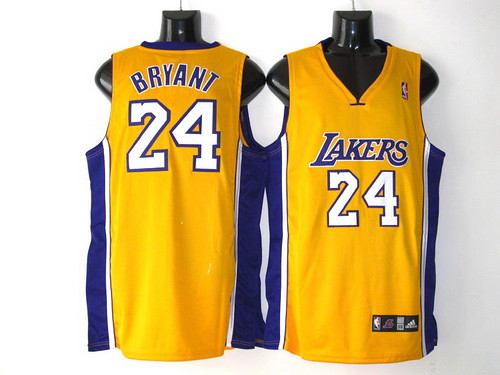
Following a period of rebuilding in the early 1990s, the Lakers re-emerged as a dominant force with the acquisition of Kobe Bryant and the signing of Shaquille O'Neal. This superstar pairing, guided by the legendary coach Phil Jackson, orchestrated a remarkable 'three-peat,' winning three consecutive NBA championships from 2000 to 2002. This era showcased a blend of individual brilliance and team cohesion, with O'Neal's overwhelming physical presence complemented by Bryant's clutch scoring and competitive fire.
Although the Shaq-Kobe era concluded with O'Neal's departure in 2004, the Lakers' championship aspirations were reignited with the trade for Pau Gasol. This led to further Finals appearances and championships in 2009 and 2010, once again facing and defeating their archrivals, the Boston Celtics, in a memorable 2010 Finals.
Modern Icons and the Pursuit of Continued Legacy
After a period of transition following the retirements of key figures and a rare playoff drought, the Lakers once again assembled a championship-caliber team. The signing of LeBron James in 2018 and the subsequent acquisition of Anthony Davis in 2019 brought a new wave of star power to Los Angeles. Under the guidance of coach Frank Vogel, this formidable duo led the Lakers to their 17th NBA championship in 2020, tying the Boston Celtics for the most titles in league history.
This victory underscored the franchise's enduring ability to attract and maximize the talents of generational players. The Lakers continue to navigate the league's evolving landscape, demonstrating a persistent commitment to contending for championships and upholding their legacy as one of basketball's most storied franchises.
Statistical Supremacy and Cultural Impact
The Los Angeles Lakers' statistical achievements are as impressive as their championship count. They hold the NBA record for the longest winning streak at an astounding 33 consecutive games, set during the 1971-72 season. This level of sustained excellence is a testament to the caliber of players and coaching that have graced the franchise.
A remarkable 26 Hall of Famers have worn the Lakers uniform, and four have coached the team, highlighting the deep talent pool that has passed through Los Angeles. Furthermore, Lakers legends like Kareem Abdul-Jabbar, Magic Johnson, Shaquille O'Neal, and Kobe Bryant have amassed a combined eight NBA MVP awards while playing for the team. Beyond the numbers, the Lakers have transcended sports, becoming a symbol of Los Angeles culture and a global brand recognized for its winning tradition and star-studded history.
Go deeper
Based on content from Wikipedia · Licensed under CC BY-SA 4.0