

Lift: The Amazing Force That Lets Things Fly!
Images
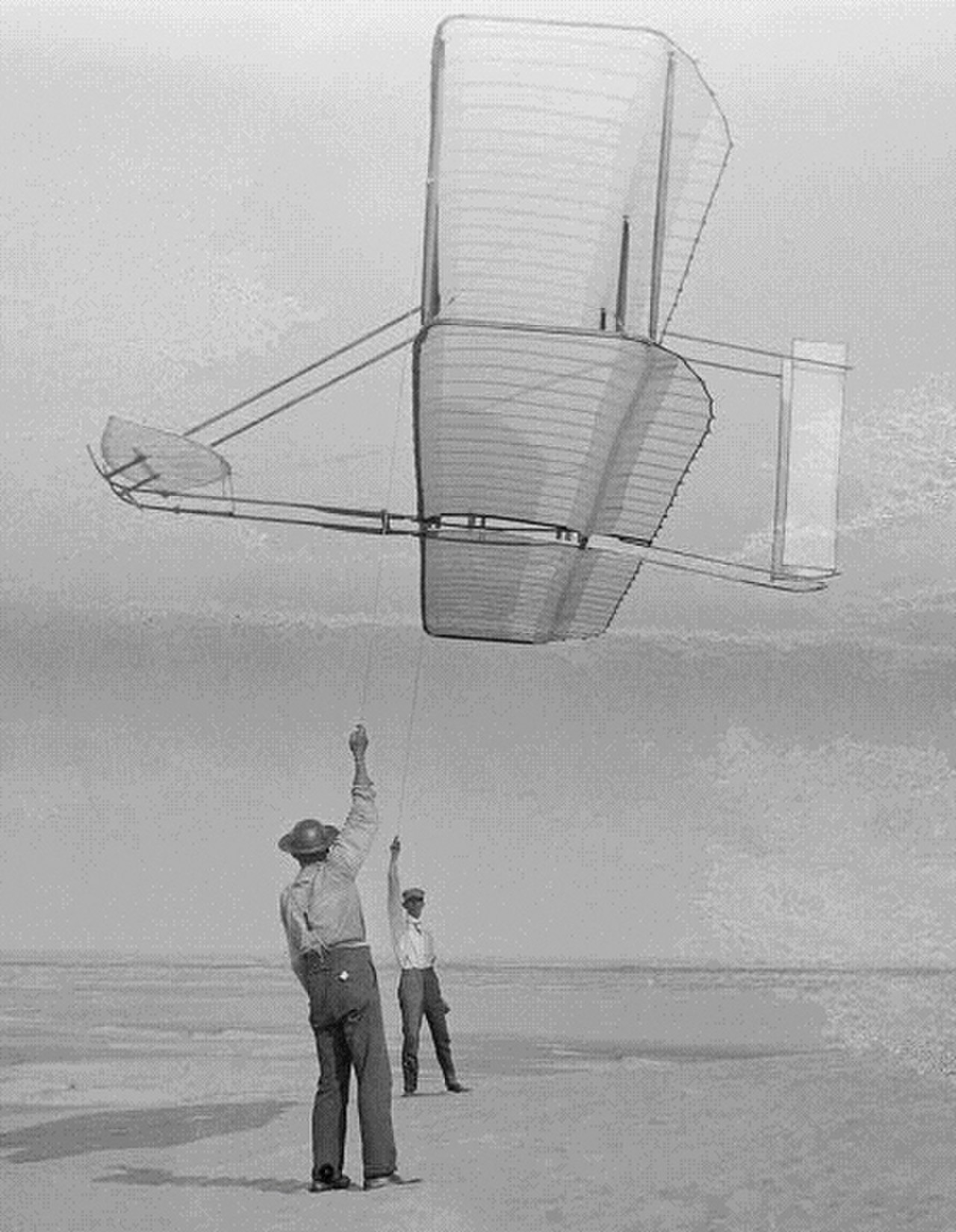
Lift (force)


The Upward Vector
Lift is defined as the component of a dynamic reaction force that is perpendicular to the direction of motion through a fluid. In simpler terms, it's the force that pushes an object upward, counteracting its weight, and is primarily generated by the movement of air around a specially shaped surface, known as an airfoil. The magnitude of lift is influenced by several factors, including the speed of the fluid, the density of the fluid, the shape and surface area of the airfoil, and the angle at which the fluid strikes the airfoil (angle of attack).
Mathematically, lift (L) can be approximated by the formula L = 0.5 * ρ * v^2 * A * Cl, where ρ is the fluid density, v is the fluid velocity, A is the reference area (often wing area), and Cl is the coefficient of lift, which depends on the airfoil shape and angle of attack. Understanding and controlling lift is paramount for any object designed to fly.
From Observation to Equation
The scientific exploration of lift spans centuries, evolving from rudimentary observations to sophisticated mathematical models. Early insights into aerodynamics can be traced to Leonardo da Vinci's studies of bird flight in the late 15th century. However, it was Sir George Cayley in the early 19th century who is widely credited with establishing the foundational principles of aerodynamics, identifying lift, drag, thrust, and weight as distinct forces.
His work with gliders provided empirical evidence for the importance of wing shape. The 18th-century work of Daniel Bernoulli, particularly his principle relating fluid velocity and pressure, provided a crucial theoretical underpinning. Later, in the late 19th and early 20th centuries, researchers like Lord Rayleigh and Frederick W.
Lanchester further refined the understanding of lift generation, developing theories like the circulation theory of lift, which explained how a spinning cylinder or airfoil could generate lift.
The Aerodynamic Dance
The primary mechanism for generating lift in most aircraft is the airfoil's shape, which exploits Bernoulli's principle and Newton's third law. The curved upper surface of an airfoil forces air to travel a greater distance than the air flowing beneath the flatter lower surface. This difference in path length, combined with the continuity of airflow, results in higher velocity air above the wing.
According to Bernoulli's principle, this higher velocity corresponds to lower static pressure. Consequently, the higher pressure beneath the wing exerts an upward force on the airfoil. Simultaneously, Newton's third law plays a role: the wing deflects air downwards, and in reaction, the air pushes the wing upwards.
The angle of attack also significantly influences lift; increasing it generally increases lift up to a critical point, beyond which airflow separates, leading to a stall.
Lift's Enduring Impact
The mastery of lift has fundamentally reshaped human civilization. It is the cornerstone of aviation, enabling global travel, rapid transport of goods, and military capabilities. Beyond conventional aircraft, lift principles are applied in designing high-speed trains (like the Maglev), wind turbines, and even in sports equipment to enhance performance.
Understanding lift also informs the design of marine vessels and underwater vehicles. Current research continues to explore novel ways to generate and control lift, such as through biomimicry inspired by insect flight, advanced materials, and active flow control systems. The ongoing quest to optimize lift efficiency promises further innovations in transportation, energy generation, and beyond.
See also
Frequently Asked Questions
What is lift and why does it help airplanes fly?+
How does the shape of a wing create lift?+
Why do pilots change the angle of attack during flight?+
Who first studied lift and how did it help us build airplanes?+
Where else can we use lift besides airplanes?+
Based on content from Wikipedia · Licensed under CC BY-SA 4.0